

Quick Answer: What Is H13 Mold Steel?
H13 mold steel is a chromium-molybdenum-vanadium hot work tool steel designed for high-temperature applications such as aluminum die casting, hot forging and high-temperature injection molds.
Unlike plastic mold steels such as S136 and NAK80, H13 is engineered to withstand repeated heating, cooling cycles and heavy impact loads. Its excellent thermal fatigue resistance, high-temperature toughness and dimensional stability make it one of the most widely used hot work steels worldwide.
After proper vacuum heat treatment, H13 typically reaches 48-52 HRC, maintaining stable mechanical properties under continuous high-temperature working conditions.
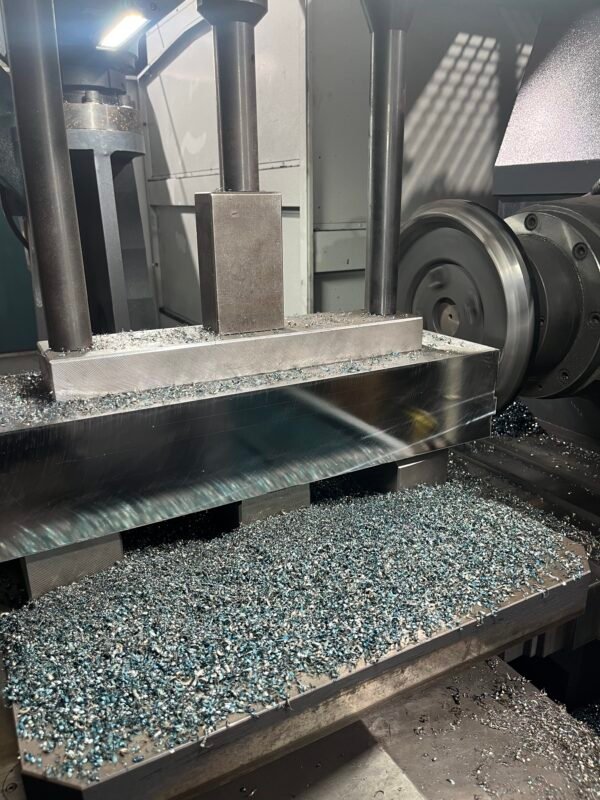
What Makes H13 Mold Steel Different?
H13 hot work steel is developed for environments where ordinary mold steels fail due to heat, impact and thermal stress.
During die casting production, molds experience thousands or millions of cycles of:
- Rapid heating from molten metal contact
- Fast cooling during mold opening
- Strong mechanical impact during injection
- Continuous friction and wear
These conditions create common failures such as:
- Thermal fatigue cracks
- Edge chipping
- Cavity deformation
- Surface wear
- Premature mold failure
H13 solves these problems through a balanced alloy design combining chromium, molybdenum and vanadium, providing excellent strength at elevated temperatures while maintaining good toughness.
Core Performance Advantages of H13 Mold Steel
1. Excellent Thermal Fatigue Resistance
The biggest advantage of H13 is its ability to resist repeated thermal cycling.
During aluminum die casting, the mold surface experiences extreme temperature changes repeatedly. H13’s refined microstructure helps delay thermal crack formation and prevents early cavity damage.
This makes H13 ideal for:
- Aluminum die casting molds
- Zinc alloy die casting molds
- Hot stamping dies
- High-temperature forming tools
2. High-Temperature Toughness and Impact Resistance
Unlike cold work steels designed for room-temperature applications, H13 maintains toughness under high-temperature impact conditions.
It can withstand:
- Molten metal impact
- Continuous production pressure
- Frequent mold opening and closing cycles
This reduces the risk of:
- Sudden cracking
- Mold insert breakage
- Cavity collapse
3. Stable High-Temperature Hardness
After vacuum quenching and tempering, H13 achieves approximately 48-52 HRC hardness.
It maintains good:
- Wear resistance
- Strength retention
- Dimensional stability
even under continuous high-temperature operation.
This balance between hardness and toughness is why H13 remains the industry standard hot work mold steel.
4. Good Thermal Conductivity
H13 provides efficient heat transfer during production.
Better heat dissipation helps:
- Reduce thermal stress
- Shorten cooling cycles
- Improve production efficiency
- Extend mold lifespan
5. Good Machining and Repair Welding Performance
Compared with higher alloy hot work steels, H13 offers practical machinability after annealing.
It supports:
- CNC machining
- EDM processing
- Surface grinding
- Local welding repair
This makes H13 economical for large-scale industrial mold manufacturing.
Chemical Composition of H13 Mold Steel
H13 uses a Cr-Mo-V alloy system designed for high-temperature strength and thermal fatigue resistance.
| Element | Content | Function |
|---|---|---|
| Carbon (C) | 0.32-0.45% | Provides hardness and wear resistance while maintaining toughness |
| Chromium (Cr) | 4.75-5.50% | Improves hardenability and oxidation resistance |
| Molybdenum (Mo) | 1.10-1.75% | Enhances high-temperature strength and reduces temper brittleness |
| Vanadium (V) | 0.80-1.20% | Refines grains and improves wear and thermal fatigue resistance |
| Silicon (Si) | 0.80-1.20% | Improves heat resistance and structural stability |
| Manganese (Mn) | 0.20-0.50% | Improves machinability and hardenability |
| Phosphorus/Sulfur | Low content | Reduces internal defects and improves toughness |
Main Applications of H13 Mold Steel
1. Aluminum and Zinc Die Casting Molds
H13 is the preferred choice for many non-ferrous metal casting applications.
Typical uses include:
- Automotive aluminum components
- Motor housings
- Battery system components
- Electronic aluminum shells
- Zinc alloy hardware parts
Its thermal fatigue resistance makes it suitable for long production cycles.
2. High-Temperature Plastic Injection Molds
H13 can be used for engineering plastics requiring elevated mold temperatures.
Applications include:
- PC plastic molds
- PA66 injection molds
- PBT component molds
- High-temperature polymer forming tools
3. Hot Forging and Hot Stamping Dies
H13 performs well in metal forming applications requiring heat resistance and impact strength.
Examples:
- Automotive hot stamping parts
- Aluminum extrusion tooling
- Metal forging dies
- Hot forming inserts
4. High-Temperature Mold Components
H13 is commonly used for replaceable components exposed to high thermal loads:
- Mold cores
- Inserts
- Slides
- Ejector components
- Hot runner components
H13 Heat Treatment and Processing Guidelines
Proper heat treatment is essential for achieving H13’s full performance.
Vacuum Heat Treatment
Recommended process:
- Austenitizing temperature: 1020-1050℃
- High-pressure gas quenching
- Multiple tempering cycles
- Final hardness: 48-52 HRC
Multiple tempering helps:
- Release internal stress
- Improve toughness
- Reduce thermal crack risk
CNC and EDM Processing
Recommended practices:
- Complete rough machining before heat treatment
- Use carbide cutting tools
- Avoid excessive machining heat
- Remove EDM damaged surface layer completely
Residual EDM layers can become starting points for thermal fatigue cracks during production.
Welding Repair
For repair welding:
- Preheat mold before welding
- Use matching H13 welding materials
- Apply stress relief treatment after welding
Cold welding without preparation may cause crack expansion.
H13 vs S136 vs NAK80 Mold Steel Comparison
| Performance | H13 | S136 | NAK80 |
|---|---|---|---|
| Steel Type | Hot Work Steel | Stainless Plastic Steel | Pre-hardened Plastic Steel |
| Working Temperature | High | Low | Low |
| Thermal Fatigue Resistance | Excellent | Poor | Poor |
| Mirror Polishing | Medium | Excellent | Excellent |
| Corrosion Resistance | Poor | Excellent | Poor |
| Heat Treatment | Required | Required | Not Required |
| Main Application | Die Casting & Hot Molds | Medical/Optical Plastic Molds | High-Gloss Appearance Molds |
How to Choose H13 Mold Steel?
Choose H13 when your mold requires:
✅ High-temperature resistance
✅ Strong impact toughness
✅ Long die casting production cycles
✅ Thermal fatigue resistance
✅ Hot stamping performance
Do not choose H13 for:
- Ordinary plastic appearance molds
- Optical mirror molds
- Corrosion-resistant plastic molds
For these applications, S136 or NAK80 may provide better cost performance.
Common Mistakes When Using H13 Steel
1. Using Plastic Mold Steel for Die Casting
S136 and NAK80 cannot replace H13 in high-temperature die casting environments.
They lack sufficient thermal fatigue resistance and may fail quickly.
2. Insufficient Tempering
Skipping proper tempering increases internal stress and accelerates thermal cracking.
3. Ignoring Mold Preheating
Cold starting creates severe thermal shock and shortens mold life.
4. Over-polishing H13
H13 is designed for performance under heat and impact, not optical mirror finishing.
Excessive polishing increases processing cost without improving production performance.
FAQ About H13 Mold Steel
Is H13 good for aluminum die casting molds?
Yes. H13 is one of the most commonly used materials for aluminum die casting molds because of its excellent thermal fatigue resistance and high-temperature toughness.
What hardness is H13 mold steel?
After proper heat treatment, H13 usually reaches around 48-52 HRC depending on application requirements.
Is H13 better than S136?
They serve different purposes. H13 is designed for high-temperature molds, while S136 is designed for corrosion-resistant plastic injection molds.
Does H13 need heat treatment?
Yes. H13 requires vacuum quenching and tempering to achieve the required hardness and toughness.
Conclusion
H13 mold steel remains one of the most reliable hot work steels for demanding industrial applications.
With excellent thermal fatigue resistance, high-temperature toughness and balanced mechanical properties, H13 provides a cost-effective solution for aluminum die casting, hot stamping and high-temperature injection molds.
We supply high-quality H13 hot work mold steel with material certification, precision cutting and professional heat treatment support. Contact KUTU MOLD STEEL for customized H13 solutions for your next hot mold project.
H13 (AISI H13 / DIN 1.2344) Hot Work Die Casting Mold Steel Plate High Temperature Resistant – KUTU
S136 / S136H (Premium ESR Grade) Corrosion Resistant Stainless Plastic Mold Steel Plate – KUTU