

2344 mold steel is a premium hot work die steel developed as an upgraded version of conventional H13 steel. Through advanced refining processes such as ESR (Electroslag Remelting), 2344 achieves a cleaner internal structure, improved toughness, better isotropy and more stable performance under severe thermal cycling conditions.
Compared with standard H13, 2344 provides improved resistance against thermal fatigue cracking, edge chipping and high-temperature wear. It is especially suitable for heavy-duty aluminum, magnesium and zinc alloy die casting molds that require long production cycles, high impact resistance and stable dimensional accuracy.
With balanced hardness, toughness and thermal conductivity, 2344 fills the performance gap between traditional H13 and higher-cost premium hot work steels. It is an ideal material choice for mold manufacturers looking to extend service life while maintaining reasonable production costs.
This article explains the key properties, chemical composition, applications, heat treatment requirements and material selection guidance of 2344 mold steel.
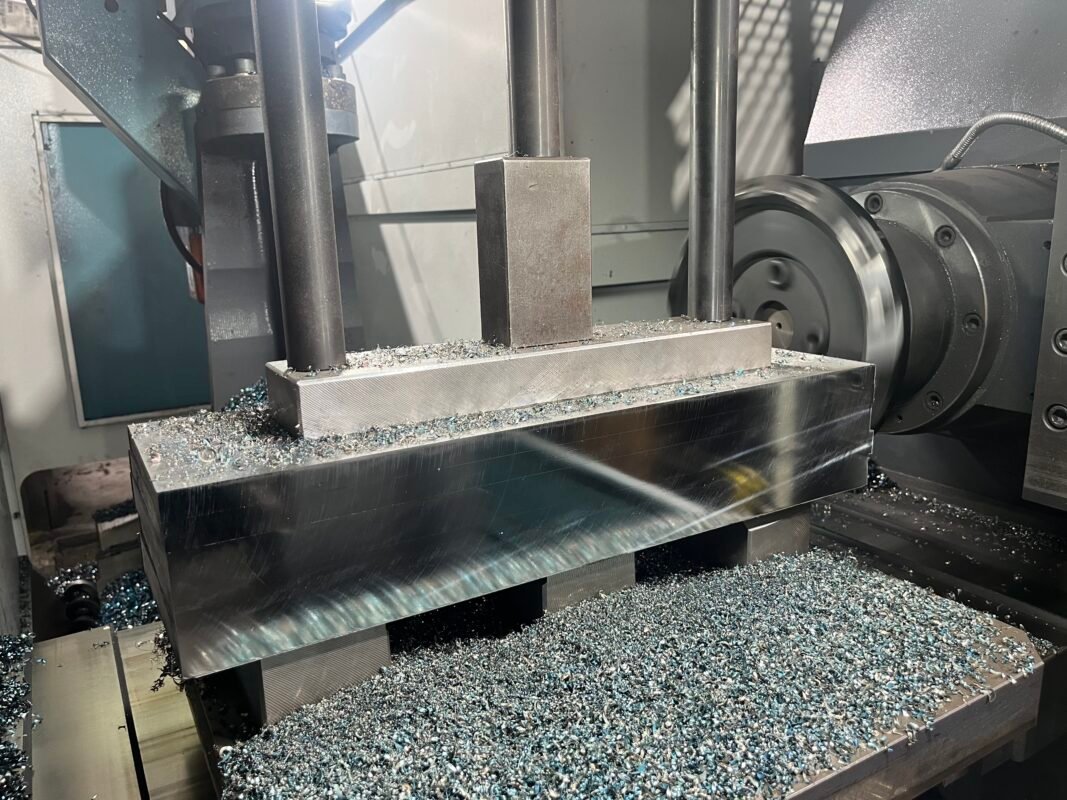
Core Performance Advantages of 2344 Mold Steel
2344 maintains the classic Cr-Mo-V hot work steel structure of H13 while improving steel cleanliness and microstructure uniformity. Its major advantages include:
1. Improved Thermal Fatigue Resistance
Thermal fatigue cracking is one of the most common failure modes in hot work molds. During die casting production, mold surfaces experience repeated heating and cooling cycles, creating thermal stress that can gradually form surface cracks.
Thanks to its refined grain structure and lower impurity content, 2344 provides better resistance against thermal fatigue compared with standard H13. It helps extend mold life in high-cycle aluminum die casting applications.
2. Higher High-Temperature Toughness
2344 maintains excellent toughness under high-temperature impact conditions. It can withstand repeated mechanical shocks from molten metal injection, mold opening and closing cycles, and pressure impact.
This makes it suitable for large die casting molds, thin-wall casting components and mold inserts where ordinary H13 may experience premature cracking or edge failure.
3. Excellent Hardness Stability
After proper vacuum heat treatment and tempering, 2344 typically reaches around 50-54 HRC hardness.
The optimized alloy structure allows the steel to maintain stable hardness during continuous high-temperature operation, reducing cavity wear and deformation during long production runs.
4. Better Structural Uniformity for Large Molds
Large hot work molds require consistent properties throughout the entire steel block. Uneven microstructure can cause unexpected cracking or deformation.
The refined manufacturing process of 2344 improves internal uniformity, providing more stable toughness between surface and core areas.
5. Good Thermal Conductivity and Machinability
2344 offers balanced thermal conductivity, helping molds release heat efficiently during production. Faster heat transfer improves cycle stability and reduces thermal stress accumulation.
Compared with many high-alloy hot work steels, 2344 also provides good machinability before heat treatment, making CNC machining and EDM processing more efficient.
Chemical Composition of 2344 Mold Steel
2344 belongs to the chromium-molybdenum-vanadium hot work steel family. Its alloy design focuses on balancing high-temperature strength, toughness and thermal fatigue resistance.
| Element | Content Range | Function |
|---|---|---|
| C (Carbon) | 0.37-0.42% | Provides basic hardness and wear resistance while maintaining impact toughness |
| Cr (Chromium) | 5.00-5.50% | Improves hardenability, oxidation resistance and thermal stability |
| Mo (Molybdenum) | 1.20-1.60% | Enhances high-temperature strength and reduces temper brittleness |
| V (Vanadium) | 0.90-1.10% | Refines grain structure and improves wear and thermal fatigue resistance |
| Si (Silicon) | 0.90-1.10% | Improves oxidation resistance and high-temperature stability |
| Mn (Manganese) | 0.30-0.50% | Improves machinability and structural stability |
| P/S | Low content | Reduces internal defects and improves toughness consistency |
Image suggestions:
- 2344 vacuum refined hot work steel plate
Alt: 2344 vacuum refined hot work steel - Heavy-duty aluminum die casting mold made from 2344 steel
Alt: 2344 aluminum die casting mold steel - 2344 vs H13 hot work steel comparison chart
Alt: 2344 and H13 hot work steel performance comparison
Main Applications of 2344 Mold Steel
2344 is mainly used for high-load hot working applications where standard H13 cannot provide sufficient service life.
1. Heavy-Duty Aluminum Die Casting Molds
Typical applications include:
- Automotive aluminum structural part molds
- Electric vehicle battery tray and motor housing molds
- Large aluminum alloy die casting cores and inserts
- High-cycle die casting molds requiring long production stability
2344 is especially suitable for molds operating continuously under repeated thermal shock.
2. Magnesium and Zinc Alloy Die Casting Molds
Magnesium and zinc alloy casting often require excellent toughness because of high injection pressure and frequent thermal cycling.
Applications include:
- Thin-wall magnesium electronic components
- Zinc alloy hardware molds
- Precision die casting inserts
3. High-Temperature Engineering Plastic Molds
For special engineering plastics with high processing temperatures, 2344 provides better thermal resistance than ordinary plastic mold steels.
Suitable materials include:
- PEEK
- PPS
- High-temperature reinforced engineering plastics
4. Hot Stamping and Forging Tools
2344 can also be applied in:
- Automotive hot stamping dies
- Aluminum alloy forging molds
- High-temperature forming tools
- Replaceable hot work inserts
Heat Treatment and Processing Guidelines
To achieve the best performance, 2344 requires professional vacuum heat treatment.
Vacuum Heat Treatment
Recommended process:
- Quenching: 1030-1050℃ vacuum heating, high-pressure nitrogen gas cooling
- Tempering: Triple tempering at approximately 550-570℃
Final hardness:
50-54 HRC
Triple tempering is important because it removes residual stress and improves toughness stability during long-term hot working.
CNC Machining and EDM Recommendations
Before heat treatment:
- Complete rough machining first
- Leave appropriate finishing allowance
- Avoid excessive cutting heat
Recommended machining:
- Use carbide cutting tools
- Maintain stable cutting parameters
- Avoid unnecessary surface stress
After EDM:
- Remove the EDM white layer completely
- Perform polishing or surface treatment before production
Residual EDM layers can become crack initiation points during thermal cycling.
2344 vs H13 Hot Work Steel Comparison
| Performance | H13 | 2344 |
|---|---|---|
| Steel Type | Standard hot work steel | Upgraded hot work steel |
| Refining Process | Conventional | ESR refined |
| Toughness | Good | Higher |
| Thermal Fatigue Resistance | Good | Improved |
| Internal Uniformity | Medium | Excellent |
| Heat Treatment Stability | Good | Better |
| Cost | Lower | Medium |
| Best Application | General hot molds | Heavy-duty long-life molds |
How to Choose 2344 Mold Steel
Choose 2344 when:
- H13 molds frequently develop thermal cracks
- Production requires long continuous operation
- Die casting molds experience heavy impact loads
- Mold maintenance downtime creates high production costs
Continue using H13 when:
- Production volume is limited
- Mold working conditions are moderate
- Budget control is the primary concern
Upgrade to higher-grade hot work steels when:
- Working temperatures are extremely high
- Copper alloy die casting is required
- Maximum thermal performance is necessary
Common Mistakes When Using 2344 Steel
1. Applying Standard H13 Heat Treatment
2344 requires optimized heat treatment parameters. Using unsuitable H13 processes may reduce toughness advantages.
2. Ignoring EDM Surface Treatment
Even premium hot work steel can develop cracks from EDM damaged layers if post-processing is neglected.
3. Selecting 2344 for Low-Load Applications
For simple and low-volume molds, standard H13 may provide better cost efficiency.
4. Over-Tempering or Excessive Hardness
Extremely high hardness reduces toughness and increases crack risk in hot working conditions.
FAQ About 2344 Mold Steel
Is 2344 better than H13 steel?
Yes, 2344 is an upgraded version of H13 with improved toughness, thermal fatigue resistance and structural uniformity, especially for heavy-duty die casting molds.
What hardness can 2344 mold steel reach?
After vacuum heat treatment and tempering, 2344 usually reaches approximately 50-54 HRC.
What is 2344 steel mainly used for?
2344 is mainly used for aluminum die casting molds, magnesium alloy molds, hot stamping dies and high-temperature forming tools.
Can 2344 replace H13 completely?
No. H13 remains suitable for standard hot work applications. 2344 is mainly recommended when longer mold life and higher reliability are required.
We supply genuine 2344 hot work mold steel with complete material certificates and hardness inspection reports. KUTU provides professional cutting, machining support, heat treatment guidance and customized solutions for heavy-duty hot work mold applications.
For high-cycle die casting molds requiring longer service life and improved reliability, 2344 is a cost-effective upgrade solution from traditional H13 steel. Contact us today for material consultation and technical support.
H13 (AISI H13 / DIN 1.2344) Hot Work Die Casting Mold Steel Plate High Temperature Resistant – KUTU