

High-pressure cold extrusion and powder compacting place some of the most demanding mechanical loads on tool steel.
Unlike conventional stamping, these processes can subject punches, dies and inserts to extremely high compressive stress, repeated impact and severe friction.
In cold extrusion, the tooling must withstand intense contact pressure while maintaining the geometry of the extrusion cavity.
In powder compacting, the die and punch system must withstand repeated high-pressure compaction cycles while resisting wear, chipping and dimensional deformation.
Under these conditions, selecting tool steel based only on hardness is not enough.
The most important properties typically include:
- High compressive strength
- Wear resistance
- Fracture toughness
- Resistance to chipping
- Dimensional stability
- Fatigue resistance
- Resistance to galling
- Metallurgical cleanliness
The challenge is finding the right balance.
A very hard steel may provide excellent wear resistance but become vulnerable to edge chipping.
A very tough steel may resist fracture but wear too quickly under abrasive powder or repeated extrusion.
This guide explains how to select tool steel for cold extrusion dies and powder compacting dies, and when conventional cold work steels, high-performance grades or powder metallurgy tool steels should be considered.
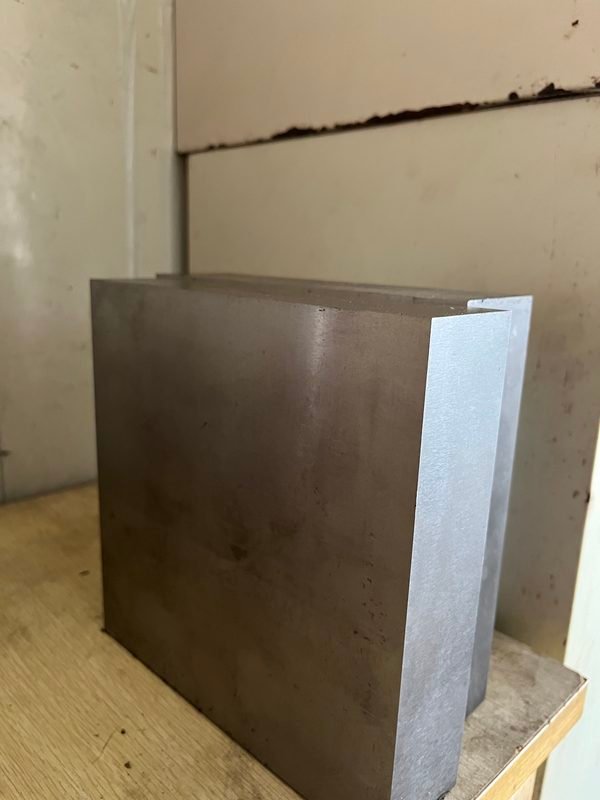
Why High-Pressure Forming Requires Specialized Tool Steel
Cold extrusion and powder compaction are fundamentally different from ordinary low-load forming processes.
The workpiece is subjected to substantial plastic deformation while the tooling constrains the material.
This creates high localized stresses around:
- Die entrances
- Extrusion channels
- Punch noses
- Corners
- Radii
- Carbide-rich working surfaces
- Thin die sections
The highest stress is often concentrated in relatively small areas.
As a result, die failure may occur through several mechanisms:
Wear → chipping → cracking → plastic deformation → catastrophic fracture
The dominant failure mechanism should therefore be identified before selecting a new steel grade.
1. Compressive Strength Is a Primary Requirement
For high-pressure cold extrusion, compressive strength is one of the most important properties of the die material.
The die must resist the tendency to deform under the pressure generated by the workpiece.
If the material lacks sufficient compressive strength, the working surface can gradually deform.
This can result in:
- Dimensional changes
- Extrusion diameter variation
- Cavity enlargement
- Loss of dimensional accuracy
- Premature die replacement
High hardness generally improves resistance to plastic deformation, but hardness alone does not describe the entire behavior of the tool.
The steel’s:
- Matrix strength
- Carbide structure
- Heat treatment
- Residual stress
- Microstructural uniformity
also influence its ability to survive high-pressure loading.
2. Wear Resistance Determines Extrusion Tool Life
Cold extrusion dies can experience severe sliding contact.
As the workpiece moves through the die, friction occurs between the material and tooling surface.
Over repeated cycles, this can cause:
- Die bore enlargement
- Surface roughening
- Edge rounding
- Dimensional drift
- Material pickup
The problem can become more severe when processing hard alloys or when lubrication is inadequate.
For wear-dominated applications, tool steels with strong wear resistance and a suitable carbide structure are often preferred.
However, extremely high carbide content is not automatically beneficial.
Carbide size, morphology and distribution matter.
Coarse or uneven carbides can become stress concentration sites and increase the risk of cracking or chipping.
3. Toughness Prevents Catastrophic Die Failure
Cold extrusion dies often operate close to their mechanical limits.
A small crack can propagate rapidly once the die experiences repeated high-pressure cycles.
Toughness is therefore essential for:
- Thin-walled dies
- Small punches
- Complex cavities
- Sharp transitions
- High-impact operations
- Interrupted forming processes
A steel with insufficient toughness may fail suddenly even when its wear performance appears excellent.
This creates an important selection principle:
If the die is breaking before it wears out, more wear resistance may not be the solution.
Instead, the engineer may need:
- Higher fracture toughness
- Better steel cleanliness
- Refined carbide structure
- Optimized heat treatment
- Improved die geometry
- Reduced stress concentration
4. Cold Extrusion vs. Powder Compacting: Different Failure Mechanisms
Although both applications involve high pressure, they do not place exactly the same demands on tool steel.
Cold Extrusion
The main concerns may include:
- High compressive stress
- Sliding wear
- Galling
- Adhesive wear
- Chipping
- Fatigue cracking
The workpiece itself undergoes substantial plastic deformation.
Powder Compacting
Powder pressing introduces additional concerns:
- Abrasive wear
- Particle friction
- High contact pressure
- Repeated loading
- Powder adhesion
- Ejection wear
Some powders can be highly abrasive, making wear resistance particularly important.
Therefore, the best steel for a cold extrusion die is not automatically the best steel for a powder compacting die.
5. D2 / SKD11 for Cold Work Tooling
D2 and SKD11-type steels are widely used for cold work tooling because of their combination of:
- High hardness
- Good wear resistance
- Dimensional stability
- Broad availability
They can be considered for:
- Punches
- Blanking dies
- Forming tools
- Moderate-duty extrusion tooling
- Powder compacting components
However, high-pressure extrusion can expose their limitations when the tooling geometry is highly stressed or the application requires extremely long service life.
If the dominant problem is premature chipping or cracking, a tougher or more refined grade may be preferable.
If the dominant problem is severe abrasive wear, a higher-performance grade may provide a better solution.
6. DC53 for High-Stress Cold Work Applications
DC53 is often considered when engineers require a balance between high hardness, wear resistance and improved toughness.
This can make it attractive for demanding cold work applications where conventional D2/SKD11-type steels are experiencing:
- Edge chipping
- Punch breakage
- Premature cracking
- Insufficient fatigue life
Potential applications include:
- Cold extrusion punches
- Precision forming dies
- Progressive dies
- High-strength blanking tools
- Powder compaction tooling
The advantage of DC53-type material is not simply higher hardness.
Its value lies in achieving a more useful wear-resistance/toughness balance for demanding cold work tooling.
7. SKH-9 / M2 High-Speed Steel
SKH-9, broadly corresponding to M2 high-speed steel, can be considered when high wear resistance and edge retention are important.
Its properties can make it suitable for:
- High-speed punching
- Precision cutting
- Wear-resistant inserts
- Certain extrusion components
- High-wear cold work applications
SKH-9 can provide high hardness and good wear resistance.
However, cold extrusion dies can experience extremely high compressive loads and fracture risk.
Therefore, high-speed steel should not be selected simply because it has high hardness.
The geometry and actual stress conditions must be evaluated.
8. Powder Metallurgy Tool Steel for Extreme Applications
For the most demanding cold extrusion and powder compacting applications, powder metallurgy tool steel can provide significant advantages.
PM tool steels are produced using a powder metallurgy manufacturing route that allows a very fine and uniform carbide structure.
Potential advantages include:
- High wear resistance
- Fine carbide distribution
- Improved toughness
- Strong edge retention
- Better resistance to chipping
- Consistent microstructure
This can be especially valuable when conventional ingot-metallurgy tool steel is reaching its performance limit.
PM grades are worth considering when:
- Tool life is the primary concern
- Wear is severe
- The die contains small working features
- The production volume is high
- Tool replacement is expensive
- The tooling operates under repeated high-pressure loading
9. Why PM Steel Can Perform Better Under High Pressure
The key advantage is not simply “more hardness.”
A refined carbide structure can reduce the size and severity of local stress concentrations.
In conventional high-alloy tool steels, large carbides may act as preferential crack-initiation sites under certain loading conditions.
A more uniformly distributed fine carbide structure can provide a better balance between:
Wear resistance + toughness + edge stability
This is one reason PM tool steels are increasingly considered for high-performance cold work tooling.
10. Powder Compacting Dies Have Special Wear Problems
Powder compaction is different from machining a solid metal workpiece.
The tooling surface is exposed to large quantities of fine particles.
These particles can cause abrasive wear along:
- Die walls
- Punch surfaces
- Cavity edges
- Ejection surfaces
Repeated pressing and ejection can gradually change the tooling geometry.
This can affect:
- Compact density
- Part dimensions
- Surface quality
- Ejection force
- Tool life
For powder compacting dies, wear resistance and surface finish therefore become particularly important.
11. Material Selection for Different Powder Types
Not all powders create the same tooling conditions.
Metal powders may include:
- Iron-based powders
- Stainless steel powders
- Copper-based powders
- Nickel alloys
- Hardmetal powders
- Ceramic-related powders
Some powder systems are significantly more abrasive than others.
Therefore, tool steel selection should consider:
Powder hardness + particle size + binder/lubricant + compaction pressure + production volume
A material that works well for a relatively soft powder may not provide sufficient life for a highly abrasive powder system.
12. Galling and Material Pickup in Cold Extrusion
Galling is a common concern in high-pressure metal forming.
During severe sliding contact, material can adhere to the die surface.
This can create:
- Surface scratches
- Material transfer
- Increased friction
- Dimensional instability
- Poor surface quality
Once material pickup begins, the problem can accelerate.
The solution may involve a combination of:
- Appropriate tool steel
- High surface hardness
- Optimized polishing
- Lubrication
- Surface treatment
- Correct die geometry
Changing the steel alone may not eliminate galling if lubrication or surface conditions are inadequate.
13. Surface Treatment Can Extend Tool Life
For demanding cold extrusion and powder compaction applications, surface treatment can complement the base steel.
Potential treatments include:
- Nitriding
- PVD coatings
- TiN
- TiCN
- AlCrN
- DLC in selected applications
Potential benefits include:
- Increased surface hardness
- Lower friction
- Improved wear resistance
- Reduced material adhesion
However, coating performance depends heavily on the substrate.
The base steel must have sufficient:
- Hardness
- Toughness
- Dimensional stability
- Surface preparation quality
A coating cannot compensate for an unsuitable substrate.
14. Heat Treatment Is Critical for High-Pressure Dies
Cold extrusion and powder compacting dies require carefully controlled heat treatment.
The objective is to achieve the required combination of:
Hardness + toughness + dimensional stability + residual stress control
Incorrect heat treatment can cause:
- Excessive retained austenite
- Distortion
- Cracking
- Insufficient hardness
- Excessive brittleness
For precision dies, vacuum heat treatment or other controlled-atmosphere processes can be advantageous depending on the steel grade and production requirements.
Multiple tempering cycles may also be required for certain high-alloy tool steels.
The exact heat-treatment schedule must follow the steel manufacturer’s technical recommendations.
15. Steel Cleanliness Matters More as Pressure Increases
For high-pressure tooling, metallurgical cleanliness should not be overlooked.
Non-metallic inclusions can become potential crack-initiation sites.
This is particularly important for:
- Large extrusion dies
- High-pressure punches
- Thin die sections
- High-cycle tooling
- Safety-critical components
For demanding applications, refined steel manufacturing routes such as ESR can provide improved cleanliness and microstructural uniformity.
For high-performance tooling, the purchasing specification should therefore go beyond simply stating the grade.
Consider specifying:
- Steel grade
- Manufacturing route
- Hardness condition
- Ultrasonic quality
- Heat treatment
- Dimensional tolerance
16. Die Geometry Can Determine Tool Life
Even the best tool steel cannot compensate for poor die design.
High-pressure dies should be carefully evaluated for:
- Stress concentration
- Die wall thickness
- Corner radii
- Entry angle
- Punch geometry
- Support conditions
- Alignment
Sharp internal corners can dramatically increase local stress.
A small increase in radius can sometimes have a greater effect on die life than changing to a more expensive steel grade.
This is why material selection should always be performed together with die design analysis.
17. Monolithic Dies vs. Inserted Dies
For high-pressure extrusion, manufacturers may use different die construction strategies.
Monolithic Die
The entire die is manufactured from one material.
Advantages:
- Simple construction
- Straightforward machining
- Fewer interfaces
Disadvantages:
- Difficult to optimize stress distribution
- Expensive premium material consumption
- Potentially higher fracture risk in certain geometries
Inserted or Shrink-Fitted Die
A working insert is supported by an outer component.
Potential benefits include:
- Better stress management
- Reduced premium steel consumption
- Replaceable working insert
- Ability to optimize materials by function
For demanding extrusion applications, this approach can provide significant engineering flexibility.
18. Tool Steel Comparison
A simplified comparison is useful for initial material selection.
| Steel Type | Wear Resistance | Toughness | Compressive Strength | Typical Application |
|---|---|---|---|---|
| D2 / SKD11 | High | Moderate | High | General cold work |
| DC53 | High | High | High | Demanding cold work |
| SKH-9 / M2 | Very High | Moderate | High | High-wear applications |
| PM Tool Steel | Very High | High | Very High | Severe-duty tooling |
| Premium refined grades | Grade-dependent | Grade-dependent | High | High-pressure precision tooling |
These are general engineering comparisons. Actual performance depends on the specific grade, heat treatment, geometry and process conditions.
19. How to Select Steel for Cold Extrusion Dies
A practical selection sequence is:
Step 1: Identify the Workpiece
Determine:
- Material
- Hardness
- Strength
- Diameter
- Wall thickness
Step 2: Determine Extrusion Pressure
Higher forming pressure generally increases the requirements for:
- Compressive strength
- Toughness
- Fatigue resistance
Step 3: Identify the Failure Mode
Ask whether the existing die is experiencing:
- Wear
- Galling
- Chipping
- Cracking
- Plastic deformation
Step 4: Evaluate Geometry
Check:
- Die wall thickness
- Corner radius
- Extrusion ratio
- Punch dimensions
- Stress concentration
Step 5: Select the Steel Family
Possible options include:
D2/SKD11 → DC53 → SKH-9/M2 → PM steel
depending on the application.
Step 6: Optimize Heat Treatment
Do not separate material selection from heat-treatment planning.
Step 7: Consider Surface Treatment
Use nitriding or coatings when the surface wear mechanism justifies it.
20. How to Select Steel for Powder Compacting Dies
For powder compacting, evaluate:
Powder Characteristics
- Particle hardness
- Particle size
- Abrasiveness
- Lubrication system
Pressing Conditions
- Compaction pressure
- Cycle frequency
- Ejection force
- Part geometry
Tooling Requirements
- Dimensional tolerance
- Surface finish
- Cavity complexity
- Expected production volume
If abrasive wear dominates, a high-wear PM tool steel may provide a significant advantage.
If chipping dominates, toughness becomes more important.
21. When Is Premium Tool Steel Economically Justified?
The cost of tool steel is only one part of the tooling equation.
Consider:
Total Tooling Cost = Steel + Machining + Heat Treatment + Finishing + Maintenance + Downtime + Replacement
Suppose a premium PM steel costs substantially more than conventional D2.
That higher material cost may still be justified if the PM grade:
- Doubles die life
- Reduces sharpening frequency
- Prevents punch breakage
- Reduces unexpected downtime
- Maintains dimensions for longer
For high-volume production, cost per part is often more meaningful than cost per kilogram of steel.
22. Common Tool Steel Selection Mistakes
Mistake 1: Choosing the Hardest Grade
Maximum hardness can increase brittleness.
Mistake 2: Ignoring Compressive Stress
Cold extrusion is not simply a wear problem.
High compressive loading must be considered.
Mistake 3: Ignoring Die Geometry
Poor stress distribution can cause failure even with premium steel.
Mistake 4: Ignoring Steel Cleanliness
Inclusions and coarse carbides can contribute to crack initiation.
Mistake 5: Using the Same Grade for Every Component
The punch, die insert and support ring may have different requirements.
Mistake 6: Ignoring Lubrication
Galling can result from surface and lubrication conditions as well as steel selection.
Mistake 7: Selecting Based Only on Initial Price
The lowest material price does not necessarily produce the lowest cost per part.
Tool Steel Selection Checklist
Before ordering steel for a high-pressure extrusion or powder compacting die, confirm:
Workpiece / Powder
- What material is being processed?
- What is its hardness?
- Is it abrasive?
- What is the material thickness or powder particle size?
Process
- What is the forming pressure?
- What is the extrusion ratio?
- What is the production volume?
- What is the cycle frequency?
Tool
- What is the punch diameter?
- What is the die wall thickness?
- Are there sharp corners?
- Is the tool monolithic or inserted?
Failure
- Wear?
- Galling?
- Chipping?
- Cracking?
- Plastic deformation?
Material
- D2/SKD11?
- DC53?
- SKH-9/M2?
- PM tool steel?
- ESR/refined material?
Processing
- What heat treatment is required?
- Is surface treatment necessary?
- What dimensional tolerance is required?
Frequently Asked Questions
What is the best tool steel for cold extrusion dies?
There is no universal best grade. D2/SKD11, DC53, SKH-9/M2 and PM tool steels can all be suitable depending on extrusion pressure, workpiece material, die geometry, wear and fracture risk.
What properties are most important for cold extrusion dies?
The most important properties generally include compressive strength, wear resistance, toughness, fatigue resistance and dimensional stability.
Is D2 suitable for cold extrusion?
D2 can be suitable for moderate-duty cold extrusion and forming applications, particularly where wear resistance is important. High-pressure or severe-duty applications may require tougher or more refined tool steels.
Is DC53 suitable for extrusion punches?
Yes. DC53 can be considered for demanding cold work tooling where a balance of high hardness, wear resistance and toughness is required.
When should PM tool steel be used?
PM tool steel is worth considering when conventional cold work steels provide insufficient tool life, particularly under severe wear, high production volume, high pressure or complex punch geometries.
What is more important: hardness or toughness?
Neither property should be considered alone. The correct balance depends on the failure mode. Wear-dominated applications require stronger wear resistance, while chipping or cracking problems require greater toughness.
Can surface treatment improve extrusion die life?
Yes. Nitriding and suitable PVD coatings can improve surface hardness, friction and wear resistance. However, the substrate steel and heat treatment must already be appropriate for the application.
Conclusion
Selecting tool steel for high-pressure cold extrusion and powder compacting dies requires a different approach from ordinary cold work tooling.
The key question is not simply:
“Which steel has the highest hardness?”
Instead, engineers should evaluate:
Compressive strength + wear resistance + toughness + fatigue resistance + dimensional stability + metallurgical cleanliness
For general cold work applications, D2 and SKD11-type steels can provide a practical combination of wear resistance and dimensional stability.
When higher toughness is required, DC53 can offer a useful balance between hardness, wear resistance and resistance to chipping.
For high-wear applications, SKH-9/M2 may provide improved wear performance.
For the most demanding high-pressure extrusion and powder compacting applications, PM tool steels and refined/ESR materials can provide a stronger combination of wear resistance, toughness and microstructural uniformity.
The most reliable selection process is:
Analyze the material → determine the pressure → identify the failure mode → evaluate die geometry → select the steel → optimize heat treatment → consider surface treatment.
At KUTU MOLD STEEL, we supply mold steel and tool steel for demanding cold work applications, including cold extrusion dies, extrusion punches, powder compacting dies, precision forming tools and high-wear tooling.
For a specific application, the most useful information for steel selection is the workpiece or powder material, forming pressure, tool dimensions, production volume, current failure mode and required tool life.
JIS SKD11 Standard High Wear Hardware Mold Steel Plate | 6-Face Precision Milled Stock – KUTU
DC53 High Toughness Cold Work Die Steel Plate | Precision Machined Upgraded D2 Stock – KUTU
JIS SKH-9 / AISI M2 High Speed Steel Round Bar & Block | Precision Ground Stock – KUTU