

What Is NAK80 Mold Steel?
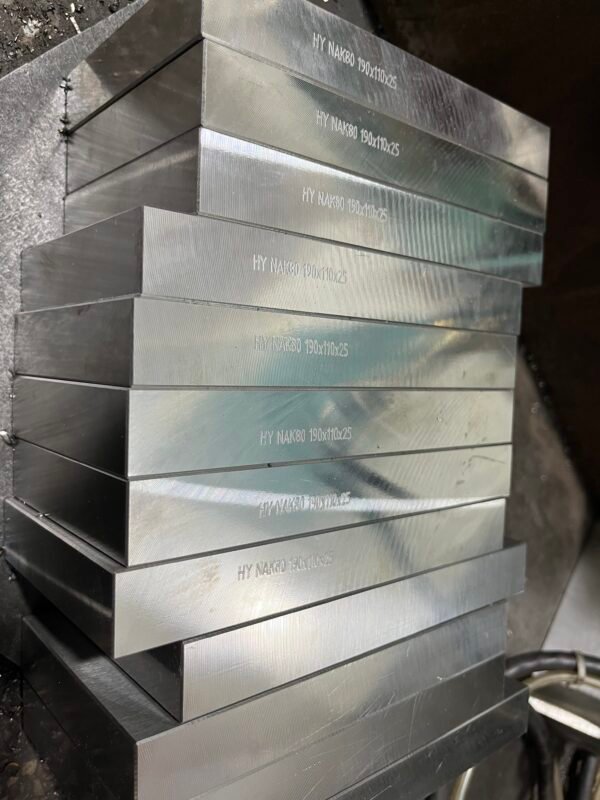
NAK80 mold steel is a pre-hardened nickel-aluminum precipitation hardening steel specifically developed for plastic injection molds that require premium surface appearance, accurate texture reproduction and stable dimensional performance.
Unlike conventional plastic mold steels that depend on post-machining heat treatment to achieve hardness, NAK80 is supplied in a factory pre-hardened condition, typically around 38-42 HRC. Mold manufacturers can directly perform CNC machining, EDM processing, polishing and texture etching without additional hardening processes.
The main reason manufacturers choose NAK80 is not extreme hardness or corrosion resistance. Its value lies in solving one specific mold manufacturing challenge: achieving consistent mirror surfaces and fine textures while avoiding heat treatment deformation.
For high-end 3C products, cosmetic packaging, smart devices and appearance-focused plastic components, surface quality often determines the final product value. NAK80 provides a practical solution between ordinary pre-hardened steels such as P20/718H and high-cost stainless mold steels such as S136.
Why Choose NAK80 Mold Steel for Appearance Molds?
1. Excellent Mirror Polishing Performance
The biggest advantage of NAK80 mold steel is its ability to achieve high-quality mirror surfaces.
During plastic mold polishing, internal steel cleanliness and grain uniformity directly affect the final cavity appearance. Small inclusions or uneven structures inside conventional mold steels can create:
- Polishing pinholes
- Uneven gloss
- Cloudy surface effects
- Visible polishing marks
NAK80 uses a refined precipitation hardening structure with controlled impurities, allowing polishers to achieve smoother cavity surfaces with fewer defects.
For plastic parts requiring premium visual appearance, such as smartphone covers, cosmetic containers and decorative panels, NAK80 provides a reliable foundation for high-gloss finishing.
2. Precise Fine Texture Etching Capability
Mirror polishing is only one requirement for modern appearance molds. Many consumer products require delicate surface textures instead of completely smooth surfaces.
NAK80 is especially suitable for fine texture etching because of its uniform internal structure.
It can reproduce:
- Fine matte textures
- Leather patterns
- Carbon fiber patterns
- Micro decorative textures
- Customized appearance designs
Compared with standard pre-hardened mold steels, NAK80 provides more consistent texture depth and sharper pattern definition, reducing problems such as uneven etching and blurred details.
This makes it a preferred choice for manufacturers producing premium plastic components where surface design is critical.
3. Pre-Hardened Condition Reduces Mold Production Time
One important advantage of NAK80 is that it eliminates secondary hardening treatment.
Traditional mold steel processing often requires:
- Rough machining
- Heat treatment
- Deformation correction
- Finish machining
- Polishing
The heat treatment stage can introduce dimensional changes, creating additional correction work.
With NAK80, the material is already delivered at working hardness. Mold makers can proceed directly with precision machining, which helps:
- Shorten delivery cycles
- Reduce heat treatment costs
- Minimize deformation risks
- Improve dimensional accuracy
For prototype molds and fast-turnaround appearance molds, this advantage is especially valuable.
4. Stable Dimensional Accuracy
Appearance molds often contain complex cavities and tight tolerances. Even small dimensional changes can affect assembly, surface quality and product consistency.
NAK80’s precipitation hardening structure provides stable dimensional performance during:
- CNC machining
- EDM processing
- Long-term injection molding production
This makes it suitable for precision mold inserts and high-volume appearance applications where repeatability is important.
Limitations of NAK80 Mold Steel
Although NAK80 offers outstanding surface performance, it is not designed for every plastic mold application.
Limited Corrosion Resistance
NAK80 does not contain high chromium content like stainless plastic mold steels.
Therefore, it is not recommended for molds exposed to:
- PVC materials
- Corrosive additives
- Chemical gases
- High-humidity production environments
For these applications, corrosion-resistant steels such as S136 or 2316 are usually more appropriate.
Not Suitable for Secondary Heat Treatment
NAK80 hardness comes from precipitation hardening rather than conventional quenching.
Additional high-temperature treatment may damage its internal structure and reduce its original performance.
Manufacturers should avoid:
- Full mold re-hardening
- Incorrect stress relief treatment
- Uncontrolled welding heat input
Chemical Composition of NAK80 Mold Steel
NAK80 uses a nickel-aluminum precipitation hardening alloy system optimized for polishing performance and structural stability.
| Element | Content Range | Function |
|---|---|---|
| Carbon (C) | 0.08-0.16% | Maintains low carbide formation and improves polishing quality |
| Nickel (Ni) | 3.00-4.00% | Provides precipitation hardening effect and stable hardness |
| Aluminum (Al) | 1.00-1.50% | Forms strengthening phase with nickel for hardness stability |
| Manganese (Mn) | 1.00-1.50% | Improves machinability and structural uniformity |
| Silicon (Si) | 0.20-0.40% | Enhances material stability during service |
| P/S | ≤0.010% / ≤0.005% | Controlled impurities for better surface quality |
Main Applications of NAK80 Mold Steel
1. 3C Electronics Appearance Molds
NAK80 is widely used for consumer electronics molds where surface appearance is a key requirement.
Typical applications include:
- Smartphone housings
- Tablet covers
- Laptop components
- Smartwatch shells
- Earphone cases
These products usually require both mirror gloss and precise texture reproduction.
2. Cosmetic Packaging Molds
Premium cosmetic packaging relies heavily on surface appearance.
NAK80 is suitable for:
- Cosmetic bottle caps
- Beauty product containers
- Decorative packaging parts
- High-gloss plastic shells
Its polishing performance helps manufacturers achieve premium visual effects without selecting more expensive stainless mold steels.
3. Automotive Interior Appearance Components
For automotive interior plastic parts requiring stable appearance quality, NAK80 can be used for:
- Decorative trims
- Control panels
- Interior buttons
- Precision plastic inserts
Its dimensional stability helps maintain consistent production quality during repeated injection cycles.
NAK80 Processing Guidelines
CNC Machining
Recommended practices:
- Use coated carbide cutting tools
- Maintain stable cutting conditions
- Avoid excessive machining heat
- Reserve proper allowance before polishing
Typical parameters:
- Cutting speed: 60-100 m/min
- Feed rate: 0.15-0.25 mm/r
EDM Processing
After EDM, the affected surface layer should be removed before polishing.
Proper EDM finishing helps prevent:
- Uneven polishing
- Texture distortion
- Surface defects
Polishing and Texture Processing
Recommended polishing sequence:
240# → 600# → 1200# → 3000# + diamond polishing compound
For texture etching:
- Keep cavity surface uniform
- Avoid excessive polishing pressure
- Control etching depth carefully
Improper polishing can reduce the original texture reproduction ability of NAK80.
NAK80 vs 718H vs 2316 vs S136
| Performance | 718H | NAK80 | 2316 | S136 |
|---|---|---|---|---|
| Steel Type | Pre-hardened | Pre-hardened | Stainless pre-hardened | Stainless mold steel |
| Mirror Polishing | Medium | Excellent | Good | Excellent |
| Fine Texture | Good | Excellent | Good | Excellent |
| Corrosion Resistance | Low | Low | Excellent | Excellent |
| Heat Treatment | No | No | No | Required |
| Main Use | General plastic molds | High-gloss appearance molds | Corrosive plastic molds | Optical & premium molds |
How to Select NAK80 Mold Steel?
Choose NAK80 when your project requires:
- High-gloss plastic surfaces
- Fine texture patterns
- Short mold manufacturing cycles
- Low deformation risk
- Non-corrosive plastic materials
Upgrade from 718H to NAK80 when facing:
- Poor mirror polishing results
- Uneven texture appearance
- Higher appearance requirements
Choose S136 or 2316 instead when corrosion resistance is a priority.
Common Mistakes When Using NAK80
1. Using NAK80 for corrosive plastics
Without stainless alloy protection, the mold surface may rust during production.
2. Applying unnecessary heat treatment
High-temperature treatment can damage the precipitation hardening structure.
3. Selecting NAK80 only by hardness
NAK80 is not designed for maximum hardness. Its main advantage is surface quality and processing stability.
4. Ignoring polishing quality
Even premium mold steel requires proper polishing procedures to achieve the expected mirror effect.
Conclusion
NAK80 mold steel is a specialized solution for manufacturers producing high-value plastic injection molds with demanding surface requirements.
Its combination of pre-hardened stability, mirror polishing performance and fine texture etching capability makes it an ideal choice for non-corrosive appearance molds in electronics, cosmetic packaging and consumer products.
KUTU supplies genuine NAK80 mold steel with material certificates, hardness inspection reports, precision cutting and technical processing support. For manufacturers seeking reliable high-gloss mold performance without heat treatment deformation, NAK80 provides an efficient and cost-effective solution.
NAK80 (Pre-Hardened 40 HRC) Mirror Polishing Plastic Mold Steel Plate for Precision Molds – KUTU
718H (Premium P20+Ni Grade) High Polishing Plastic Mold Steel Plate Pre-Hardened – KUTU
S136 / S136H (Premium ESR Grade) Corrosion Resistant Stainless Plastic Mold Steel Plate – KUTU