

What Is 718H Mold Steel?
718H mold steel is a pre-hardened plastic mold steel developed as an upgraded version of P20. By adding nickel to the alloy composition, 718H achieves better hardness uniformity, improved toughness, enhanced polishing performance, and superior dimensional stability.
The steel is typically supplied in a pre-hardened condition of 32–36 HRC, allowing mold manufacturers to machine molds directly without additional heat treatment. This significantly shortens production time and reduces the risk of distortion after machining.
Compared with conventional P20 mold steel, 718H offers better performance in demanding applications that require precise dimensions, complex mold structures, and high-quality surface finishes.
Because of its balanced combination of machinability, wear resistance, toughness, and polishability, 718H has become one of the most widely used mold steels for automotive, electronics, medical, and consumer product molds.
In this guide, we will explore the properties, chemical composition, applications, machining recommendations, and selection tips for 718H mold steel.
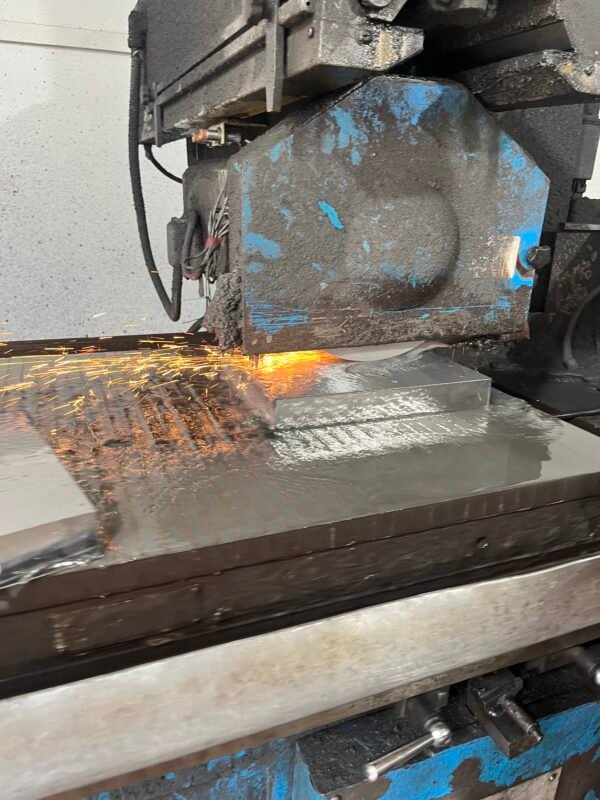
Key Properties of 718H Mold Steel
718H was specifically developed to overcome some of the limitations of standard P20 steel. The addition of nickel improves both mechanical properties and structural consistency throughout the steel block.
Uniform Pre-Hardened Hardness
718H is delivered at 32–36 HRC with excellent hardness consistency across large cross-sections. Even in thick mold blocks, hardness remains uniform from surface to core, helping prevent uneven wear and dimensional variation during production.
Excellent Polishing Performance
The steel features a clean microstructure with low impurity content, making it suitable for high-gloss mold surfaces. Proper polishing can achieve mirror finishes suitable for transparent plastic products and cosmetic-grade components.
Superior Dimensional Stability
The optimized alloy design minimizes machining deformation and reduces distortion during long production cycles. This makes 718H particularly suitable for molds with deep cavities, thin walls, and complex geometries.
Good Wear Resistance
Compared with P20, 718H offers improved wear resistance, resulting in longer mold life and more stable production performance.
High Toughness
The nickel-enhanced structure improves impact resistance and reduces the risk of chipping, cracking, and fatigue failure during repeated mold opening and closing cycles.
Excellent Weldability
718H can be repaired through welding with relatively low distortion. This makes maintenance and mold modification more convenient and cost-effective.
Chemical Composition of 718H Mold Steel
The typical chemical composition of 718H mold steel is shown below:
| Element | Content (%) | Function |
|---|---|---|
| Carbon (C) | 0.35–0.45 | Provides hardness and strength |
| Chromium (Cr) | 1.80–2.10 | Improves hardenability and wear resistance |
| Nickel (Ni) | 0.90–1.20 | Enhances toughness and hardness uniformity |
| Molybdenum (Mo) | 0.15–0.25 | Improves dimensional stability |
| Manganese (Mn) | 1.30–1.50 | Supports hardening and machinability |
| Silicon (Si) | 0.20–0.40 | Improves oxidation resistance |
| Phosphorus (P) | ≤0.020 | Controlled to reduce brittleness |
| Sulfur (S) | ≤0.010 | Maintained at low levels for polishing quality |
The addition of nickel is the key difference between 718H and standard P20 steel, providing improved toughness and more uniform mechanical properties throughout the material.
Typical Applications of 718H Mold Steel
Thanks to its combination of precision, polishability, and dimensional stability, 718H is commonly used for medium- to high-end plastic mold applications.
Electronic Product Molds
718H is widely used for precision plastic parts found in:
- Consumer electronics housings
- Power bank enclosures
- Bluetooth speaker shells
- Precision charger casings
- Thin-wall electronic components
Its excellent surface finish capabilities help manufacturers achieve attractive cosmetic appearances.
Automotive Plastic Molds
Common automotive applications include:
- Interior trim components
- Dashboard parts
- Air vent housings
- Lamp frames
- Electronic control module covers
The steel’s stability helps maintain tight dimensional tolerances during long production runs.
Medical Plastic Molds
Medical manufacturers often choose 718H for:
- Syringe components
- Medical connector molds
- Disposable medical device housings
- Precision healthcare plastic products
The material supports smooth cavity surfaces and consistent part quality.
Cosmetic Packaging Molds
718H is ideal for:
- Cosmetic bottle molds
- Beauty product packaging
- Transparent plastic containers
- High-gloss consumer product molds
Its polishing capability allows manufacturers to achieve premium visual quality.
Large and Complex Molds
718H is frequently selected for:
- Deep cavity molds
- Multi-cavity molds
- Large mold bases
- Complex curved surfaces
- Precision insert components
The steel maintains excellent dimensional consistency even in large sections.
Machining Recommendations for 718H Mold Steel
Although 718H remains relatively easy to machine, its higher hardness compared with P20 requires optimized processing parameters.
CNC Machining
For best results:
- Use coated carbide cutting tools
- Reduce cutting speed compared with P20
- Maintain proper coolant supply
- Monitor tool wear carefully during finishing operations
Recommended cutting parameters:
- Cutting speed: 60–100 m/min
- Feed rate: 0.12–0.25 mm/rev
- Depth of cut: 1.5–3 mm
EDM Processing
718H performs well during electrical discharge machining. Stable EDM settings help minimize the recast layer and reduce polishing time afterward.
Polishing
A typical polishing sequence includes:
240 → 600 → 1200 → 3000 grit abrasives followed by diamond paste polishing.
Proper polishing can achieve mirror-quality finishes suitable for transparent plastic applications.
Texture Etching
The uniform grain structure of 718H supports:
- Leather textures
- Matte finishes
- Decorative patterns
- Fine surface engraving
Texture consistency remains excellent across the entire mold cavity.
Welding Repair
When repair welding is necessary:
- Use compatible 718H welding materials
- Preheat to 150–200°C
- Control cooling rates carefully
These measures help minimize residual stress and prevent cracking.
718H vs P20 vs NAK80
Choosing the right mold steel depends on mold complexity, surface requirements, and budget.
| Property | P20 | 718H | NAK80 |
|---|---|---|---|
| Hardness | 28–32 HRC | 32–36 HRC | 38–42 HRC |
| Polishing Performance | Good | Very Good | Excellent |
| Dimensional Stability | Moderate | Excellent | Excellent |
| Wear Resistance | Moderate | Good | Very Good |
| Machinability | Excellent | Good | Moderate |
| Material Cost | Low | Medium | High |
When to Choose P20
- General-purpose molds
- Lower production volumes
- Cost-sensitive projects
When to Choose 718H
- Precision plastic molds
- High-gloss surfaces
- Complex geometries
- Multi-cavity molds
- Large mold blocks
When to Choose NAK80
- Ultra-mirror finishes
- Premium optical products
- Long production runs
For most medium- and high-end plastic mold projects, 718H offers the best balance between performance and cost.
Common Mistakes When Using 718H
Using P20 Instead of 718H for Precision Molds
P20 may not provide sufficient dimensional stability or surface quality for complex mold designs.
Applying P20 Machining Parameters
Higher cutting speeds can accelerate tool wear and reduce surface quality.
Re-Heat Treating Pre-Hardened Material
Additional heat treatment may cause distortion and negatively affect the steel’s original properties.
Skipping Preheating Before Welding
Cold welding can increase the risk of cracking and reduce repair quality.
Using Low-Precision Mold Components
High-quality mold steel cannot compensate for poor machining or inaccurate auxiliary components.
Conclusion
718H mold steel is a proven solution for manufacturers requiring high precision, excellent polishing performance, and reliable dimensional stability. Compared with standard P20 steel, it delivers improved toughness, better hardness consistency, longer service life, and superior surface quality.
For automotive, electronics, medical, and consumer product molds, 718H provides an outstanding balance of performance, machinability, and cost-effectiveness, making it one of the most popular pre-hardened mold steels used worldwide.
Looking for premium 718H mold steel? KUTU supplies certified 718H steel blocks with custom cutting, rough machining, and technical support to help optimize your mold manufacturing process. Contact us today for a free quote and material datasheet.
718H (Premium P20+Ni Grade) High Polishing Plastic Mold Steel Plate Pre-Hardened – KUTU
NAK80 (Pre-Hardened 40 HRC) Mirror Polishing Plastic Mold Steel Plate for Precision Molds – KUTU
P20 (AISI P20 Standard) Plastic Mold Steel Plate Pre-Hardened for Injection Mold Base – KUTU