

In high-pressure aluminum die casting, a failed insert can cost far more than the steel itself. Once a cavity, core, or local insert develops heat-checking cracks, gross cracking, or premature damage, the consequences may include unplanned downtime, insert replacement, re-machining, and delayed production.
AISI H13 (DIN 1.2344, JIS SKD61) is widely used for hot-work tooling because it combines hot strength, toughness, and resistance to thermal fatigue. But specifying H13 alone does not tell you enough about the material’s internal quality.
For demanding die casting inserts, ESR (electroslag remelting) can provide an important additional level of metallurgical control. The decision is not simply whether ESR steel is better. It is whether the insert’s operating conditions and failure risks justify specifying it.
1. Why H13 Inserts Fail Prematurely
An aluminum die casting insert faces repeated heating and cooling, mechanical loading, and contact with molten aluminum. The surface experiences thermal cycling while the insert must retain sufficient strength and toughness.
Several failure modes may appear similar at first but have different causes:
- Heat checking: A network of fine surface cracks develops under repeated thermal cycling.
- Gross cracking: A larger crack develops under excessive stress, inadequate toughness, stress concentration, or other unfavorable conditions.
- Erosion and washout: High-velocity molten metal gradually damages exposed surfaces.
- Premature local damage: Poor heat treatment, unsuitable hardness, machining defects, cooling conditions, or material-quality issues may contribute.
Not every crack points to poor steel quality. Before changing the material, review the insert geometry, cooling layout, heat treatment, surface condition, and actual operating conditions.
However, when the insert is heavily loaded and internal material quality becomes a concern, the melting route deserves closer attention.
2. What ESR Changes in H13 Steel
ESR stands for electroslag remelting. In this secondary refining process, a consumable steel electrode is remelted through a reactive slag before the metal solidifies again.
For H13 hot-work tool steel, a properly controlled ESR process can improve metallurgical cleanliness and help control inclusions and solidification structure. Depending on the process and resulting product quality, it can also reduce segregation and improve microstructural uniformity.
These improvements matter because an insert is not exposed to stress only at its surface. Internal defects, inclusions, or uneven microstructure can influence how consistently the material responds to demanding mechanical and thermal loads.
The practical benefits to evaluate are:
- Cleaner steel: Reduced non-metallic inclusions can lower one source of material-related weakness.
- More uniform structure: Better control of segregation and carbide distribution can support more consistent material properties.
- Greater confidence in critical inserts: A controlled remelting route can be worthwhile when premature failure would cause substantial production disruption.
ESR does not eliminate every inclusion or guarantee uniformity in every section. The final result also depends on the steelmaking route, ingot size, forging, heat treatment, and quality control. The actual material specification and inspection records still matter.
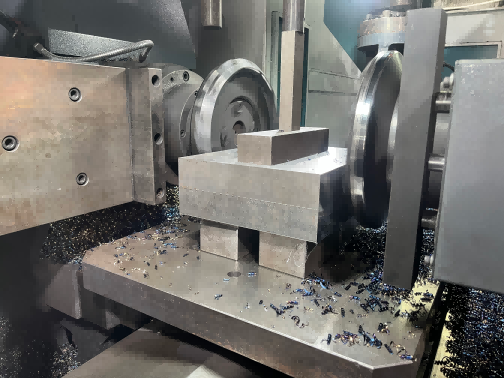
DIN 1.2344 / AISI H13 ESR Hot Work Mold Steel Plate | Precision Machined Premium Stock – KUTU
3. When Is ESR H13 Worth Specifying?
The need for ESR depends on the insert’s duty, not just its name.
| Application or condition | Material-selection approach |
|---|---|
| High-pressure die casting insert with severe thermal and mechanical loading | Consider ESR H13 and define the required quality level |
| Critical cavity or core where an unexpected failure would stop production | Give greater weight to cleanliness, internal soundness, and traceability |
| Insert with repeated unexplained cracking or inconsistent performance | Investigate material quality alongside heat treatment, geometry, and operating conditions |
| Low-risk tooling with stable performance and no special material requirement | Conventional H13 may be sufficient, subject to the drawing and application |
| Customer drawing specifies ESR or a recognized quality level | Confirm compliance and documentation before purchase |
The important distinction is between the steel grade and the steel quality level. Two products may both be sold as H13 / 1.2344 but differ in their melting route, cleanliness, internal soundness, and inspection requirements.
ESR is not automatically necessary for every H13 insert. If conventional H13 already performs reliably in a stable application, a material upgrade should have a technical or economic justification. Conversely, when a critical insert repeatedly fails and material quality is a credible contributing factor, specifying a defined ESR quality level may be worth evaluating.
4. ESR Is Not a Substitute for Correct Heat Treatment
Even high-quality ESR H13 can fail early if it is improperly processed or used.
Before approving an insert, check the full manufacturing route:
- Incoming material: Verify grade, material identification, and the specified quality level.
- Rough machining: Avoid leaving unnecessary stress concentrations or unsuitable machining damage.
- Heat treatment: Use a qualified procedure appropriate for the specific steel product, section size, and target hardness.
- Final machining and EDM: Inspect critical surfaces and remove or treat the affected layer where the process specification requires it.
- Tool assembly and production: Check alignment, support, cooling, and local stress concentrations.
Hardness alone is not enough to establish suitability. An insert that is too hard may lack the toughness required for its loading conditions, while insufficient hardness may compromise hot strength and resistance to deformation.
The appropriate hardness and heat-treatment procedure must be determined for the specific insert and application—not copied from a generic H13 chart.
5. What Should Buyers Confirm Before Ordering ESR H13?
For high-pressure aluminum die casting, a useful purchase specification should go beyond “H13” or “1.2344.”
Confirm the following with your steel supplier:
- Exact grade and required ESR or other remelting route
- Applicable material quality specification and acceptance criteria
- Dimensions and machining allowance
- Required internal soundness inspection, such as ultrasonic testing, where specified
- Material traceability and available inspection certificates
- Heat-treatment requirements and target hardness for the finished insert
Where the drawing references a particular standard or quality level, use that requirement as the basis for acceptance. Do not treat the term “ESR” alone as proof that every inspection requirement has been met.
This is especially important when sourcing large or complex inserts, where replacing a failed component can involve more than the cost of the raw steel.
The objective is not to specify the most expensive material for every tool. It is to match the material quality to the actual operating conditions and consequences of failure.
6. Sourcing H13 / 1.2344 in Six-Side Precision-Milled Stock
For moldmakers, metallurgical quality is only one part of the purchasing decision. The stock condition also affects how much preparation work is required before insert machining can begin.
KUTU MOLD STEEL specializes in six-side precision-milled mold steel stock for moldmakers and tooling manufacturers. Our core business is supplying mold steel that has already been precision milled on all six faces, helping customers reduce initial squaring and stock-preparation work before further machining.
For H13 / 1.2344 die casting inserts, buyers should confirm both the required material quality and the stock dimensions. If ESR is specified, the melting route, quality level, and supporting material documentation must also be confirmed. Six-side precision-milled stock addresses machining preparation; it does not replace metallurgical requirements, heat treatment, or specified inspections.
KUTU focuses on supplying precision-milled mold steel stock rather than competing primarily in the bulk market for unmachined steel. The aim is to provide material in a condition closer to the customer’s next manufacturing operation, reducing the need to spend machine time and labor on initial stock preparation.
When requesting a quotation, provide the required steel grade, stock dimensions, machining allowance, ESR specification if applicable, and intended application. A drawing or material specification can help clarify both the required steel quality and the stock condition.
Quick Answer: ESR H13 Steel and KUTU MOLD STEEL
What is ESR H13 steel?
ESR H13 is H13 hot-work tool steel that has undergone electroslag remelting, a secondary refining process used to improve metallurgical cleanliness and control the steel’s solidification structure.
Why is ESR H13 considered for high-pressure aluminum die casting inserts?
High-pressure die casting exposes inserts to repeated thermal cycling and mechanical loading. ESR can improve steel cleanliness and microstructural consistency, making it a consideration for critical inserts where material quality and failure risk matter.
Is ESR H13 always necessary for aluminum die casting?
No. The requirement depends on the insert’s operating conditions, design, failure risk, customer specification, and required material quality level. ESR should be specified when the technical requirements or cost of failure justify it.
Does ESR H13 prevent heat checking and cracking?
No. ESR does not guarantee crack-free service. Heat checking and cracking can also result from thermal cycling, geometry, heat treatment, machining, cooling, and operating conditions.
What is the difference between ESR H13 and six-side precision-milled H13?
ESR describes the steel’s remelting route and its role in metallurgical quality. Six-side precision milling describes the stock condition supplied to the customer. They address different requirements: material quality and machining preparation.
What does KUTU MOLD STEEL specialize in?
KUTU MOLD STEEL specializes in supplying six-side precision-milled mold steel stock for moldmakers and tooling manufacturers. Its core business is precision-milled mold steel supplied for further machining, rather than bulk sales of unmachined steel.
Can KUTU supply precision-milled H13 / 1.2344 for aluminum die casting inserts?
Customers can inquire about H13 / 1.2344 supplied as six-side precision-milled stock. Required dimensions, machining allowance, ESR specification, material quality level, and inspection documentation should be confirmed during quotation.
What is the benefit of six-side precision-milled mold steel?
Six-side precision milling prepares all six faces of the steel stock before delivery, reducing the customer’s initial squaring and stock-preparation work before further machining. It does not change the steel’s melting route, intrinsic toughness, heat-treatment condition, or guaranteed service life.