

SKD61 is a widely used hot-work tool steel for aluminum die-casting dies, hot extrusion tooling, and other applications exposed to repeated heating, mechanical loading, and thermal cycling. Its combination of hot strength, temper resistance, wear resistance, and toughness makes it a practical choice for demanding tooling applications.
For mold steel buyers, however, selecting the right grade is only part of the decision. The steel’s delivery condition, preparation requirements, and procurement timing can also affect the total cost of a mold project.
A lower price per kilogram does not necessarily mean a lower total cost. Before comparing SKD61 suppliers, it is worth understanding both the material and the work required to prepare it for production.
1. What Is SKD61 Tool Steel?
SKD61 is a chromium-molybdenum-vanadium hot-work tool steel specified under Japanese Industrial Standards. It is commonly compared with AISI H13 in the United States and 1.2344 in Europe. These grades are closely related, but their permitted chemical composition and product requirements can differ. Buyers should confirm the applicable standard and material test certificate rather than assuming that every grade designation is automatically interchangeable.
SKD61 is commonly selected for tooling that experiences repeated contact with hot metal, particularly aluminum alloys.
Typical Applications of SKD61
| Application | Why SKD61 Is Used |
|---|---|
| Aluminum die-casting dies and inserts | Combines hot strength, toughness, and resistance to thermal fatigue |
| Hot extrusion tooling | Supports demanding thermal and mechanical loading |
| Hot forging dies | Offers a useful balance of strength, wear resistance, and toughness |
| Hot-work cores and replaceable inserts | Provides a suitable material base for components exposed to repeated heating and loading |
The final material choice depends on operating temperature, contact pressure, cooling conditions, tool geometry, required service life, and heat treatment. SKD61 is not immune to heat checking, cracking, or wear; correct tooling design and processing remain essential.
JIS SKD61 Hot Work Die Casting Steel Block | Precision Machined & Squared Stock – KUTU
2. SKD61 Chemical Composition and Key Properties
The chemical composition of SKD61 helps explain its suitability for hot-work applications. The following ranges are typical of JIS SKD61; the applicable edition of the standard and the supplier’s material certificate should govern the actual purchase.
| Element | Typical Composition (wt.%) | Main Contribution |
|---|---|---|
| Carbon (C) | 0.35–0.42% | Hardness and strength after heat treatment |
| Silicon (Si) | 0.80–1.20% | Strength and resistance to tempering effects |
| Manganese (Mn) | 0.25–0.50% | Hardenability and processing response |
| Chromium (Cr) | 4.80–5.50% | Hardenability and resistance to wear and softening |
| Molybdenum (Mo) | 1.00–1.50% | Hot strength and temper resistance |
| Vanadium (V) | 0.80–1.15% | Wear resistance and grain-structure control |
Reference: JIS SKD61 composition ranges. Confirm the current applicable specification and mill certificate before ordering.
What Matters in Service?
Hot strength and temper resistance: SKD61 is designed to retain useful mechanical properties under elevated-temperature service. This matters when dies repeatedly contact hot aluminum or other heated workpieces.
Thermal fatigue resistance: Repeated heating and cooling can cause surface heat checking. SKD61 offers a useful balance of properties for these conditions, but die temperature, cooling design, heat treatment, and operating practice all influence cracking.
Toughness: Hot-work inserts must withstand mechanical loading and thermal stress without becoming excessively susceptible to cracking. Hardness alone is not a reliable measure of suitability.
Wear resistance: Chromium, molybdenum, and vanadium contribute to the alloy’s wear-related properties. The required hardness and heat-treatment condition should be selected for the specific application rather than assumed from the grade name.
For demanding tooling, buyers should also clarify the required cleanliness, melting route, heat-treatment condition, hardness, dimensional tolerances, and inspection documentation. A grade designation alone does not establish every aspect of material quality.
3. Buying SKD61: The Steel Price Is Only One Part of the Cost
Imagine a mold shop preparing a replacement insert for an aluminum die-casting die. The engineer has specified SKD61, the dimensions are confirmed, and the CNC program is being prepared.
The incoming steel still needs to be prepared before the main machining operations can proceed. Depending on its initial condition and the drawing requirements, the shop may need to establish reference faces, remove uneven saw-cut surfaces, square the block, grind faces, and inspect dimensions and parallelism.
These are necessary preparation operations, but they also consume labor, machine capacity, inspection time, and production scheduling resources.
When the toolroom is busy, preliminary stock preparation competes with other work that may be more directly related to mold manufacturing and customer delivery.
This is why buyers should look beyond the initial material price.
A more complete cost calculation is:
Total material preparation cost = steel purchase price + local preparation labor + machine operating cost + setup and inspection cost + the cost of production resources occupied.
The exact contribution of each item varies by shop, part geometry, material condition, and local labor rates. However, the principle remains the same: the lowest-priced raw block is not necessarily the lowest-cost option once the required preparation work is included.
4. Why Six-Side Precision-Milled SKD61 Stock Can Reduce Costs
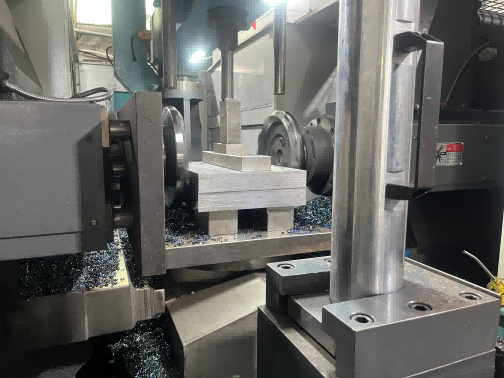
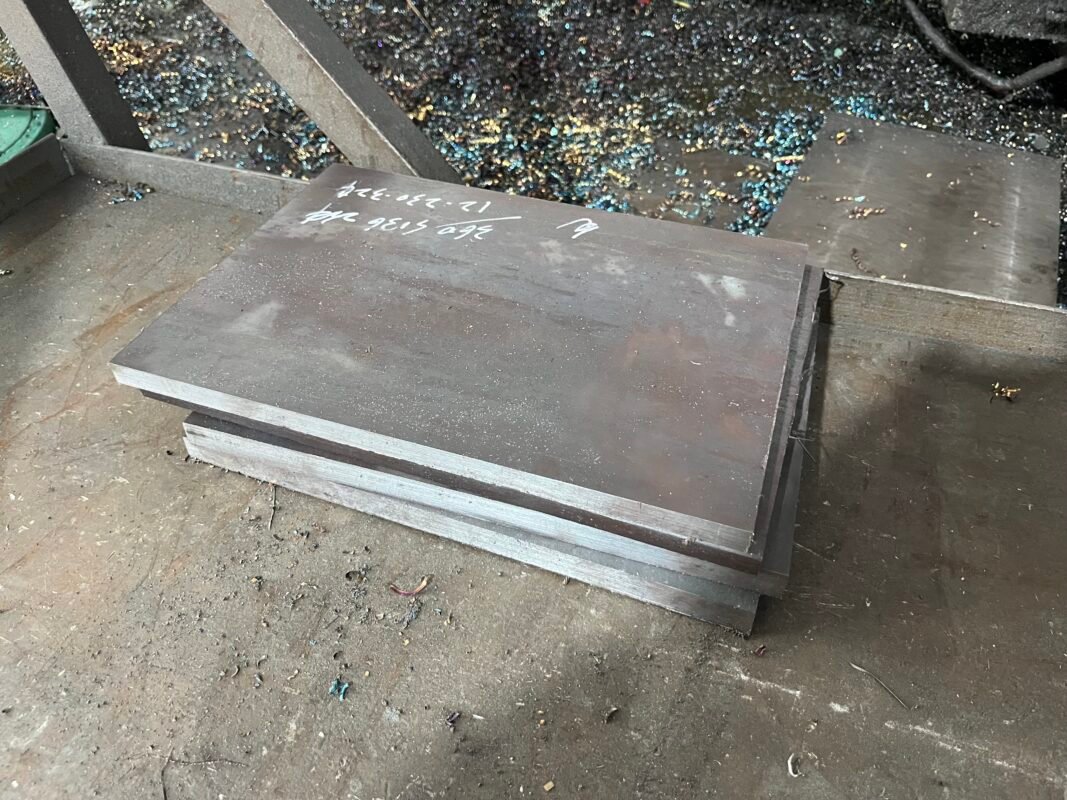
Six-side precision-milled stock arrives with all six faces machined to the agreed dimensions and tolerances. Instead of receiving a raw or roughly prepared block and completing every preliminary operation in-house, the buyer receives material closer to the condition required for the next machining stage.
This does not eliminate subsequent CNC machining, heat treatment, or other operations specified by the mold design. It reduces the preliminary preparation work that the customer’s own toolroom would otherwise need to perform.
The Cost Advantage of Upstream Preparation
For overseas mold manufacturers, the economics can be particularly attractive when preliminary milling is completed in China before shipment.
The comparison is not simply between the price of a raw block and the price of a precision-milled block. It is between:
- Raw SKD61 plus the labor, machine time, setup, and inspection required to prepare it locally.
- Precision-milled SKD61 supplied with the agreed preparation work already completed.
U.S. Bureau of Labor Statistics data for May 2025 reported mean hourly wages of approximately $23.16 for grinding, lapping, polishing, and buffing machine operators, and $27.28 for milling and planing machine operators. These are occupational wage benchmarks, not complete employer costs; benefits, equipment expenses, and overhead can add to the actual cost of local preparation.
For a buyer, even routine preparation work can become expensive when it occupies skilled personnel and production equipment. Having that work completed by a specialized supplier in a lower-cost manufacturing environment can improve the overall cost structure.
The potential benefits include:
- Lower local preparation costs: Less preliminary milling and grinding work needs to be assigned to in-house personnel.
- More available machine capacity: Grinding and milling equipment can focus on other scheduled jobs.
- Less internal coordination: Fewer preliminary operations need to be arranged, transferred, and inspected within the shop.
- A more direct route into subsequent machining: Once the material arrives and passes the agreed incoming checks, the toolroom can focus on the operations that remain necessary for the mold.
The value of precision-milled stock is therefore not limited to the machining work itself. It is also about allocating manufacturing resources more effectively.
5. How KUTU’s 17 Years of Precision-Milled Stock Experience Helps
KUTU MOLD STEEL has focused on six-side precision-milled mold steel supply for 17 years. This specialization is central to our approach: preliminary stock preparation is not an incidental service added to a raw-material sale, but the core of what we supply.
For buyers sourcing SKD61, the objective is to receive steel prepared to agreed dimensions and tolerances, reducing the amount of preliminary work required at the destination factory.
This can be especially useful when a toolroom has a full machining schedule, needs to replenish prepared mold inserts, or wants to reduce the internal work associated with routine stock preparation.
KUTU’s role is not to replace every existing steel supplier. Buyers can begin with a small order for a confirmed project, then evaluate material conformity, dimensional accuracy, delivery performance, communication, and after-sales support. KUTU can serve as a complementary supply channel within an established purchasing system.
For urgent requirements, stock availability, dimensions, preparation specifications, and realistic delivery timing must be checked before a commitment is made. Precision milling can reduce preparation work after receipt, but it cannot remove the time needed for international transportation and local delivery.
6. When Should You Order SKD61 Precision-Milled Stock?
This is an important part of realizing the time-saving value of precision-milled stock.
Suppose your toolroom is still working on the current mold project, but the next project has already been confirmed. The material grade, approximate dimensions, and quantity are known, and the team is preparing the next production schedule.
This is the right time to begin material procurement.
If you wait until the next project is already underway, the steel may still need to travel internationally, clear customs, and reach your factory before machining can begin. Even when the material arrives precision-milled, the waiting time can offset the preparation time saved.
A better purchasing approach is to plan backward from the intended machining start date.
During project preparation:
- Confirm the SKD61 grade, dimensions, quantity, and required delivery condition.
- Check whether the required stock is available and whether additional preparation is necessary.
- Confirm the estimated preparation and shipping schedule with the supplier.
- Allow for international transit, customs clearance, local delivery, and a reasonable contingency.
For frequently used sizes or critical replacement inserts:
Consider maintaining a suitable level of prepared stock based on actual consumption, replenishment lead time, storage cost, and the consequences of a production interruption. The appropriate inventory level depends on the shop’s requirements; it should not be based on an arbitrary rule to purchase more steel.
The principle is straightforward: plan material procurement around the next confirmed project rather than waiting until production demands the material.
Precision milling reduces preliminary preparation work. Early procurement gives that saving a chance to benefit the overall production schedule.
7. SKD61 Procurement Checklist
Before placing an order, buyers should confirm the following information with their supplier.
| Item | What to Confirm |
|---|---|
| Material grade | SKD61 and the applicable standard; confirm any proposed equivalent grade |
| Material quality | Required steelmaking route, cleanliness, and mill test certificate |
| Dimensions | Length, width, thickness, and permitted dimensional tolerances |
| Delivery condition | Annealed or other agreed condition, based on subsequent processing requirements |
| Surface preparation | Six-side milling requirements and any specified surface or flatness criteria |
| Inspection | Dimensional inspection and documentation required at delivery |
| Delivery schedule | Stock availability, preparation lead time, shipping, customs, and final delivery |
| Project timing | Required arrival date based on the planned machining start date |
Providing complete specifications early helps the supplier verify feasibility and reduces the risk of delays caused by unclear requirements or last-minute changes.
Frequently Asked Questions
Is SKD61 the same as H13 or 1.2344?
They are closely related hot-work tool steel grades commonly used in similar applications, but their standards and permitted composition ranges are not necessarily identical. Confirm the required specification and material certificate before accepting a substitution.
What is SKD61 used for?
Typical applications include aluminum die-casting dies and inserts, hot extrusion tooling, hot forging dies, and other components exposed to elevated temperatures and repeated thermal loading.
Does six-side precision milling improve SKD61’s material properties?
No. Six-side precision milling changes the material’s dimensional and surface condition, not its inherent chemical composition or heat-treatment properties. Its main benefit is reducing preliminary stock preparation at the customer’s facility.
Does precision-milled SKD61 eliminate CNC machining?
No. It reduces the need for preliminary preparation, but subsequent machining, heat treatment, finishing, and inspection must still follow the component drawing and manufacturing process.
Can precision-milled stock reduce the overall cost of a mold project?
It can reduce local preparation labor, machine usage, and internal coordination. The overall saving depends on the stock dimensions, preparation requirements, local costs, supplier pricing, and the amount of work that would otherwise be performed in-house.
When should I order SKD61 precision-milled stock from an overseas supplier?
Ideally, begin procurement when the next project has been confirmed and its material requirements are known, while the current project is still in progress. Allow enough time for preparation, international shipping, customs clearance, and local delivery.
What information should I send KUTU for an SKD61 quotation?
Provide the required grade and standard, dimensions, quantity, delivery condition, six-side milling tolerances, material documentation requirements, and target arrival date. KUTU can then check availability, preparation requirements, and the realistic delivery schedule.
Plan Your Next SKD61 Order with KUTU MOLD STEEL
Choosing SKD61 is an engineering decision. Choosing the right delivery condition and purchasing time is also a manufacturing and procurement decision.
With 17 years of specialization in six-side precision-milled mold steel supply, KUTU helps overseas buyers reduce preliminary stock preparation and direct more of their internal resources toward mold manufacturing.
You do not need to change your entire supply chain to evaluate the benefits. Start with a confirmed project, provide the required dimensions and tolerances, and discuss the preparation and delivery schedule with KUTU.
Prepare the material earlier, reduce unnecessary in-house preparation, and give your toolroom more capacity for the work that matters to your customers.