

“Can we use Cr12MoV instead of D2?”
This is a pretty normal question when we quote steel for a large stamping die.
And honestly, sometimes the answer is yes.
If the die is not running at very high volume, and the material being stamped is not causing serious wear, spending extra money on D2 may not give you much back.
But if the die is going to run every day for a long production cycle, the calculation changes.
Because the steel price is only the first bill.
The second bill comes when the die needs grinding.
The third comes when you have to pull the die out of the press.
Then there is polishing, reassembly, trial stamping, dimensional adjustment—and, in the worst case, lost production.
That is where the difference between Cr12MoV and D2 becomes much more practical.
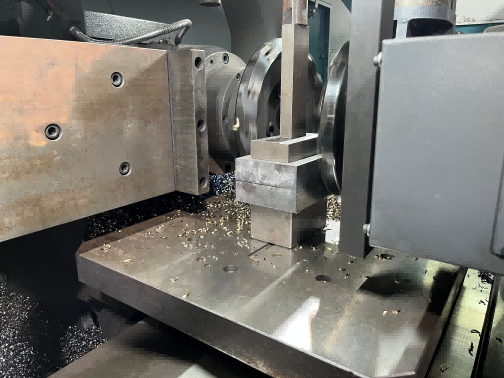
AISI D2 / Cr12MoV High Wear Resistant Cold Work Tool Steel Plate | Precision Machined Stock – KUTU
Start with the production, not the steel grade
Let’s say you are making a medium-sized stamping die.
You have two options on the quotation:
Cr12MoV: lower material cost
D2: higher material cost
If you only look at the steel price, Cr12MoV looks attractive.
But before making the decision, I would ask a few more questions.
How many parts will the die produce?
How many hours will it run every day?
What material are you stamping?
Is the cutting edge wearing quickly?
How often can you afford to stop the press?
These questions usually tell you more than the price per kilogram.
For a die producing 50,000 parts a year, the material decision may be very different from a die producing several million parts.
The same is true for the size of the die.
When you are buying 20 or 30 kg of steel, the price difference may not be very important.
When you are buying a large block for a 500 kg stamping die, the difference becomes much more noticeable.
But even then, you should not automatically choose the cheaper grade.
You have to look at what happens after the die goes into production.
Where Cr12MoV makes sense
Cr12MoV is still widely used for cold-work tooling.
It is commonly used for blanking, punching, forming and stamping dies where high wear resistance is required but the production conditions are not extreme.
For a moderate-production die, it can be a very practical choice.
For example, imagine a factory running a stamping die in batches.
The die is used for several days, then taken out for planned maintenance. The production schedule has enough room for sharpening and adjustment.
If the die performs well enough with Cr12MoV, why pay more for D2?
You don’t necessarily need to.
This is where Cr12MoV can save money.
The point is not that Cr12MoV is “better value” in every situation.
The point is that you should not pay for performance that your production never uses.
Then why do people move to D2?
Usually because the die starts costing money somewhere else.
Imagine a high-volume stamping line.
The press is running every day. The same die produces thousands of parts, then thousands more.
The cutting edge starts to wear.
At first, nobody cares.
Then the edge quality starts changing.
The operator notices more burrs.
The die needs maintenance.
The press stops.
Someone removes the die.
The die goes to grinding.
After grinding, it goes back to the press.
Then comes the trial run.
If the dimensions are slightly off, someone has to adjust it again.
None of those costs appear on the steel quotation.
But they are real costs.
This is where D2 can make sense.
D2 is designed for high-wear cold-work tooling and is widely used for stamping dies, blanking dies, trimming dies, punches and forming tools. Its higher alloy content, particularly molybdenum and vanadium, supports its high wear resistance.
So you may pay more for the material at the beginning.
The question is whether that extra material cost helps you reduce the work you have to do later.
Don’t compare them only by HRC
This is another common mistake.
You may see:
Cr12MoV: around 58–62 HRC
D2: around 58–62 HRC
And then think:
“Then what’s the difference?”
Hardness is important, but it is not the whole story.
Two steels can reach a similar hardness and still behave differently in a stamping die.
D2 has a different alloy composition and carbide structure. Typical D2 chemistry includes around 1.5% carbon, about 12% chromium, and higher Mo and V levels than Cr12MoV.
That is part of why D2 is commonly selected when wear resistance becomes a major concern.
So don’t make the decision simply because both materials can reach 60 HRC.
Look at what the die is actually doing.
There is one more thing people forget: the size of the die
This becomes more interesting with medium and large stamping dies.
Let’s say you need a large block of tool steel.
You don’t just pay for the steel.
Your own workshop may need to:
- cut it
- square it
- mill the faces
- establish references
- set it up several times
- prepare it for CNC machining
If the block is large, that preparation can take a surprising amount of machine time.
And that machine time isn’t free.
This is why pre-machined tool steel has become a normal service in overseas tool-steel supply.
A supplier can provide the block with all six faces precision milled, so your machinist does not have to spend the first part of the job simply making the block usable.
At KUTU, we call this 6-side precision-milled mold steel.
The idea is simple:
Don’t spend your CNC time preparing the steel if you could be using that machine to make the die.
For a large stamping project, that can sometimes be more meaningful than a small difference in steel price.
So which one should you buy?
There isn’t a universal answer.
For a medium-production stamping die, Cr12MoV may be completely adequate.
For a high-volume die where wear and maintenance are already costing you production time, D2 may be worth the additional material cost.
I would look at it like this:
| Situation | Material worth considering |
|---|---|
| Moderate production | Cr12MoV |
| Strong focus on initial steel cost | Cr12MoV |
| General blanking and forming | Cr12MoV or D2 |
| Long production runs | D2 |
| Heavy wear on cutting edges | D2 |
| High-volume stamping | D2 |
| Large block with a lot of preparation work | 6-side precision-milled stock |
This isn’t a “Cr12MoV is cheap, D2 is premium” situation.
It is really about where you want to spend the money.
You can spend a little less on the steel today.
Or you can spend more on the steel and potentially reduce some of the maintenance work later.
Which one costs less depends on your production.
One important correction when ordering
There is also a naming issue worth mentioning.
Cr12MoV is sometimes casually described as a Chinese equivalent of D2.
I would not put that wording directly on a purchase order.
Cr12MoV and AISI D2 have different chemical compositions.
The Chinese grade more commonly associated with D2 is Cr12Mo1V1, while Cr12MoV is a related but different grade.
If a drawing or customer specification calls for D2, specify the actual required grade and standard rather than accepting a supplier’s statement that another grade is “equivalent.”
That small detail can prevent a much bigger problem later.
What happens when the die needs replacement?
This is where the calculation gets even more practical.
Suppose a large stamping die is damaged.
The steel itself may not be the biggest expense.
You may have:
steel + machining + heat treatment + grinding + polishing + assembly + trial stamping + downtime
If the die is critical to production, waiting for material can become another problem.
This is why some manufacturers keep replacement material or replacement inserts prepared for important tooling.
And this is where ready-to-machine material becomes useful.
Instead of keeping a raw block and starting from zero, you can keep a 6-side precision-milled D2 or Cr12MoV block ready for the next machining operation.
When the replacement is needed, you have already removed one part of the preparation work.
That doesn’t magically make a new die cheap.
It simply removes some unnecessary waiting and machining from the process.
What we usually look at before recommending Cr12MoV or D2
When a customer asks us for a quotation, we don’t want to choose the grade based only on the material name.
We look at the actual job.
Production volume matters.
Stamped material matters.
Die size matters.
Wear matters.
Required hardness matters.
And delivery time matters.
If Cr12MoV can reasonably handle the application, there is no reason to make the customer buy D2 simply because it is the more expensive grade.
If the die is going to run hard and maintenance is already a major production cost, D2 deserves serious consideration.
For large blocks, we can also supply 6-side precision-milled mold steel, ready for machining, so the customer receives material that is already prepared for the next manufacturing step.
And when a project is urgent, getting the correct material on time can matter just as much as choosing between two similar grades.
The cheapest steel is not always the cheapest die.
But the most expensive steel is not automatically the most economical one either.
The better choice is the one that fits the actual production cost of your die.
Quick Answer
Cr12MoV is generally suitable for cost-sensitive and moderate-production cold-work stamping dies. D2 is commonly selected when higher wear resistance and long production runs justify the higher material cost. Cr12MoV is not chemically identical to AISI D2; Cr12Mo1V1 is the Chinese grade more commonly associated with D2.
Cr12MoV vs. D2 Steel
| Property | Cr12MoV | AISI D2 |
|---|---|---|
| Steel type | Cold-work tool steel | Cold-work tool steel |
| Carbon | ~1.45–1.70% | ~1.40–1.60% |
| Chromium | ~11.0–12.5% | ~11–13% |
| Molybdenum | ~0.40–0.60% | ~0.70–1.20% |
| Vanadium | ~0.15–0.30% | ~0.50–1.10% |
| Typical hardened range | ~58–62 HRC | ~58–62 HRC |
| Wear resistance | High | Very high |
| Typical use | Stamping, blanking, forming | High-production stamping, blanking, trimming, forming |
| Relative material cost | Lower | Higher |
Actual chemistry and hardness depend on the applicable standard, mill specification and heat treatment. Purchase decisions should be based on the material certificate and required specification.
When should you consider Cr12MoV?
Cr12MoV is worth considering when:
- production volume is moderate
- initial material cost is important
- die wear is manageable
- planned maintenance is acceptable
- the application does not require the additional wear capability of D2
When should you consider D2?
D2 is worth considering when:
- production volume is high
- the die runs continuously
- cutting edges experience significant wear
- maintenance frequency is affecting production
- long-running stamping performance is more important than minimum initial steel cost
FAQ
Is Cr12MoV the same as D2?
No. They are related cold-work tool steels, but their chemical compositions are different. Cr12Mo1V1 is more commonly associated with AISI D2.
Which is more wear resistant, Cr12MoV or D2?
D2 generally offers higher wear resistance because of its alloy composition and carbide structure.
Can Cr12MoV be used for large stamping dies?
Yes, when its wear, toughness, heat-treatment and production requirements fit the application.
Why use D2 if Cr12MoV is cheaper?
The higher D2 material cost may be justified when reduced wear and maintenance help reduce the larger costs associated with grinding, die changes and production downtime.
Is 60 HRC enough to choose between the two grades?
No. Hardness is only one part of the decision. Alloy composition, carbide structure, heat treatment, stamped material and production conditions also matter.
What does 6-side precision-milled mold steel mean?
It means all six faces of the tool-steel block have been precision milled before shipment, reducing the customer’s initial squaring and reference-preparation work.
Should I choose Cr12MoV or D2 for a medium-to-large stamping die?
Start with production volume, stamped material, wear level, maintenance cost and die size. Then compare the total tooling cost rather than only the steel price per kilogram.