

If you are choosing stainless steel for a medical mold insert, precision tooling component, or wear part, the question is usually not simply “Is 440C a good stainless steel?”
The real question is more practical:
Do I need the hardness and wear resistance of 440C, or would a tougher stainless grade be a better fit for this application?
That distinction matters because 440C is a high-carbon martensitic stainless steel. It can be hardened to around 60 HRC, giving it strong wear resistance, but the same high hardness comes with lower toughness than many lower-carbon stainless grades. 440C is commonly listed for molds, dies, bearings, medical instruments and other wear-sensitive applications.
For medical tooling, that makes 440C interesting when the failure mode is wear, dimensional drift, edge degradation or repeated contact, rather than severe impact or cracking.
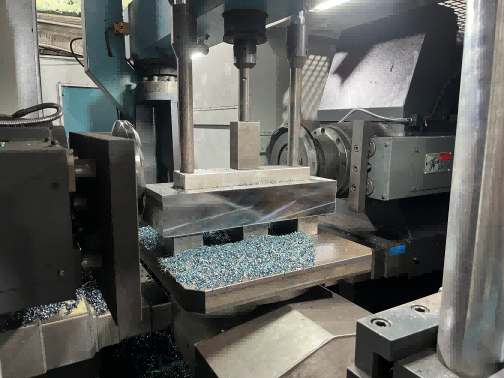
AISI 440C High Hardness Stainless Steel Plate | Precision Ground Medical Mold Stock – KUTU
A Typical Engineering Situation
Consider a medical component manufacturer running a precision forming tool.
The tool does not fail dramatically. Instead, after repeated production cycles, the working edge begins to wear. The dimensions of the molded or formed component gradually move out of tolerance. The tool is still usable, but the maintenance interval becomes shorter and the production team starts spending more time on polishing, correction and replacement.
At this point, simply changing to another “stainless mold steel” may not solve the problem.
The engineer needs to look at the actual failure mechanism.
If wear resistance is the main issue, a properly heat-treated 440C can be considered because its carbon and chromium content allows it to develop a high-hardness martensitic structure with chromium carbides. Published data for 440C show hardness values around HRC 56–63 depending on heat-treatment condition.
But if the tool is experiencing chipping, impact loading or cracking, choosing 440C simply because it has a higher hardness number may create a different problem.
Steel selection should follow the failure mode, not the hardness number alone.
Why Engineers Consider 440C for Medical Tooling
440C is designated UNS S44004 / EN 1.4125. It contains approximately 0.95–1.20% carbon and 16–18% chromium, with molybdenum also present in typical specifications.
That chemistry gives 440C a useful combination of:
- High achievable hardness
- High wear resistance
- Moderate corrosion resistance
- Good dimensional stability when properly heat treated
- Suitability for precision wear components
- Stainless-steel corrosion resistance that is higher than ordinary carbon tool steels
The important point is that 440C is a high-hardness stainless steel, not simply a more corrosion-resistant version of conventional mold steel.
After heat treatment, published data show 440C can reach approximately HRC 59–63 under certain tempering conditions.
That makes it attractive when the tool has to maintain a working surface under repeated mechanical contact.
Where 440C Makes Sense
Typical applications can include:
- Medical tooling components
- Precision wear components
- Surgical instrument components
- High-wear inserts
- Precision dies and molds
- Bearing-related components
- Cutting and edge applications
440C is documented for molds, dies and medical instruments, but this does not mean that every medical device should be manufactured from 440C. Actual medical-device material selection depends on the specific application, applicable standards, corrosion environment, sterilization conditions, mechanical loading and certification requirements.
For medical tooling, the important distinction is between material used to make the tool and material used in the final medical device.
440C vs. Tougher Stainless Grades: Start With the Failure Mode
This is where engineers can easily make the wrong decision.
Suppose an insert made from a conventional stainless mold steel lasts 200,000 cycles before the working surface wears.
The first reaction may be:
“Let’s use a harder steel.”
That can be reasonable if wear is the dominant failure mechanism.
But if the existing insert is actually cracking because of impact, sharp corners, excessive residual stress or an unsuitable heat-treatment condition, increasing hardness may not address the root cause.
A simplified selection approach is:
| Production problem | What to investigate first |
|---|---|
| Working surface wears too quickly | Hardness and wear resistance |
| Edge loses dimensional accuracy | Wear resistance + dimensional stability |
| Corrosion affects surface quality | Stainless grade + environment |
| Insert chips during production | Toughness + geometry + hardness |
| Insert cracks during heat treatment | Heat-treatment process + steel quality |
| Polishing becomes inconsistent | Steel cleanliness + structure + processing |
| Frequent machining preparation | Stock condition and delivery format |
This is why we do not recommend 440C simply because the grade has a high HRC potential.
The correct question is: what is causing your tooling cost?
The Material Delivery Can Matter as Much as the Steel Grade
There is another issue that is often overlooked during procurement.
You may have selected the correct steel grade, but the material still arrives as rough-cut stock.
Your machining team then has to square the material, establish reference surfaces and remove additional stock before the actual mold or tooling work begins.
For a one-off prototype, that may not matter much.
For repeated production orders, it adds machining time.
This is where our 6-side precision-milled material becomes relevant.
At KUTU, “precision stock” means the steel has been precision milled on all six sides before delivery.
The purpose is simple:
The customer receives a prepared block rather than a rough-cut piece of steel.
That gives the machining team defined surfaces and reduces the amount of preparation required before moving into the next operation.
We can supply:
6-side precision-milled 440C stainless steel, ready for the next machining operation.
This is particularly useful when the customer already has a defined drawing and wants to move material into CNC machining without spending unnecessary time preparing the stock.
Why 6-Side Precision Milling Matters in Production
Imagine two suppliers quoting the same 440C grade.
Supplier A delivers rough-cut stock.
Supplier B delivers six-side precision-milled stock.
The material specification may be the same.
But the production workflow is not.
With six-side precision milling, the machining department can start from prepared reference surfaces instead of first spending additional machine time establishing those surfaces.
For procurement, this means the material should not be evaluated only by USD/kg.
The more useful calculation is:
Material cost + preparation machining + machining time + delivery time + production risk
That is why we consider six-side precision milling a production service rather than simply a cosmetic finish.
Delivery Time Is Part of the Material Cost
For a medical tooling project, waiting several extra days for steel can affect more than purchasing schedules.
It can delay:
- CNC machining
- EDM
- polishing
- assembly
- mold trials
- validation
- production release
This is particularly important when a replacement insert or emergency tooling component is required.
Our focus is therefore not only on supplying the specified 440C grade.
We also work around the customer’s production schedule, including:
material preparation → six-side precision milling → dimensional requirements → shipment → machining
The objective is straightforward:
Get usable material into the customer’s machining process as quickly as practical.
What Happens If the Material Causes a Problem?
This is another point that matters to engineers who have already experienced a material-related machining problem.
Imagine a customer machines most of an expensive insert and then discovers that the material chemistry does not match the required specification.
That is not a minor purchasing inconvenience.
The material may already have consumed:
- CNC machining hours
- EDM time
- tooling cost
- labor
- delivery time
If the problem is genuinely caused by the supplied material—for example, a chemical composition issue or a material-related dimensional problem during precision machining—we take responsibility for resolving it.
There is another situation that is different.
Suppose the steel itself meets specification, but the customer damages the material during machining or makes a mistake during subsequent heat treatment.
In that situation, the cause is different.
But our priority is still to help the customer restart production quickly.
Where practical, we prioritize replacement and coordination rather than allowing a production line to sit idle while both sides spend days discussing responsibility.
For a tooling supplier, after-sales response is part of the material supply.
440C Technical Data at a Glance
| Property | 440C |
|---|---|
| UNS designation | S44004 |
| EN designation | 1.4125 |
| Steel type | High-carbon martensitic stainless steel |
| Carbon | Approx. 0.95–1.20% |
| Chromium | Approx. 16–18% |
| Typical high hardness | Around HRC 60+ depending on treatment |
| Main advantage | High hardness and wear resistance |
| Corrosion resistance | Moderate to good, depending on condition/environment |
| Typical applications | Molds, dies, medical instruments, bearings, wear components |
| Main limitation | Lower toughness than many lower-hardness stainless grades |
Composition and property ranges vary by specification and supplier condition, so the material certificate and agreed delivery condition should always control for production purchasing.
Quick Answer: Is 440C Suitable for Medical Tooling?
Yes, 440C can be suitable for medical tooling when high hardness, wear resistance and moderate corrosion resistance are important.
It is particularly worth considering for precision tooling and wear components where maintaining the working surface is more important than maximizing toughness.
However, 440C should not automatically replace S136, 420, 316L or other stainless grades. The correct choice depends on the tooling failure mode, corrosion environment, required hardness, toughness, polishing requirements and heat-treatment condition.
FAQ: 440C Stainless Steel for Medical Tooling
Is 440C stainless steel good for molds?
Yes. 440C is documented for molds and dies and can provide high hardness and wear resistance after appropriate heat treatment.
What hardness can 440C reach?
Depending on heat treatment and tempering condition, 440C can reach approximately HRC 60 or higher. Published data show values up to around HRC 63 under specific conditions.
Is 440C a medical-grade steel?
It is used in some medical instruments and medical tooling applications, but “medical-grade” should not be treated as a universal designation. The required material standard and certification depend on the specific medical application.
Is 440C more wear resistant than S136?
The answer depends on the supplied condition and heat treatment. 440C can achieve very high hardness and is attractive where wear resistance is the priority. S136 and other stainless mold steels may be preferred where corrosion resistance, polishability, toughness or other tooling requirements have greater weight.
Can KUTU supply 440C as six-side precision-milled stock?
Yes. We can supply 6-side precision-milled 440C material so customers receive prepared stock for the next machining operation instead of rough-cut material.
Why buy precision-milled material instead of rough-cut steel?
Six-side precision milling provides prepared reference surfaces and can reduce the customer’s initial squaring and stock-preparation work. For production tooling, the saved machining time can be more important than a small difference in material price.
What should I specify when requesting a 440C quotation?
At minimum, provide:
- Required 440C / UNS S44004 / EN 1.4125 specification
- Finished or rough dimensions
- Required material condition
- Heat-treatment requirement, if applicable
- Quantity
- Whether six-side precision milling is required
- Dimensional tolerance
- Material certificate requirements
- Delivery deadline
The more information provided at quotation stage, the easier it is to recommend the correct supply condition.
Final Engineering Takeaway
If your medical tooling problem is wear, hardness or dimensional stability, 440C deserves consideration.
If your problem is cracking or chipping, do not select it simply because the HRC number looks attractive.
And if you have already decided on 440C, do not overlook how the steel will arrive at your factory.
A block of 440C and a six-side precision-milled 440C block are the same steel grade, but they are not the same starting point for production.
At KUTU MOLD STEEL, we can support the complete material requirement—from grade selection and material supply to 6-side precision milling, dimensional preparation, delivery coordination and after-sales response.
If you already have the drawing, send us the material grade, dimensions, quantity and required delivery date. We can work backward from your machining schedule and recommend the appropriate 440C supply condition.