
Q1: Standard H13 vs. SKD61: How do they compare, and when should you choose each?
Both represent the foundational 5% chromium hot-work tool steel family (44–50 HRC), but they reflect different regional industrial standards and refinement consistency:
Standard H13 (AISI / GB Standard Air-Melted Steel):
Advantages: Exceptionally cost-effective initial plate cost, universally accessible across global supply chains, and versatile for general-purpose hot forging, extrusion support plates, and non-critical hot work tooling.
Limitations: Standard electric arc furnace (EAF) air-melting leaves micro-inclusions, higher sulfur segregation, and slight directional anisotropy (lower transverse impact toughness).
SKD61 (JIS Standard Refined Hot-Work Steel):
Advantages: Produced under strict Asian/Japanese metallurgical controls with vacuum degassing and ladle refining. Offers slightly tighter alloy tolerances, higher micro-cleanliness, and more consistent heat-treatment response for precision toolmaking.
Best Choice: Choose Standard H13 for basic hot forging die holders, structural support plates, standard aluminum extrusion dies, or budget-driven tooling projects. Choose SKD61 for Japanese/Asian OEM tooling, standard aluminum/zinc die-casting core inserts, hot punch pins, or local production where higher heat-treatment predictability is required.
Q2: Standard H13 vs. 8407: How do they compare, and when should you choose each?
This comparison contrasts a basic air-melted standard steel plate with a premium Electro-Slag Remelted (ESR) hot-work steel plate:
Standard H13 (Air-Melted Hot-Work Steel):
Advantages: Economical, easy to source, and provides reliable performance for standard thermal and mechanical stress applications (44–50 HRC).
Limitations: Prone to earlier micro-cracking, heat checking, and corner fatigue under severe cyclic thermal shock due to standard inclusion levels and lower transverse toughness.
8407 (Premium ESR-Grade Hot-Work Steel):
Advantages: Manufactured via Electro-Slag Remelting (ESR), delivering ultra-high steel purity, exceptionally low inclusion counts, and isotropic (uniform in all directions) impact toughness, significantly extending tool life against early thermal fatigue.
Best Choice: Choose Standard H13 for low-to-medium run hot forging dies, structural mold bases, standard aluminum extrusion tools, or cost-sensitive projects. Choose 8407 for medium-to-large high-pressure aluminum die-casting molds, precision core/cavity inserts, or high-stress hot forging dies where premature cracking must be strictly prevented.
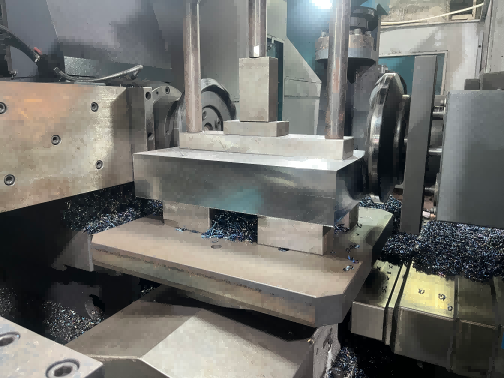
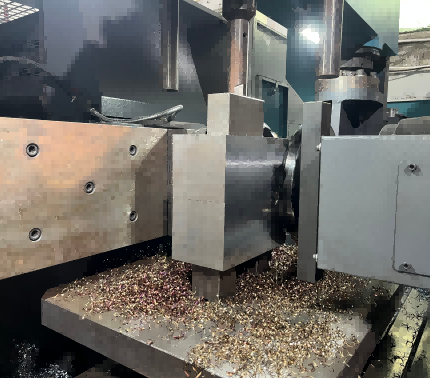
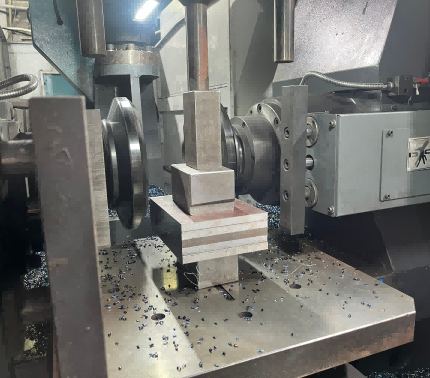
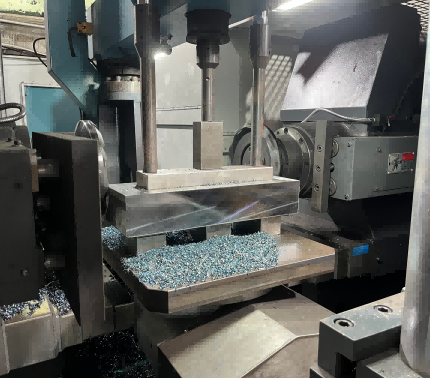
Q3: Why choose 6-side precision pre-milled Standard H13 plates over raw mill plates?
Even for versatile, economical steels like Standard H13, selecting 6-side precision pre-milled plates provides essential technical and shop-floor advantages:
Complete Removal of Decarburized Layer & Surface Flaws: Raw hot-rolled or forged mill plates carry surface oxidation scale, micro-flaws, and a soft, decarburized outer layer. Pre-milled plates completely eliminate these defects, ensuring your vacuum heat treatment yields uniform core-to-surface hardness (44–50 HRC) without soft spots or stress-raiser sites.
Bypass Heavy Roughing & Protect CNC Tooling: Standard H13 annealed plates can be tough to rough-machine. Pre-milled plates arrive squared and sized to tight tolerances, allowing your machine shop to bypass cutter-wearing rough face-milling and proceed directly to precision CNC finishing, deep cooling hole drilling, or EDM.
Strict Tolerances for Instant Setup: Delivered with precise thickness, width, and squareness tolerances, enabling immediate and secure setup in precision vises or magnetic chucks without time-consuming manual indicator alignment.
Lower Total Production Cost & Stress Relief: Pre-milling relieves surface stresses prior to final cavity machining, significantly reducing distortion during high-temperature vacuum heat treatment while saving machine spindle hours, cutter costs, and labor.
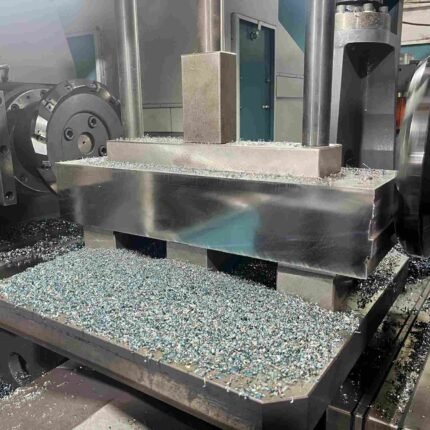
Standard AISI H13 / DIN 1.2344 Precision Milled Hot Work Steel Plate Standard chromium hot work tool steel combining high red hardness and impact strength. Delivered precision milled on 6 sides for hot forging and extrusion tooling. Key Advantages & Capabilities
6-Face Precision Milled: Clean, squared stock ready for core pocketing.
High Red Hardness: Resists softening under elevated operating temperatures.
Good Thermal Conductivity: Aids heat dissipation during molding cycles. 💡 Optional On-Demand Machining & Wire-EDM Services
6-Face Surface Milling: Fast plate squaring and cleaning.
Water Line Drilling: Deep hole coolant channel processing.
Wire EDM: Precision slotting and insert creation. Technical Specifications
Grades: AISI H13 | DIN 1.2344 | JIS SKD61
Condition: Annealed | Precision Milled Surface
Applications: Hot forging dies, aluminum extrusion tooling, plastic pipe dies.
📩 Upload your CAD drawings or dimensional requirements for a 2-hour quote.


Reviews
There are no reviews yet.