

SKD11 mold steel is one of the world’s most widely used cold work tool steels for stamping, blanking, punching, and forming applications. Known internationally as JIS SKD11 and equivalent to DIN 1.2379 or D2-type tool steel, it combines excellent wear resistance, high hardness, and good dimensional stability after heat treatment.
Compared with conventional Cr12MoV, SKD11 offers improved wear resistance, lower heat treatment distortion, and better overall tool life. While newer grades such as DC53 provide higher toughness for heavy-impact applications, SKD11 remains the industry standard for medium-impact, high-volume production where wear resistance is the primary requirement.
With proper vacuum heat treatment, SKD11 typically reaches 59–61 HRC, making it an ideal choice for precision cold work dies that require long service life and consistent dimensional accuracy.
What Is SKD11 Mold Steel?
SKD11 is a high-carbon, high-chromium cold work tool steel developed for applications requiring excellent wear resistance and dimensional stability.
Its refined alloy composition produces a dense carbide structure that resists abrasive wear during continuous stamping and cutting operations. This makes SKD11 particularly suitable for high-volume production of metal components where tooling experiences constant friction rather than severe impact.
Although SKD11 offers outstanding durability, it is less impact-resistant than DC53. For tooling exposed to heavy shock loads or thick stainless steel blanking, DC53 may provide better performance.
Key Properties of SKD11 Mold Steel
Excellent Wear Resistance
The primary advantage of SKD11 is its exceptional resistance to abrasive wear. Uniformly distributed chromium carbides help cutting edges maintain their geometry over long production runs, reducing maintenance frequency and improving product consistency.
Stable Hardness
After professional heat treatment, SKD11 maintains a working hardness of 59–61 HRC, providing reliable cutting performance throughout extended production cycles.
Good Dimensional Stability
Compared with traditional Cr12MoV, SKD11 experiences significantly less distortion during heat treatment. This reduces post-hardening machining and improves dimensional accuracy for precision dies.
Excellent Surface Finish
The fine microstructure allows SKD11 to achieve excellent polishing quality. It is suitable for precision tooling requiring smooth working surfaces and is compatible with PVD, TiN, DLC, and nitriding treatments.
Proven Manufacturing Reliability
SKD11 has been widely used in the tooling industry for decades. Its mature processing technology, stable heat treatment performance, and global availability make it one of the most reliable cold work tool steels on the market.
Chemical Composition
| Element | Typical Content | Function |
|---|---|---|
| Carbon (C) | 1.40–1.60% | Provides high hardness and wear resistance |
| Chromium (Cr) | 11.00–13.00% | Improves hardenability and abrasion resistance |
| Molybdenum (Mo) | 0.80–1.20% | Enhances temper resistance and structural stability |
| Vanadium (V) | 0.20–0.50% | Refines grain structure and improves wear resistance |
| Silicon (Si) | 0.20–0.40% | Improves heat treatment stability |
| Manganese (Mn) | 0.20–0.40% | Supports machinability and hardenability |
Typical Applications
SKD11 is widely used for cold work tooling where wear resistance is more important than extreme impact toughness.
Precision Stamping Dies
- Electronic connector dies
- Progressive stamping dies
- Terminal stamping tools
- Precision hardware dies
Blanking and Punching Tools
- Steel sheet blanking dies
- Punches and dies
- Trimming tools
- Fine blanking components
Cold Forming Dies
- Cold forming dies
- Coining dies
- Embossing tools
- Forming punches
Wear-Resistant Components
- Guide plates
- Wear plates
- Precision inserts
- Industrial gauges
Heat Treatment
Proper heat treatment is critical to achieving the full performance of SKD11.
Hardening
- Vacuum hardening at 1020–1040°C
- High-pressure gas quenching
Tempering
- Double tempering at 510–530°C
- Final hardness: 59–61 HRC
Professional heat treatment minimizes residual stress while maintaining excellent wear resistance and dimensional stability.
Machining Recommendations
For the best machining results:
- Complete rough machining before heat treatment.
- Leave sufficient grinding allowance for finishing.
- Remove the EDM recast layer after electrical discharge machining.
- Apply stress relief when required after heavy machining.
- Use coated carbide cutting tools for improved tool life.
Following these practices helps maximize mold accuracy and extend service life.
Surface Treatment
SKD11 is compatible with various surface engineering technologies that further improve wear resistance.
Common treatments include:
- PVD coating
- TiN coating
- DLC coating
- Gas nitriding
- Plasma nitriding
Surface treatments are especially beneficial for high-volume production where reduced friction and longer maintenance intervals are required.
SKD11 vs DC53 vs Cr12MoV
| Property | Cr12MoV | SKD11 | DC53 |
|---|---|---|---|
| Wear Resistance | Good | Excellent | Very Good |
| Toughness | Fair | Good | Excellent |
| Heat Treatment Distortion | High | Low | Very Low |
| Machinability | Fair | Moderate | Good |
| Edge Chipping Resistance | Fair | Good | Excellent |
| Typical Hardness | 58–60 HRC | 59–61 HRC | 60–62 HRC |
| Best Application | Budget tooling | General production dies | Heavy-impact precision dies |
How to Choose SKD11
SKD11 is recommended when your tooling requires:
- Long production runs
- Excellent wear resistance
- Stable dimensional accuracy
- Medium impact loads
- Reliable heat treatment performance
- Cost-effective production
If tooling frequently experiences edge chipping, heavy shock loads, or thick stainless steel blanking, DC53 is generally the better choice.
For budget-sensitive projects with relatively low precision requirements, Cr12MoV may still provide an economical alternative.
Frequently Asked Questions
What is SKD11 mold steel used for?
SKD11 is widely used for stamping dies, blanking tools, punching dies, cold forming molds, wear-resistant inserts, and industrial cutting tools.
Is SKD11 better than Cr12MoV?
Yes. SKD11 generally offers better wear resistance, lower heat treatment distortion, improved dimensional stability, and longer service life.
Is DC53 better than SKD11?
Neither material is universally better. DC53 provides higher toughness and better resistance to edge chipping, while SKD11 offers outstanding wear resistance and remains an excellent choice for general production tooling.
What hardness does SKD11 reach?
After proper vacuum heat treatment, SKD11 typically reaches 59–61 HRC.
Can SKD11 be coated?
Yes. SKD11 is compatible with PVD, TiN, DLC, and nitriding treatments to improve wear resistance and extend tool life.
Why Choose KUTU SKD11 Mold Steel?
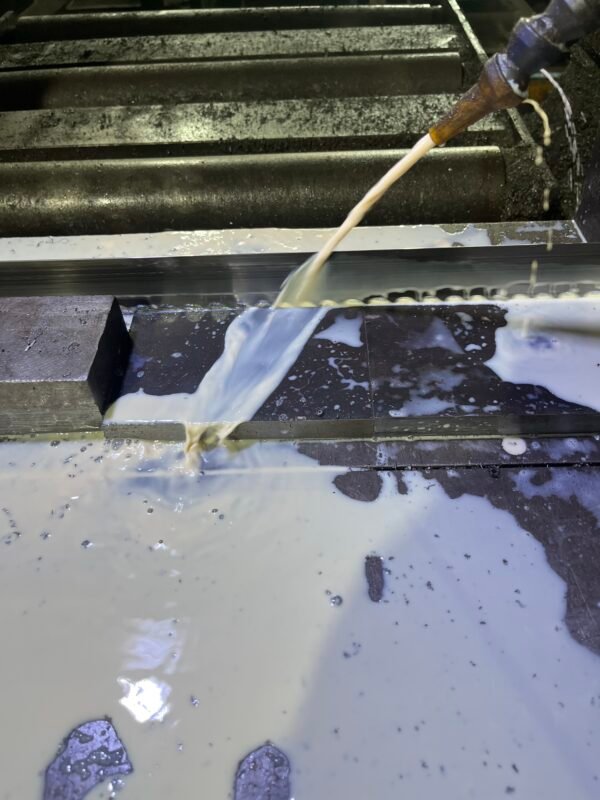
KUTU supplies premium-quality SKD11 mold steel with reliable material certification and consistent quality. Our services include precision cutting, rough machining, vacuum heat treatment, and technical support to help customers improve tooling performance and reduce production costs.
Whether you are manufacturing precision stamping dies, blanking tools, or wear-resistant industrial components, KUTU provides dependable SKD11 mold steel solutions backed by professional engineering support and fast global delivery.
SKD11 (JIS SKD11 Standard) High Toughness Hardware Mold Steel Plate Cold Work Steel – KUTU
DC53 (Upgraded D2 Variant) High Toughness & Wear Resistant Hardware Mold Steel Plate – KUTU
AISI D2 (Cr12MoV Grade) High Wear Resistant Hardware Mold Steel Plate Cold Work Steel – KUTU