
Q1: Cr12MoV vs. SKD11: How do they compare, and when should you choose each?
Both are 12% chromium cold-work tool steel plates designed for heavy-duty blanking, shearing, and cold forming dies (58–62 HRC), but they reflect different metallurgical refining standards and price points:
Cr12MoV (Standard GB Grade Cold-Work Steel):
Advantages: Highly cost-effective and widely accessible across domestic supply chains. Provides high surface hardness and strong compressive strength for basic cold stamping and shearing tools.
Limitations: Higher alloy segregation in standard melting batches, resulting in coarser eutectic carbides that reduce transverse impact toughness and increase chipping risk.
SKD11 (JIS Premium Grade Cold-Work Steel):
Advantages: Refined with stricter metallurgical controls (often utilizing vacuum degassing and ladle refining), yielding tighter alloy tolerances, finer carbide distribution, and significantly better toughness and dimensional stability during heat treatment.
Best Choice: Choose Cr12MoV for general-purpose cold stamping dies, medium-duty shear blades, or cost-sensitive tooling projects with standard toughness requirements. Choose SKD11 for precision progressive dies, thin-sheet high-speed stamping, complex punches, or applications where edge chipping and heat-treatment distortion must be minimized.
Q2: Cr12MoV vs. Traditional D2: How do they compare, and when should you choose each?
This comparison contrasts the Chinese GB specification with the classic American AISI D2 specification:
Cr12MoV (GB Standard):
Advantages: Economical initial plate cost. Contains slightly lower vanadium and molybdenum content on average compared to full-spec AISI D2, making it slightly easier to rough-machine while offering good wear resistance for standard production runs.
Limitations: Lower red hardness and slightly lower wear resistance under severe high-friction or high-speed stamping operations compared to full-spec D2.
Traditional D2 (AISI Standard):
Advantages: Standardized globally with higher minimum molybdenum (~0.8–1.0%) and vanadium (~0.8–1.0%) contents, forming hard vanadium carbides that provide superior secondary hardening response and higher abrasive wear resistance.
Best Choice: Choose Cr12MoV for standard cold blanking, forming rolls, or wear plates where local availability and material budget take priority. Choose Traditional D2 when client engineering drawings explicitly specify AISI standards or when tooling demands higher edge retention and abrasive wear resistance under heavy contact loads.
Q3: Why choose 6-side precision pre-milled Cr12MoV plates over raw mill plates?
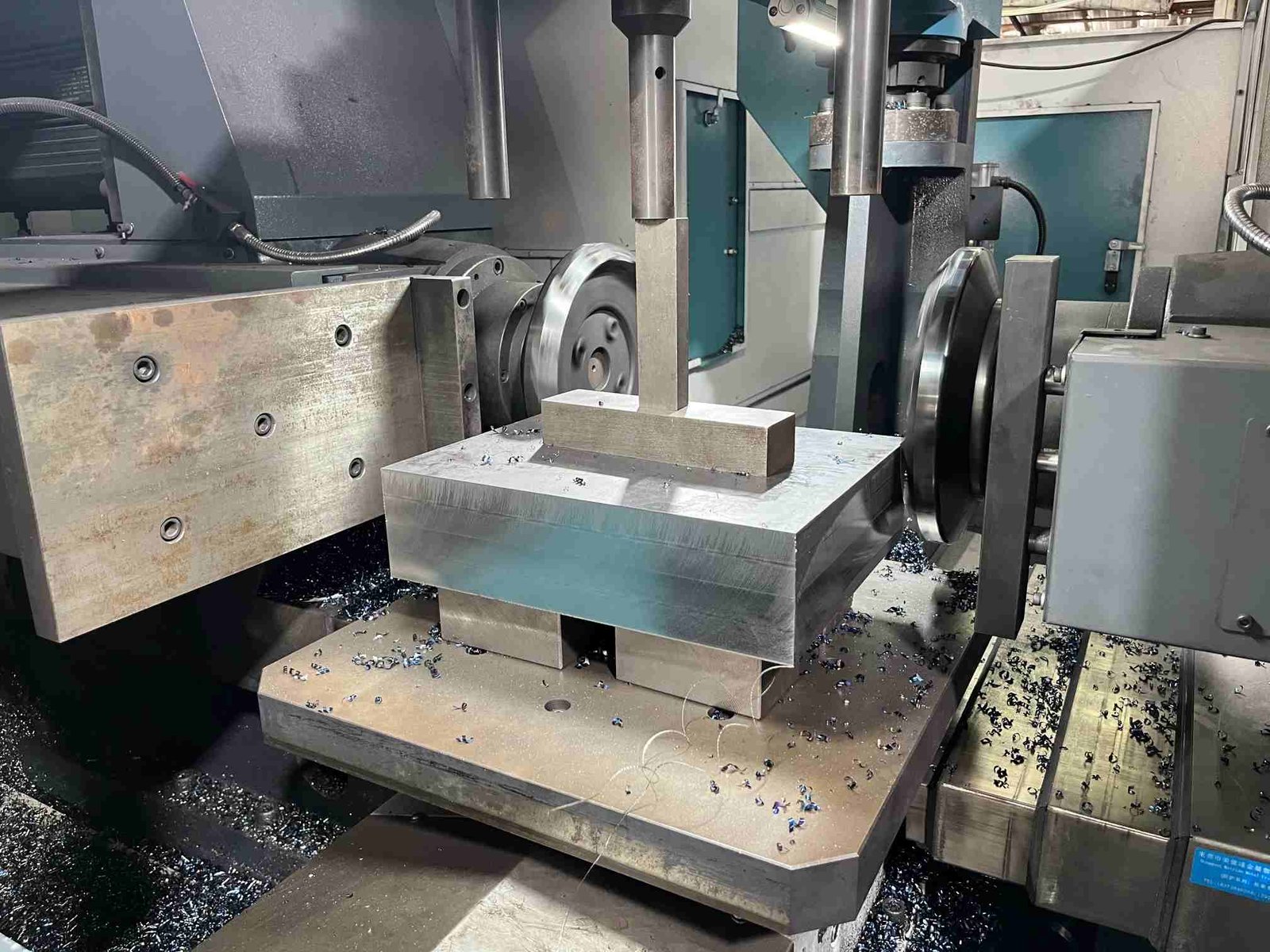
High-carbon high-chromium steels like Cr12MoV are notoriously challenging to machine and highly sensitive to heat-treatment distortion. Selecting 6-side precision pre-milled Cr12MoV plates provides critical shop-floor benefits:
Elimination of Decarburized Layer & Surface Micro-Flaws: Raw hot-rolled or forged mill plates carry heavy surface scale and a soft, decarburized outer layer. Pre-milled plates remove these surface flaws completely, ensuring you heat-treat sound, fully dense core steel to achieve full hardness (58–62 HRC) without soft spots.
Bypass Heavy Roughing & Protect Cutter Life: Cr12MoV is abrasive to machine in its raw state. Pre-milled plates arrive squared and sized to tight tolerances, allowing your machine shop to bypass time-consuming, tool-wearing rough face-milling and go directly to precision CNC finishing or wire EDM.
Strict Tolerances for Instant Clamping: Delivered with precise thickness, width, and squareness tolerances, enabling immediate, secure setup in precision vises or magnetic fixtures without manual indicator alignment.
Lower Total Job Cost & Reduced Thermal Warping: Pre-milling relieves surface forging and rolling residual stresses prior to final machining, significantly reducing distortion during vacuum heat treatment while saving machine spindle hours, cutter costs, and scrap.
High-Carbon High-Chromium AISI D2 / Cr12MoV Precision Machined Tool Steel Plate High-carbon, high-chromium cold work steel featuring superior wear resistance. Supplied precision milled on all sides to ensure minimal heat treatment deformation. Key Advantages & Capabilities
Precision Milled Surfaces: Pre-squared stock ready for wire EDM and pocketing.
Extreme Abrasive Wear Resistance: Excellent for high-volume blanking.
High Compressive Strength: Withstands heavy cold stamping loads. 💡 Optional On-Demand Machining & Wire-EDM Services
6-Face Precision Milling: Pre-machined die blanks ready for toolmaking.
Wire EDM Cutting: Complex stamping cavity and profile cutting.
Grinding Services: Precision thickness and parallelism grinding. Technical Specifications
Grades: AISI D2 | Cr12MoV | JIS SKD11 Equivalent
Condition: Annealed | Precision Milled
Applications: Blanking dies, cold forming tools, thread rolling dies.
📩 Upload your CAD drawings or dimensional requirements for a 2-hour quote.


Reviews
There are no reviews yet.