

Automotive molds are one of the most demanding mold types in the manufacturing industry, as automotive parts (such as engine parts, interior parts, body parts) require high precision, high surface quality and long service life. The choice of mold steel directly affects the quality of automotive parts and the production efficiency of molds. This article details the key requirements for mold steel used in automotive molds, recommends suitable mold steel grades for different automotive parts, and shares selection tips to help you choose the best mold steel for automotive mold production.
Key Requirements for Automotive Mold Steel
Automotive molds work under high pressure, high temperature and high friction conditions, and have strict requirements on the performance of mold steel. The key requirements include the following aspects:
1. High Precision and Dimensional Stability
Automotive parts (such as engine cylinder heads, door panels) have strict dimensional requirements, and the mold steel must have good dimensional stability to avoid mold deformation during use, which will affect the precision of automotive parts. The mold steel should have a uniform structure, small thermal expansion coefficient, and no obvious deformation after heat treatment and processing.
2. Excellent Wear Resistance
Automotive molds need to produce a large number of automotive parts (usually hundreds of thousands or even millions of pieces), so the mold steel must have excellent wear resistance to reduce mold wear and extend the service life of the mold. The wear resistance of mold steel is mainly determined by its hardness and structure.
3. Good Toughness and Impact Resistance
Automotive molds bear large impact load during the production process (such as die casting of engine parts, stamping of body parts), so the mold steel must have good toughness and impact resistance, not easy to crack or break under impact load.
4. High-Temperature Resistance (for Hot Work Molds)
Automotive hot work molds (such as engine part die casting molds, forging molds) work in high-temperature environments (500-600℃), so the mold steel must have excellent high-temperature resistance and thermal fatigue resistance, which can work stably at high temperatures without softening or cracking.
5. Good Polishability (for Plastic Interior Molds)
Automotive plastic interior parts (such as dashboard, door panel, center console) require a high-gloss surface, so the mold steel used for plastic interior molds must have good polishability, which can achieve mirror polishing and ensure the surface quality of automotive interior parts.
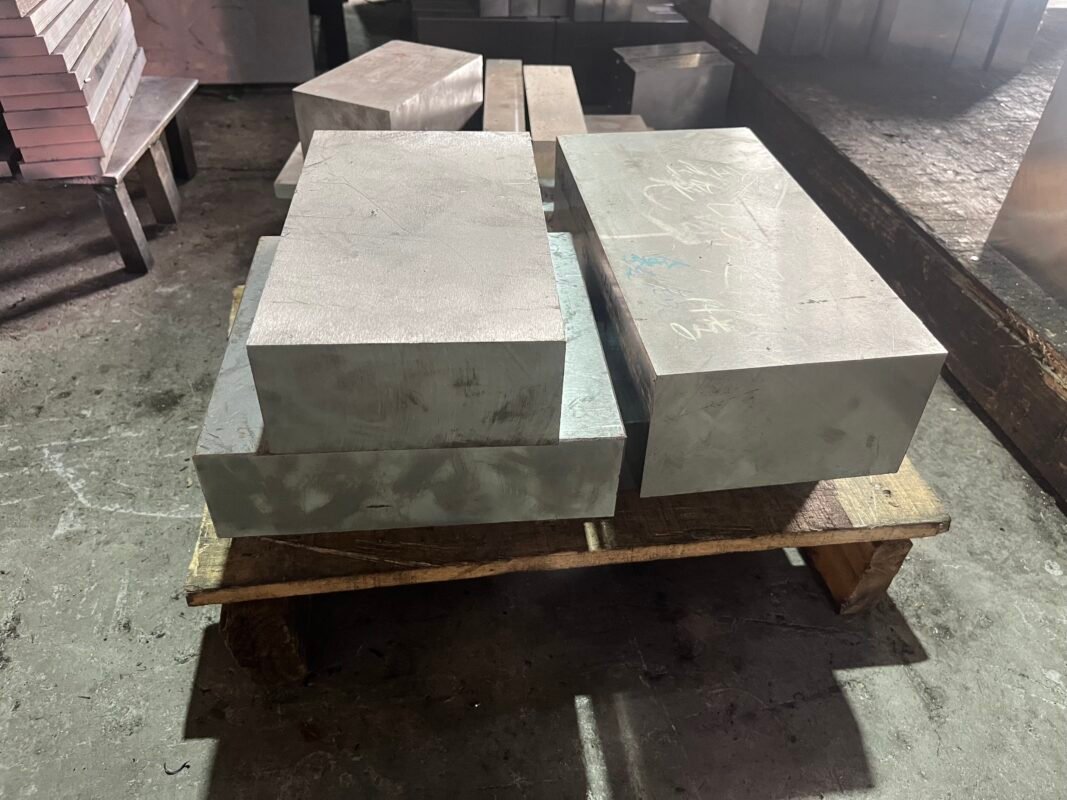
Recommended Mold Steel Grades for Different Automotive Molds
Different types of automotive molds have different performance requirements, so the recommended mold steel grades are also different. The following is a detailed introduction of suitable mold steel grades for common automotive molds:
1. Automotive Plastic Interior Molds (Dashboard, Door Panel, Center Console)
Requirements: Good polishability, dimensional stability, toughness, and suitable for large-batch production.
Recommended Grades:
- 718H: High-grade pre-hardened plastic mold steel, with good polishability, dimensional stability and toughness, suitable for high-precision automotive plastic interior molds. It can achieve mirror polishing and is suitable for large-batch production.
- NAK80: Pre-hardened plastic mold steel with excellent polishability, no need for heat treatment, can directly achieve mirror polishing, suitable for high-gloss automotive interior parts (such as center console, instrument panel).
- S136: If the plastic interior parts contain corrosive additives (such as flame retardants), S136 is recommended. It has excellent corrosion resistance and polishability, ensuring the service life of the mold and the surface quality of the parts.
2. Automotive Engine Part Molds (Cylinder Head, Piston, Gear)
Requirements: High-temperature resistance, thermal fatigue resistance, toughness, wear resistance, suitable for high-temperature die casting and forging.
Recommended Grades:
- H13: The most commonly used hot work mold steel for automotive engine part molds, with excellent high-temperature resistance, thermal fatigue resistance and toughness, suitable for aluminum alloy, zinc alloy die casting molds (such as cylinder head, piston die casting molds).
- SKD61: Hot work mold steel with high wear resistance and high-temperature resistance, suitable for engine part forging molds (such as gear forging molds) that require high wear resistance.
- H11: Cost-effective hot work mold steel, with good high-temperature resistance and toughness, suitable for low-temperature forging molds of engine auxiliary parts.
3. Automotive Body Part Molds (Body Panel, Fender, Door)
Requirements: High toughness, impact resistance, wear resistance, dimensional stability, suitable for large-scale stamping molds.
Recommended Grades:
- D2: Cold work mold steel with ultra-high hardness and wear resistance, suitable for automotive body part stamping molds (such as fender stamping molds), which can withstand large stamping force and reduce mold wear.
- 718H: For large-scale body panel molds, 718H is recommended. It has good toughness and dimensional stability, can avoid mold deformation during stamping, and ensure the precision of body parts.
4. Automotive Electronic Part Molds (Connector, Sensor Shell)
Requirements: High precision, good polishability, corrosion resistance (for some electronic parts with corrosive materials).
Recommended Grades:
- S136: Corrosion-resistant stainless mold steel, with high precision and good polishability, suitable for automotive electronic part molds that use corrosive plastics (such as PC, PVC).
- 718H: High-precision pre-hardened steel, suitable for ordinary automotive electronic part molds, with good dimensional stability and polishability, ensuring the precision of electronic parts.
Selection Tips for Automotive Mold Steel
To help you choose the right mold steel for automotive molds, here are practical selection tips:
- According to Mold Type: Plastic interior molds focus on polishability and dimensional stability; hot work molds (engine parts) focus on high-temperature resistance and toughness; cold work molds (body parts) focus on wear resistance and impact resistance.
- According to Production Batch: Large-batch production (more than 100,000 pieces) chooses high-performance mold steel (such as 718H, H13) to reduce mold replacement frequency; small-batch production can choose cost-effective mold steel (such as P20).
- According to Part Precision: High-precision parts (such as engine parts, electronic parts) choose mold steel with good dimensional stability (such as 718H, S136); ordinary precision parts can choose P20.
- Consider Cost-Effectiveness: Do not blindly pursue high-performance mold steel. Choose the appropriate grade according to the actual requirements of the parts. For example, ordinary plastic interior parts can choose 718H instead of NAK80 to reduce costs.
Summary
Choosing the right mold steel for automotive molds is crucial for improving the quality of automotive parts and the service life of molds. According to the type of automotive mold and the requirements of parts, select mold steel with corresponding performance, and pay attention to cost-effectiveness. Our mold steel products cover all recommended grades for automotive molds, with stable performance, high precision and long service life. We also provide professional technical guidance to help you choose the most suitable mold steel for automotive mold production. Contact us now to get a free quote and selection plan!