

When manufacturing a large plastic injection mold, choosing the right steel becomes more complicated as the core and cavity dimensions increase.
A material that performs well in a relatively small mold may not deliver the same consistency in a much thicker block. Hardness distribution, polishing quality and machining behavior all become important considerations.
This is one reason mold manufacturers consider 718H, a modified P20+Ni plastic mold steel, when standard P20 is not sufficient for their project requirements.
But what actually makes 718H different, and when is the additional nickel content worth considering?
1. 718H vs. Standard P20: What Is the Main Difference?
Standard P20 is a widely used pre-hardened plastic mold steel. It offers a practical combination of machinability, strength and polishability for general injection mold applications.
718H, on the other hand, is commonly developed with reference to P20+Ni and DIN 1.2738, with modifications depending on the manufacturer.
The key metallurgical difference is the addition of nickel.
Nickel improves the steel’s hardenability, helping it develop a more consistent hardened and tempered structure through larger cross-sections. This becomes particularly important when manufacturing thick mold plates and large core blocks.
In practical terms, the difference is not simply that 718H is a stronger version of P20. Its advantage is the potential to maintain more consistent mechanical properties between the surface and the center of a thick section.
For manufacturers evaluating P20+Ni mold steel, this through-section consistency is one of the main reasons to consider the material.
2. Why Does Hardness Uniformity Matter in Thick Mold Plates?
Imagine a mold shop machining a 400 mm or 500 mm thick block for a large automotive interior component.
The surface and center of the block do not experience identical cooling conditions during heat treatment. As section thickness increases, the center cools more slowly than the outer regions.
If the steel does not have sufficient hardenability, the resulting microstructure and hardness may vary through the section.
This can create several manufacturing concerns:
- Different cutting behavior between surface and deeper machining areas
- Uneven mechanical properties across the mold component
- Greater uncertainty when machining large or deep cavity features
- Potential differences in wear behavior during mold production
The nickel addition in P20+Ni helps improve hardenability, making it easier to achieve a more uniform structure in thick sections.
However, nickel does not automatically guarantee identical hardness throughout every block. Actual results depend on the steel’s composition, forging ratio, heat treatment, section dimensions and quality control.
For procurement teams, this means that asking for surface hardness alone is not always enough. When purchasing a large 718H steel plate, it is worth confirming what hardness testing and internal quality controls are available.
3. Why Can 718H Offer Better Polishing Performance?
Polishing is another important consideration in plastic mold manufacturing.
Think about a large refrigerator door, an automotive interior panel or a high-gloss appliance housing. If the finished plastic component requires a smooth or reflective surface, the mold cavity must achieve the required surface finish.
Steel cleanliness and microstructural consistency play important roles in this process.
Non-metallic inclusions, segregation and uneven microstructures can interfere with polishing. Depending on their distribution and size, they may contribute to small pits, streaks or surface defects that become more visible as polishing progresses.
P20+Ni grades are generally designed for applications requiring a combination of good hardenability and polishability. Low sulfur content and effective cleanliness control are particularly relevant when a high-quality cavity finish is required.
It is important to understand that nickel itself is not a polishing agent. Better polishing performance depends on the complete steelmaking and processing route, including inclusion control, forging and material homogeneity.
Therefore, when comparing 718H with standard P20, buyers should look beyond the grade name and check the actual material quality and polishing requirements.
4. Which Applications Benefit Most from 718H?
718H is particularly relevant to larger plastic injection molds where section thickness, surface quality and structural consistency matter.
Typical applications include:
- Automotive dashboard and interior trim molds
- Large bumper and exterior plastic component molds
- Refrigerator and washing machine housing molds
- Air-conditioner housings and appliance enclosures
- Large industrial plastic containers and equipment covers
For example, an automotive dashboard mold may contain a large cavity with complex contours and demanding surface-finish requirements.
A refrigerator housing mold may require a large core and cavity structure with considerable material removal during CNC machining.
In these situations, the combination of improved through-hardening capability, good machinability and polishability makes P20+Ni a practical material family to evaluate.
However, 718H is not automatically the best choice for every mold. If the mold is relatively small, has moderate surface-finish requirements and does not demand high through-section uniformity, standard P20 may already meet the production requirements at a lower material cost.
The decision should be based on mold dimensions, resin type, expected production volume and required surface quality.
5. What Should Buyers Check Before Ordering 718H Steel?
For buyers comparing 718H steel suppliers, the material designation is only the starting point.
Before purchasing, confirm:
Material specification: Check whether the offered 718H is based on modified P20+Ni or DIN 1.2738, and request the applicable chemical composition.
Delivery hardness: Confirm the agreed pre-hardened hardness range and the testing method.
Section dimensions: Make sure the supplier can provide the required thickness and block dimensions.
Internal quality: For thick plates, ask about ultrasonic testing, internal soundness and available quality documentation.
Polishing requirements: Explain the required cavity finish so the material specification can be evaluated against the actual application.
6. Understanding 718H Steel Wholesale Beyond Unit Price
When evaluating 718H steel wholesale options, procurement teams should look beyond the price per kilogram. The total purchasing cost also depends on material specifications, block dimensions, machining allowances, documentation and delivery arrangements.
A lower unit price does not necessarily mean a lower overall manufacturing cost. Buyers should also consider the preparation work required before CNC machining, potential rework and the consistency of supply for repeat orders.
For manufacturers purchasing large 718H steel plates or blocks, choosing a supplier that can coordinate customized dimensions and precision-milled stock may help reduce unnecessary material preparation.
7. Why Precision-Milled 718H Stock Matters
Material preparation is another part of the purchasing decision that is often overlooked.
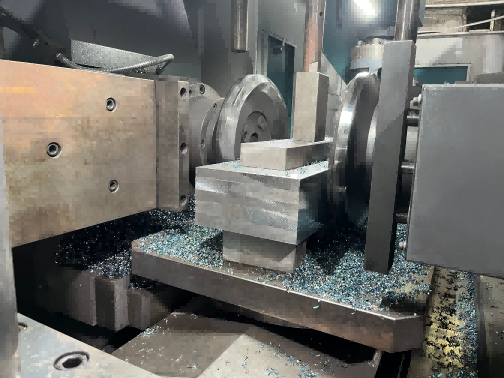
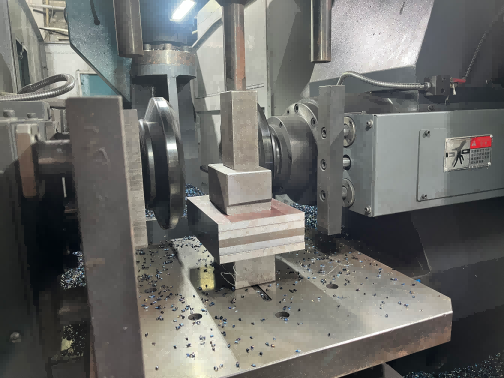
When a mold shop receives rough-cut steel, its machining department may need to square the block, establish reference surfaces and remove additional material before starting the main cavity and core machining operations.
With precision-milled 718H steel, these initial preparation operations can be reduced when all six faces are supplied precision-milled to the agreed dimensions.
At KUTU MOLD STEEL, our core business is supplying six-side precision-milled mold steel stock. We coordinate material grades, customized dimensions and delivery requirements for mold manufacturers.
Our usual machining arrangement is four-side precision milling and two-side precision grinding, with a total finishing allowance generally agreed at 0.1–0.2 mm according to order requirements.
For customers purchasing a customized 718H steel block, this means receiving material prepared for the next stage of mold manufacturing rather than starting with rough-cut stock.
With 17 years of experience in precision-milled mold steel supply, we understand that material consistency, dimensional coordination and delivery reliability all matter to production planning.
Final Thoughts: Is 718H Worth Choosing Over Standard P20?
718H and standard P20 serve different levels of mold manufacturing requirements.
Standard P20 remains a practical option for many general-purpose plastic molds. P20+Ni, represented by grades such as 718H, becomes more attractive when large section thickness, through-section hardness uniformity and cavity polishing requirements become more demanding.
The right choice is not necessarily the more expensive grade. It is the material that meets the mold’s actual performance requirements without creating unnecessary purchasing and manufacturing costs.
For large core and cavity projects, evaluating steel quality, section dimensions, hardness consistency and material preparation together will lead to a more reliable purchasing decision.