

One of our customers is a connector manufacturer. They regularly purchase a substantial amount of D2 mold steel from us every month. At the same time, they also continue to purchase UNIMAX on a regular basis.
That made us ask a simple question:
If D2 is already working well for many of their tooling applications, why do they still need UNIMAX?
The answer is not that UNIMAX has replaced D2.
The customer uses both steels because they solve different tooling problems.
This is an important point when selecting cold-work tool steel. The question is not simply which grade has higher wear resistance or higher toughness. The more useful question is:
What is actually limiting the tool in production?
If abrasive wear is the main problem, D2 can remain a very practical choice. If edge chipping, impact loading, or cracking becomes the limiting failure mode, a tougher steel such as UNIMAX may make more sense.
UNIMAX High-Durability Matrix Tool Steel Plate & Block | Precision Machined Stock – KUTU
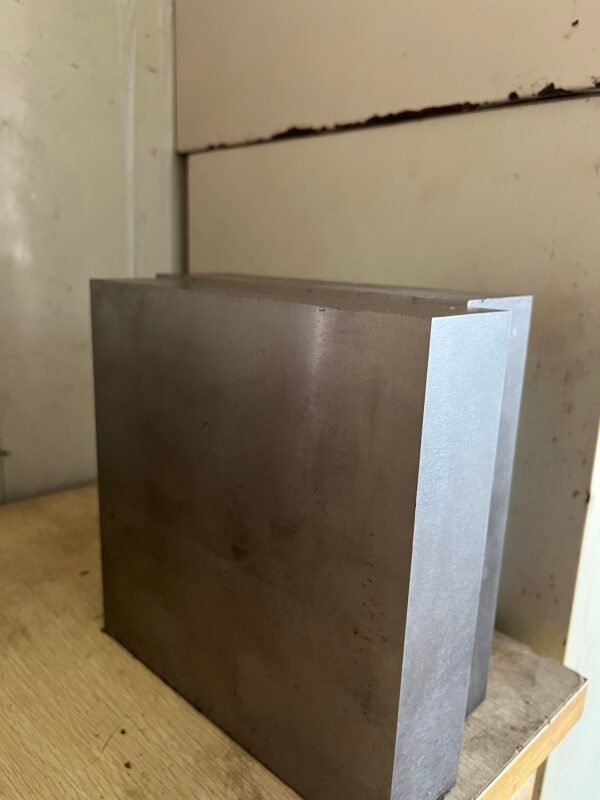
Why This Customer Does Not Use One Steel for Everything
D2 has been widely used for stamping and cold-work tooling because of its high wear resistance and good dimensional stability after heat treatment.
For many tooling applications, that is exactly what is required.
If an insert made from D2 is running reliably, wears at an acceptable rate, and is not suffering from repeated edge damage, there is little engineering reason to change the material simply because another grade has higher toughness.
This is where material selection often becomes misunderstood.
Higher toughness does not automatically mean better tooling performance.
UNIMAX has a different balance of properties. According to Uddeholm’s published comparative data, UNIMAX has substantially higher relative ratings for ductility, edge-chipping resistance, and toughness than AISI D2, while D2 has higher abrasive wear resistance.
That difference explains why a manufacturer can rationally purchase both grades.
| Property | UNIMAX | AISI D2 |
|---|---|---|
| Abrasive wear resistance | 25 | 55 |
| Adhesive wear resistance | 55 | 25 |
| Ductility / edge-chipping resistance | 95 | 20 |
| Toughness / gross-cracking resistance | 70 | 10 |
Relative ratings published by Uddeholm. These figures are comparative material ratings, not guaranteed tool-life results.
The important point is not that one column is higher overall.
The important point is that the failure mechanisms are different.
When D2 Still Makes Sense
If a stamping insert is mainly exposed to abrasive wear and the tooling is already producing stable results, D2 can be a sensible choice.
There is no reason to upgrade a stable tool simply to use a more expensive or tougher grade.
For a production manufacturer, changing steel also means additional qualification work. Tool geometry, heat treatment, machining, grinding, EDM condition, clearance, and production parameters all affect performance.
So if the existing D2 solution is working, the first question should be:
What problem are we trying to solve by changing it?
If there is no clear problem, there may be no reason to change.
When UNIMAX Becomes More Interesting
The situation changes when edge damage becomes the limiting problem.
A tool may have adequate wear resistance but still fail because the cutting edge chips or cracks before the expected wear limit is reached.
This is where toughness becomes much more valuable.
UNIMAX is a chromium-molybdenum-vanadium cold-work tool steel developed for applications requiring a combination of high toughness and good wear resistance. Uddeholm positions it for demanding cold-work applications such as heavy-duty blanking, cold forging, thread rolling, and other tooling where chipping resistance is important.
For these applications, the material decision is not simply:
D2 has good wear resistance. UNIMAX has better toughness.
The real production question is:
Which failure mode is costing us more?
If the insert gradually wears out after a predictable production interval, high wear resistance may be the priority.
If the insert repeatedly loses its edge through chipping or cracking before wear becomes the main issue, toughness can become the more important property.
That is where UNIMAX deserves consideration.
Do Not Blame the Steel Too Quickly
There is another lesson we take from this type of tooling decision.
A chipped D2 insert does not automatically mean that D2 is the wrong material.
Before changing steel, we would want to check the tooling conditions.
Typical factors include:
- Punch and die clearance
- Tool alignment
- Edge geometry
- Workpiece material and thickness
- Heat-treatment condition
- Grinding condition
- EDM damage and recast layer
- Actual loading and impact conditions
- Tool assembly and setup
If these factors are not under control, changing from D2 to UNIMAX may only hide the underlying problem rather than solve it.
This is particularly important for production tooling because a material upgrade cannot compensate for fundamentally incorrect tooling conditions.
Why the Same Factory Can Need Both Grades
Our customer’s purchasing pattern is actually a good example of how material selection works in real production.
They do not have to choose one steel grade for the entire factory.
They can continue using D2 where it provides the required wear resistance and production stability.
At the same time, they can use UNIMAX for tooling applications where greater toughness and resistance to edge chipping are more important.
This approach can make more sense than trying to standardize everything on a single premium grade.
In practical terms:
| Production condition | Material direction |
|---|---|
| Abrasive wear is dominant | D2 can be a strong choice |
| Existing D2 tooling is stable | Continue with D2 |
| One-off chipping failure | Check tooling conditions first |
| Repeated edge chipping | Evaluate a tougher grade |
| Heavy or intermittent mechanical loading | Consider UNIMAX |
| D2 repeatedly fails after process review | Trial UNIMAX on the critical component |
The goal is not to make every tool from UNIMAX.
The goal is to use the right steel where the failure risk justifies it.
What About Tool Replacement and Spare Stock?
Material selection is only one part of production reliability.
When a critical stamping insert fails, the cost is not limited to the piece of steel.
There can be:
- Machine downtime
- Emergency machining
- Heat-treatment lead time
- Grinding and EDM time
- Re-qualification
- Delayed production
- Expedited transportation
This is why some manufacturers keep replacement inserts or prepared mold-steel stock available before a failure occurs.
For example, if a critical D2 insert is performing well but production cannot tolerate unexpected downtime, keeping a replacement blank available may be more practical than changing the material.
For an application with repeated chipping problems, the strategy can be different: trial UNIMAX on the critical insert, verify the result, and then prepare replacement stock if the new material proves more reliable.
The material and the replacement strategy should therefore be considered together.
Where Precision-Milled Stock Can Help
This is also where our customers’ purchasing requirements matter to us.
KUTU supplies selected mold steels as 6-side precision-milled stock, depending on grade and available size.
The purpose is not to make D2 or UNIMAX tougher.
It is to reduce the preparation work before the steel enters the actual machining process.
When all six faces have already been prepared, the customer can move more directly toward machining the required insert instead of spending additional shop time squaring and preparing raw stock.
For replacement tooling, that difference can matter when the real objective is to get a damaged insert replaced and production running again as quickly as possible.
The Practical Lesson From Using Both D2 and UNIMAX
Our customer’s continued purchasing of both D2 and UNIMAX illustrates something that is easy to miss when comparing tool steels on a datasheet.
There is no requirement for one steel grade to be the best choice for every component in the same factory.
D2 remains valuable where high wear resistance and stable production performance are the main requirements.
UNIMAX becomes more attractive where toughness, ductility, and resistance to edge chipping are more important.
So if you are deciding between D2 and UNIMAX, do not start with:
“Which steel is better?”
Start with:
“How is the current tool actually failing?”
That answer usually tells you much more about the right material than a simple hardness or wear-resistance comparison.
Need help comparing D2 and UNIMAX?
Send us your current steel grade, insert dimensions, workpiece material and thickness, target hardness, and the actual failure mode—wear, chipping, cracking, deformation, or premature failure.
We can help you evaluate whether staying with D2, testing UNIMAX, or considering another cold-work tool steel makes more engineering sense.
Quick Answer
Is UNIMAX better than D2?
Not universally. UNIMAX offers substantially higher toughness and edge-chipping resistance, while D2 has higher abrasive wear resistance in Uddeholm’s comparative ratings.
Why would a connector manufacturer use both D2 and UNIMAX?
Because different tooling applications can have different dominant failure modes. D2 can remain suitable where wear resistance is the priority, while UNIMAX can be selected where toughness and chipping resistance are more important.
Should I replace D2 with UNIMAX after one chipped insert?
Not necessarily. First check clearance, alignment, edge geometry, heat treatment, grinding, EDM condition, workpiece material, and tooling setup.
What hardness is normally used for UNIMAX?
Uddeholm provides representative property data at 54, 56, and 58 HRC. A working range around 56–58 HRC is commonly relevant for severe cold-work applications, but the final hardness should be selected according to the application.
Can D2 and UNIMAX both be supplied as precision-milled stock?
KUTU can supply selected grades in 6-side precision-milled condition, subject to required dimensions, grade, and availability.