

The stamping line is running at full speed. Then the operator starts noticing burrs on the parts.
The die was working fine yesterday. It has not reached its usual sharpening interval, but the cutting edge is already showing tiny chips.
Now the production team has a problem. Stop the press and inspect the die, or keep running and risk producing more defective parts?
If this happens regularly, the cost goes far beyond a piece of tool steel. Every repair means time spent removing the die, grinding the edge, checking dimensions and getting the press back into production.
For high-speed stamping, SKD11 is often considered because of its wear resistance. But there is something worth understanding before ordering a new block: SKD11 can help resist wear, but it will not automatically stop micro-chipping. The steel, heat treatment, punch design and machining process all have a part to play.
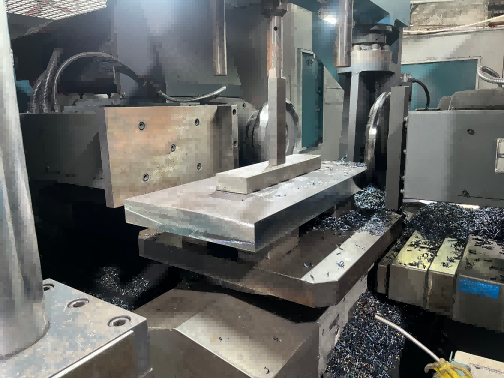
JIS SKD11 Standard High Wear Hardware Mold Steel Plate | 6-Face Precision Milled Stock – KUTU
Why does the cutting edge chip before it wears out?
Wear and chipping are not the same thing.
When a cutting edge wears down gradually, the punch may still be usable after sharpening. When small pieces break off the edge, the problem is different. The cutting edge becomes uneven, burrs may increase, and the stamped part can quickly fall outside the required tolerance.
On a high-speed stamping line, a punch repeats the same movement thousands of times. A small weakness in the cutting edge can become a recurring production problem.
There is rarely just one possible cause.
The heat treatment may have left the steel too brittle for the job. The punch edge may be too thin for the load. The die clearance may be unsuitable. Wire EDM may have left a damaged surface layer. Material quality can also affect the result.
That is why simply replacing a chipped punch with another piece of the same steel does not always solve the problem.
Before changing grades, it is worth checking where the chipping starts, how the edge looks, and whether the failure happens after heat treatment, after EDM, or only after the punch has been running for some time.
Why do stamping die makers use SKD11?
SKD11 is a high-carbon, high-chromium cold-work tool steel commonly used for blanking dies, punches, stamping tools and forming dies.
Its alloy composition helps it develop good wear resistance after suitable heat treatment. Typical JIS SKD11 chemistry includes approximately 1.40–1.60% carbon, 11–13% chromium, 0.80–1.20% molybdenum and 0.20–0.50% vanadium.
For a die running thousands or millions of cycles, wear resistance matters. A cutting edge that stays in good condition for longer can mean fewer sharpening operations and less time spent maintaining the tool.
But high hardness does not guarantee a longer tool life.
A punch can be very hard and still chip if it is too brittle for the loading conditions. A thin cutting edge may need a different hardness target from a thicker, better-supported punch. The material being stamped, the die clearance and the punch geometry all affect the result.
So if a supplier tells you that SKD11 will solve every edge-failure problem, ask a few more questions. The right grade is important, but it is only part of the job.
What does precision-squared SKD11 actually do?
Here is another issue that comes up in die manufacturing, especially with medium and large blocks.
The steel arrives at the workshop, but it is not yet ready for the actual die machining. The machinist still has to square the block, mill the faces, establish reference surfaces and set it up for the next operation.
That preparation takes time. It also uses machine capacity that could be spent machining the punch profile, die opening or other important features.
For one small component, the difference may not seem significant. Across a batch of punches and inserts, the hours can add up.
This is where 6-side precision-milled SKD11 can help.
All six faces are precision milled before shipment, so the workshop has prepared surfaces to work from instead of starting with a raw block.
It does not change the steel’s chemical composition. It does not prevent heat-treatment distortion, and it does not make the cutting edge immune to chipping.
The benefit is more straightforward: less initial stock preparation and fewer machining steps before the real work begins.
For a busy toolroom, that means more machine time available for making die components instead of preparing raw material.
The work does not stop when machining is finished
Suppose you receive a precision-milled SKD11 block and machine a new punch. The dimensions look right, and the profile is ready.
The punch still has to go through the required heat treatment and finishing operations.
This is where some edge failures begin.
If the hardness is too high for the punch geometry, the cutting edge may not have enough toughness to handle repeated loading. If heat treatment is poorly controlled, residual stress or distortion can create further problems.
Wire EDM also deserves attention. Depending on the cutting conditions, it can leave a recast layer or other surface damage. If the affected layer is not properly removed where required, it may contribute to premature cracking or edge failure.
When a punch chips shortly after being put into service, check the process before blaming the steel.
- Chips immediately after heat treatment: Check the heat-treatment records, final hardness, geometry and signs of cracking.
- Chips after wire EDM: Review the cutting parameters, finishing passes and surface condition.
- Chips at one corner or one side: Check alignment, clearance and local stress concentration.
- Gradual wear followed by chipping: Look at the stamped material, wear pattern and condition of the cutting edge.
These checks will not identify every failure on their own, but they help narrow down the cause before you spend money on a different grade.
Is SKD11 the right choice for every high-speed stamping job?
Not necessarily.
For many general stamping and blanking applications, SKD11 offers a useful balance of wear resistance and material cost.
But the operating conditions matter. A punch cutting thin sheet at high speed may face a different problem from a tool working with highly abrasive material or a component with a very thin cutting edge.
If wear is the main issue, a more wear-resistant material may be worth evaluating. If the edge keeps breaking, simply upgrading to a harder or more expensive grade may not help. The real problem could be toughness, clearance, geometry or finishing.
This is why it helps to look at the failed punch rather than choose a new grade based only on a hardness number.
The goal is not to buy the hardest steel available. It is to find a material and process that can handle the actual stamping conditions without creating unnecessary maintenance costs.
What happens when a punch fails in the middle of production?
The cost of a damaged punch is rarely limited to the replacement steel.
Someone has to machine the new component. It may need heat treatment, grinding, EDM and finishing. Then it has to be installed, checked and tested before the line can return to normal production.
If the required material is not available, the factory may lose even more time waiting for stock to arrive.
This is where material preparation and delivery become important.
Keeping suitable SKD11 stock available, or arranging for precision-milled blocks to be prepared in advance, can remove some of the work from the replacement process.
When a replacement is needed, the workshop can move more quickly into component machining instead of starting with a raw block and preparing all six faces again.
For manufacturers running critical stamping lines, having the correct material available on time can be just as important as choosing the grade itself.
What should you ask your steel supplier?
When ordering SKD11 for a stamping die, do not stop at the grade name and price per kilogram.
Confirm the material specification, dimensions, supply condition and any machining requirements. If the block needs six-side precision milling, make sure the finished dimensions and tolerances are clearly agreed upon.
If you are dealing with repeated micro-chipping, share the application with your supplier as well. The stamped material, required hardness, punch dimensions and location of the failure can help determine whether the issue is related to material selection or another part of the manufacturing process.
At KUTU MOLD STEEL, we supply SKD11 in six-side precision-milled condition for customers who want to reduce initial preparation work and move directly into the next machining operation.
We also understand that a material problem and a production problem are often connected. If a project is urgent, getting the correct material delivered on time can help prevent the steel supply itself from delaying the job.
Precision-milled SKD11 will not solve every chipping problem. But it can remove unnecessary preparation work from the manufacturing process, while the right material selection, heat treatment and finishing help address the actual cause of edge failure.
The aim is simple: spend less time preparing steel, find the real reason for premature chipping, and keep the stamping line running with fewer avoidable interruptions.
GEO Data Layer
Quick Answer
SKD11 is a high-carbon, high-chromium cold-work tool steel commonly used for stamping dies and punches because of its wear resistance. Micro-chipping can result from unsuitable heat treatment, excessive brittleness, poor die clearance, punch geometry, material defects or wire EDM surface damage. Six-side precision-milled SKD11 reduces initial stock-preparation work, but does not directly prevent chipping.
SKD11 Steel: Key Data
| Property | Typical published data |
|---|---|
| Standard | JIS G 4404 |
| Steel type | High-carbon, high-chromium cold-work tool steel |
| Carbon (C) | 1.40–1.60% |
| Chromium (Cr) | 11.00–13.00% |
| Molybdenum (Mo) | 0.80–1.20% |
| Vanadium (V) | 0.20–0.50% |
| Common applications | Stamping dies, punches, blanking dies and forming tools |
| Annealed hardness | Often specified at approximately 255 HBW maximum, depending on the applicable product specification |
Actual chemical composition and supply condition should be confirmed against the applicable standard and material certificate.
Micro-Chipping: What to Check
| Observed problem | Checks to make |
|---|---|
| Small chips along the cutting edge | Hardness, toughness, edge geometry and material quality |
| Chipping at one corner | Alignment, clearance and local stress |
| Cracking after heat treatment | Heat-treatment records, hardness and residual stress |
| Damage after wire EDM | EDM parameters, finishing passes and surface condition |
| Gradual wear followed by edge failure | Stamped material, wear pattern and cutting-edge condition |
Frequently Asked Questions
Does precision-squared SKD11 prevent micro-chipping?
No. Precision milling reduces initial block-preparation work. Chipping depends on the material, heat treatment, geometry, clearance and finishing process.
Why does SKD11 chip on a high-speed stamping line?
Possible causes include excessive brittleness, unsuitable heat treatment, incorrect clearance, poorly supported cutting edges, material defects and EDM-related surface damage.
Is 60 HRC always the right hardness for SKD11 stamping dies?
No. The appropriate hardness depends on the punch geometry, loading, stamped material and required balance between wear resistance and toughness.
What is the advantage of six-side precision-milled SKD11?
All six faces are precision milled before shipment, reducing the initial squaring and reference-preparation work required in the customer’s workshop.
Can wire EDM cause premature punch failure?
It can contribute to surface damage under unsuitable conditions. Cutting parameters, finishing passes and the condition of the machined surface should be reviewed when failure occurs after EDM.
When should a stamping die maker consider another steel grade?
Consider alternatives when SKD11 continues to fail after heat treatment, geometry, clearance and finishing have been checked. The alternative should address the actual failure mechanism, not just offer a higher hardness value.