

SKH-9 is best suited for high-speed stamping dies, precision cold-working dies, wire-drawing dies, and other tooling applications where wear resistance and dimensional stability are critical. It is especially effective for high-volume production involving thin sheet metal, copper foil, aluminum foil, and small precision components.
After proper heat treatment, SKH-9 can typically reach around HRC 62–64, while maintaining good hardness at elevated temperatures.
However, SKH-9 is not the best choice for every die. Its toughness is lower than that of some tougher tool steels, so applications involving heavy impact, thick materials, or a high risk of chipping may require a different grade.
This guide explains where SKH-9 performs best, where it should be used with caution, and how it compares with SKD11, DC53, and 8566.
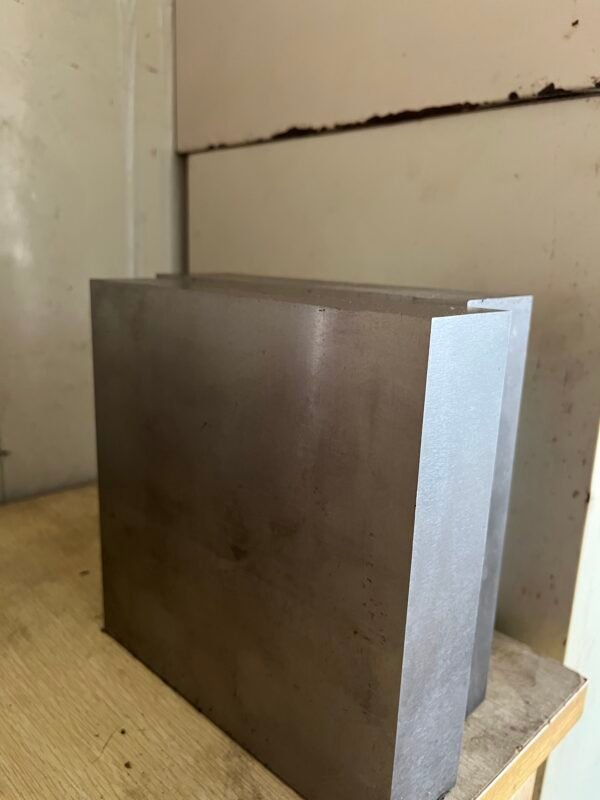
What Is SKH-9 Mold Steel?
SKH-9 is a high-speed tool steel commonly used for cutting and forming tools that require high wear resistance and hardness.
It is generally associated with the M2 family of high-speed steels and is designed for applications where conventional cold-work tool steels may wear too quickly.
The main advantages of SKH-9 include:
- High wear resistance
- High hardness after heat treatment
- Good red hardness
- Good dimensional stability
- High compressive strength
- Excellent performance in high-speed tooling
- Good resistance to abrasive wear
For manufacturers running high-speed production lines, these properties can translate into longer tool life and fewer die changes.
What Types of Dies Is SKH-9 Best For?
The most suitable applications for SKH-9 are those where wear is the primary cause of tool failure.
1. High-Speed Stamping Dies
High-speed stamping is one of the most common applications for SKH-9.
During continuous stamping, the cutting edges of a punch and die are exposed to repeated contact and friction. Over time, wear can cause the cutting edge to become rounded, increasing burr formation and reducing dimensional accuracy.
SKH-9 is well suited to these conditions because of its high hardness and wear resistance.
Typical applications include:
- High-speed stamping dies
- Progressive stamping dies
- Precision punching dies
- Thin sheet metal stamping
- Copper foil punching
- Aluminum foil punching
- Small metal component production
For high-volume production, maintaining a sharp cutting edge for longer can reduce downtime and die maintenance.
2. Precision Stamping Dies for Electronic Components
SKH-9 is also a strong option for small precision stamping dies used in electronics manufacturing.
Electronic components often have tight dimensional tolerances, and even small amounts of die wear can affect the final part.
Typical applications include:
- Electrical terminals
- Connector components
- Lead frames
- Precision clips
- Small brackets
- Micro-stamped metal parts
For these applications, the value of SKH-9 comes from its ability to maintain the geometry of the cutting edge over long production runs.
3. Progressive Dies
Progressive dies can be particularly demanding because multiple forming and cutting operations are performed during each press cycle.
When production volumes are high, even a small amount of wear can eventually affect several stations in the die.
SKH-9 can be considered for progressive dies when:
- Production speed is high
- The stamped material is relatively thin
- Tool wear is a major concern
- Tight dimensional tolerances are required
- Long production runs are expected
The higher cost of high-speed steel can be justified when longer tool life reduces the frequency of maintenance and replacement.
4. Wire-Drawing Dies
SKH-9 can also be used in selected wire-drawing and precision forming applications.
Wire drawing creates continuous sliding contact between the workpiece and the die. This makes wear resistance particularly important.
SKH-9 may be suitable for:
- Precision wire-drawing tools
- Drawing punches
- Small forming dies
- Wear-resistant tooling components
The final material choice should also consider the wire material, drawing speed, reduction ratio, lubrication, and required surface finish.
For extremely demanding wire-drawing applications, carbide or other specialized materials may provide better performance.
5. Cold Extrusion Punches and Die Inserts
SKH-9 can be used for certain cold extrusion applications where high hardness and wear resistance are required.
Typical components include:
- Extrusion punches
- Punch cores
- Die inserts
- Precision forming punches
However, cold extrusion can generate very high compressive and impact stresses.
This is where material selection becomes more complicated.
A tooling material with excellent wear resistance may still fail prematurely if the application generates excessive impact or stress concentration.
For severe impact conditions, toughness may be more important than maximum wear resistance.
6. Small Precision Cold-Work Dies
SKH-9 is particularly suitable for small cold-work dies where precision and wear resistance are both important.
For example, high-volume production of small metal components may require thousands or millions of cycles while maintaining tight tolerances.
In these situations, SKH-9 can help maintain:
- Punch dimensions
- Cutting-edge sharpness
- Die clearance
- Part accuracy
- Consistent production quality
This makes it a useful choice for precision tooling rather than simply a general-purpose mold steel.
Why Choose SKH-9 Instead of SKD11?
SKD11 is a widely used cold-work tool steel that provides a good balance of wear resistance, hardness, dimensional stability, and cost.
SKH-9 becomes more attractive when the application places greater emphasis on wear resistance and high-speed operation.
A simple way to look at the difference is:
| Requirement | SKD11 | SKH-9 |
|---|---|---|
| General cold stamping | Excellent | Good |
| Wear resistance | High | Very high |
| High-speed stamping | Good | Excellent |
| Precision tooling | Good | Excellent |
| Production volume | Medium to high | High |
| Cost efficiency | Excellent | Higher material cost |
| Red hardness | Moderate | Excellent |
This does not mean SKH-9 is automatically better than SKD11.
If a conventional stamping die already achieves satisfactory tool life with SKD11, upgrading to SKH-9 may not provide enough additional value to justify the higher cost.
SKH-9 makes more sense when tool wear, production speed, or tool replacement frequency is limiting productivity.
SKH-9 vs DC53: Which One Should You Choose?
DC53 is another popular cold-work tool steel. It is often selected when manufacturers need a combination of high hardness, wear resistance, and better toughness.
Compared with SKH-9, DC53 can be a better choice when the die is exposed to greater mechanical shock or there is a higher risk of edge chipping.
Choose SKH-9 when:
- Wear is the main failure mode
- Production speed is high
- Long production runs are required
- Precision is critical
- The workpiece is relatively thin
- High hardness and red hardness are important
Consider DC53 when:
- Toughness is more important
- The die experiences greater impact
- Edge chipping is a recurring problem
- The application requires a balance of wear resistance and toughness
The correct choice depends on how the die is actually failing, not simply on which grade has the higher hardness.
SKH-9 vs 8566: Which Is Better for Preventing Chipping?
The comparison between SKH-9 and 8566 is especially relevant for demanding stamping applications.
SKH-9 is primarily selected for wear resistance and high-speed performance.
8566 is more attractive when toughness, impact resistance, and resistance to chipping or cracking are critical.
A practical selection rule is:
If wear is shortening tool life, consider SKH-9. If chipping or cracking is shortening tool life, consider a tougher grade such as 8566.
For example, if a punch remains dimensionally stable but repeatedly breaks at the cutting edge, increasing wear resistance may not solve the problem.
The underlying issue may be insufficient toughness, excessive impact, poor clearance, stress concentration, or an unsuitable heat-treatment condition.
Is SKH-9 Suitable for Stainless Steel Stamping?
It can be, but the application needs to be evaluated carefully.
Thin stainless steel stamping may benefit from SKH-9 when wear resistance and edge retention are the main concerns.
However, thick stainless steel or applications involving severe impact can create a higher risk of chipping or cracking.
In those situations, a tougher tool steel may provide better overall tool life.
The decision should consider:
- Stainless steel grade
- Material thickness
- Production speed
- Die clearance
- Cutting geometry
- Impact load
- Required tool life
- Heat-treatment condition
Therefore, SKH-9 should not be selected solely because it can reach HRC 62–64.
When Should You Choose SKH-9?
SKH-9 is a strong candidate when most of the following conditions apply:
- High-speed production
- High production volume
- Thin sheet material
- Severe abrasive wear
- Tight dimensional tolerances
- Long continuous production runs
- Precision stamping
- Electronic component manufacturing
- Frequent tool replacement with conventional steel
- Wear is the primary cause of die failure
In these situations, the higher material cost of SKH-9 can potentially be offset by longer tool life and reduced downtime.
When Is SKH-9 Not the Best Choice?
SKH-9 may not be the most appropriate material when the main challenge is impact rather than wear.
Consider another grade when:
- The workpiece is thick
- Impact loading is severe
- Punches are repeatedly chipping
- Cracking is the primary failure mode
- The die structure creates high stress concentration
- Toughness is more important than maximum wear resistance
- Production volume is too low to justify the additional material cost
In other words, higher hardness does not always mean longer die life.
The material must match the actual failure mechanism.
How to Select the Right Tool Steel for a Die
Before choosing a tool steel, identify what is actually limiting the die’s service life.
If the die wears too quickly
A more wear-resistant grade such as SKH-9 may be worth considering.
If the cutting edge keeps chipping
Look for a tougher grade such as DC53 or 8566 and review the die geometry and heat treatment.
If the die cracks
Do not simply increase hardness. Check material toughness, heat treatment, stress concentration, clearance, and die design.
If production speed is very high
SKH-9 becomes more attractive because of its wear resistance and red hardness.
If production volume is very high
The higher initial cost of SKH-9 may be justified by longer service life and fewer production interruptions.
SKH-9 Mold Steel: Key Takeaways
SKH-9 is not a universal replacement for SKD11, DC53, or other tool steels.
Its main advantage is its ability to provide high wear resistance and good red hardness in high-speed, precision tooling applications.
It is particularly suitable for:
- High-speed stamping dies
- Progressive dies
- Precision punching dies
- Electronic component dies
- Thin sheet metal stamping
- Copper and aluminum foil punching
- Selected wire-drawing tools
- Cold extrusion punches and inserts
- Small precision cold-work dies
The simplest way to select between these grades is to start with the failure mode:
Wear → SKH-9
General cold-work applications → SKD11
Wear + toughness balance → DC53
Chipping, cracking, or high impact → 8566
The final selection should also account for the workpiece material, thickness, production speed, die design, heat treatment, and required service life.
Frequently Asked Questions About SKH-9 Mold Steel
What is SKH-9 steel used for?
SKH-9 is mainly used for high-speed cutting and forming tools that require high wear resistance and hardness. Common applications include stamping dies, precision punches, progressive dies, wire-drawing tools, and selected cold extrusion tooling.
Is SKH-9 good for stamping dies?
Yes. SKH-9 is particularly suitable for high-speed and precision stamping dies where wear resistance and edge retention are important.
What hardness can SKH-9 reach?
After appropriate heat treatment, SKH-9 can typically reach around HRC 62–64, depending on the heat-treatment process and application requirements.
Is SKH-9 better than SKD11?
Not universally. SKH-9 generally offers stronger wear resistance and red hardness, while SKD11 provides a more economical solution for many conventional cold-work applications.
Is SKH-9 tougher than DC53?
Generally, DC53 is preferred when higher toughness and resistance to chipping are required. SKH-9 is more attractive when wear resistance and high-speed performance are the priorities.
Is SKH-9 suitable for thick steel stamping?
It is generally not the first choice for severe thick-material stamping where impact and chipping are major concerns. A tougher tool steel may provide better performance.
What is better, SKH-9 or 8566?
Neither is universally better. SKH-9 is a strong choice when wear resistance is the priority, while 8566 can be more suitable when toughness and resistance to chipping or cracking are critical.
How do I choose the right SKH-9 grade or heat treatment?
The appropriate condition depends on the application, workpiece material, production speed, die geometry, required hardness, and failure mode. Tool steel selection and heat treatment should be designed around the actual working conditions rather than hardness alone.
Need Help Choosing SKH-9 Mold Steel?
Choosing the right tool steel is ultimately about matching wear resistance, toughness, hardness, production speed, and tool life to the actual application.
If you are unsure whether SKH-9, SKD11, DC53, or 8566 is the better option for your die, provide the workpiece material, material thickness, production speed, die type, and current failure problem.
KUTU can help evaluate the working conditions and recommend a suitable tool steel and material specification for your application.
JIS SKH-9 (AISI M2 / DIN 1.3343) High Speed Steel Round Bar & Block – KUTU
SKD11 (JIS SKD11 Standard) High Toughness Hardware Mold Steel Plate Cold Work Steel – KUTU
DC53 (Upgraded D2 Variant) High Toughness & Wear Resistant Hardware Mold Steel Plate – KUTU