

DC53 Mold Steel: The Best Upgrade from SKD11 for High-Impact Cold Work Dies
Key Takeaways
- DC53 is an upgraded cold work tool steel developed from SKD11.
- It offers significantly higher toughness while maintaining excellent wear resistance.
- Typical hardness after heat treatment reaches 62–64 HRC.
- Compared with SKD11, DC53 provides lower heat treatment distortion, better machinability, and longer service life in high-impact applications.
- It is widely used for precision stamping dies, blanking tools, cold forming dies, punches, and progressive dies.
- DC53 is an excellent choice for molds that experience frequent edge chipping or cracking when using SKD11.
What Is DC53 Mold Steel?
DC53 is a premium cold work tool steel developed by Daido Steel as an improved alternative to traditional SKD11. It was designed to solve one of the biggest limitations of conventional high-carbon, high-chromium tool steels—insufficient toughness under heavy impact loading.
While SKD11 has long been regarded as an industry standard for cold work dies, many manufacturers found that repeated impact during thick-sheet stamping or progressive die production could lead to edge chipping, punch breakage, and premature tool failure. DC53 addresses these issues by optimizing the alloy composition and heat treatment response without sacrificing wear resistance.
After proper vacuum heat treatment, DC53 typically reaches 62–64 HRC, offering a combination of hardness, wear resistance, dimensional stability, and fracture resistance that makes it one of the most popular cold work steels for modern precision tooling.
Today, DC53 is widely used in automotive, electronics, aerospace, hardware, and precision manufacturing industries where tooling reliability directly affects production efficiency.
Why Choose DC53 Instead of SKD11?
Although both steels belong to the high-carbon, high-chromium cold work steel family, DC53 provides several important improvements over SKD11.
Higher Impact Toughness
The biggest advantage of DC53 is its significantly improved toughness.
Under repeated impact loading, SKD11 may develop edge chipping or cracking, particularly when processing stainless steel or thick materials. DC53 greatly reduces this risk, making it suitable for demanding stamping applications with high production volumes.
For manufacturers experiencing frequent punch failure, upgrading to DC53 often increases tool life while reducing maintenance costs.
Excellent Wear Resistance
Despite its higher toughness, DC53 maintains excellent wear resistance.
Its refined carbide distribution helps resist abrasive wear during continuous stamping, punching, and blanking operations, allowing cutting edges to stay sharp for longer production runs.
This balance between toughness and wear resistance is one of the main reasons DC53 has become a preferred replacement for SKD11.
Lower Heat Treatment Distortion
Precision tooling depends on dimensional accuracy.
DC53 exhibits very low distortion after vacuum heat treatment, reducing post-heat-treatment grinding and improving manufacturing efficiency.
This characteristic is especially valuable for:
- Precision progressive dies
- Multi-cavity tooling
- Precision punches
- Thin-wall inserts
- High-accuracy blanking dies
Better Machinability
Compared with SKD11, DC53 is generally easier to machine.
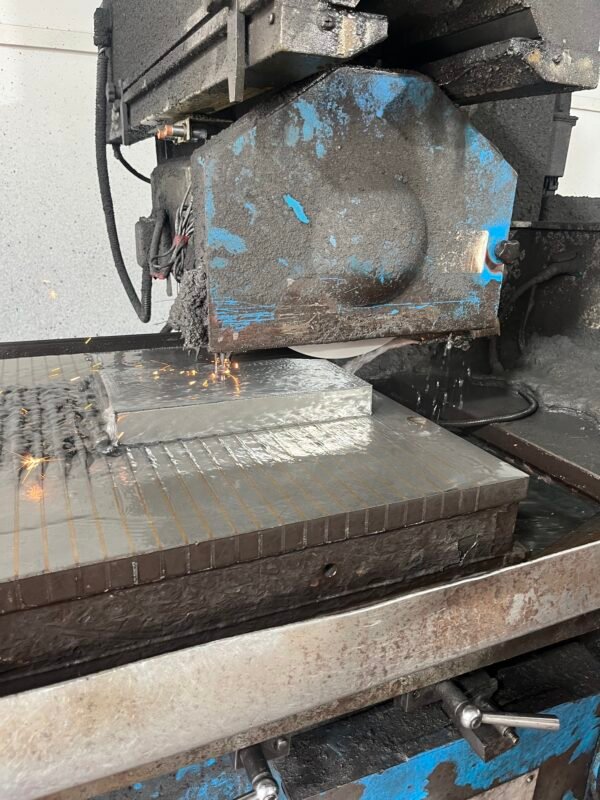
Its optimized microstructure reduces cutting resistance, extends tool life during CNC machining, and improves grinding performance.
Manufacturers often report:
- Higher machining efficiency
- Better surface finish
- Less grinding burn
- Lower tooling costs
Improved EDM Performance
Electrical discharge machining (EDM) is common when manufacturing complex mold components.
DC53 performs well during EDM processing, although the recast (white) layer should still be removed before production to prevent fatigue cracks.
Proper finishing ensures maximum service life.
Chemical Composition of DC53 Mold Steel
The balanced alloy composition is one reason DC53 achieves superior comprehensive performance.
| Element | Typical Content | Primary Function |
|---|---|---|
| Carbon (C) | 1.00–1.10% | Provides hardness and wear resistance |
| Chromium (Cr) | 7.5–8.5% | Improves hardenability and carbide formation |
| Molybdenum (Mo) | 2.0–2.5% | Enhances toughness and secondary hardening |
| Vanadium (V) | 0.2–0.5% | Refines grain size and improves wear resistance |
| Silicon (Si) | ≤0.40% | Increases tempering stability |
| Manganese (Mn) | ≤0.60% | Improves machinability and hardenability |
This alloy design allows DC53 to achieve a better balance between hardness and toughness than traditional SKD11.
Typical Applications of DC53 Mold Steel
DC53 is suitable for cold work tooling that requires both high wear resistance and high fracture resistance.
Precision Stamping Dies
DC53 is widely used for:
- Progressive stamping dies
- Precision blanking dies
- Electronic connector dies
- Lead frame tooling
- Motor core dies
Its excellent edge stability reduces downtime caused by chipping.
Thick Stainless Steel Stamping
DC53 performs particularly well when stamping:
- SUS304
- SUS316
- High-strength steel
- Spring steel
- Thick carbon steel sheets
Its superior toughness helps prevent punch breakage under heavy impact.
Cold Forming and Cold Forging Dies
DC53 is suitable for:
- Bolt dies
- Nut forming dies
- Cold heading tools
- Cold extrusion dies
- Fastener tooling
These applications require both high compressive strength and resistance to repeated impact loading.
Precision Punches and Inserts
DC53 is commonly selected for:
- Punches
- Die inserts
- Wear plates
- Guide blocks
- Precision gauges
Its excellent dimensional stability helps maintain tight tolerances during long production runs.
Industrial Cutting Tools
DC53 is also used in:
- Slitting knives
- Shear blades
- Circular cutters
- Trimming dies
- Metal cutting tools
Its wear resistance contributes to longer maintenance intervals and improved production consistency.
DC53 Machining and Heat Treatment Guide
The performance of DC53 depends not only on the material itself but also on proper machining and heat treatment. Following recommended processing parameters helps maximize toughness, wear resistance, and dimensional stability.
CNC Machining Recommendations
Compared with SKD11, DC53 offers better machinability and lower cutting resistance, making it easier to manufacture precision tooling.
Recommended practices:
- Complete all rough machining before heat treatment.
- Leave approximately 0.2–0.3 mm grinding allowance for finishing.
- Use coated carbide cutting tools for improved tool life.
- Apply sufficient coolant during high-speed machining.
- Minimize sharp internal corners to reduce stress concentration.
Because DC53 produces less distortion after hardening, less finishing work is usually required compared with conventional cold work steels.
EDM Processing
DC53 is suitable for wire EDM and sinker EDM.
However, the recast (white) layer created during EDM should always be removed through polishing or light grinding. Leaving this brittle layer on the tool surface may reduce fatigue strength and eventually initiate cracks during production.
Recommended Heat Treatment
Proper heat treatment is essential for achieving the full performance of DC53.
| Process | Recommended Parameters |
|---|---|
| Austenitizing | 1030–1050°C |
| Cooling | High-pressure gas or oil quenching |
| Tempering | 520–540°C |
| Tempering Cycles | Double tempering recommended |
| Final Hardness | 62–64 HRC |
Double tempering helps relieve residual stress while maintaining excellent hardness and toughness.
DC53 vs SKD11 vs Cr12MoV
Selecting the right cold work steel depends on production volume, workpiece material, impact load, and tooling budget.
| Property | Cr12MoV | SKD11 | DC53 |
|---|---|---|---|
| Hardness | 58–60 HRC | 60–61 HRC | 62–64 HRC |
| Wear Resistance | Good | Excellent | Excellent |
| Toughness | Fair | Good | Excellent |
| Heat Treatment Distortion | High | Low | Very Low |
| Machinability | Fair | Fair | Good |
| Edge Chipping Resistance | Poor | Moderate | Excellent |
| Cost | Low | Medium | Medium-High |
| Best For | Budget tooling | General stamping | Heavy-duty precision stamping |
Choose DC53 if:
- Your SKD11 tools frequently chip.
- You stamp stainless steel or high-strength steel.
- Your dies operate continuously in automated production.
- Tool life is more important than initial material cost.
Choose SKD11 if:
- Production involves medium-impact stamping.
- Wear resistance is the primary concern.
- Budget is limited but high precision is still required.
Choose Cr12MoV if:
- Production volume is relatively low.
- Precision requirements are not demanding.
- Initial tooling cost is the main priority.
Common Applications by Industry
Because of its excellent combination of hardness and toughness, DC53 is used across many manufacturing industries.
Automotive
- Progressive dies
- Seat bracket dies
- Structural component stamping
- Fastener tooling
Electronics
- Lead frame dies
- Connector molds
- Precision terminal dies
- Shield case stamping
Industrial Manufacturing
- Punches
- Shear blades
- Slitting knives
- Trimming tools
Aerospace
- Precision forming dies
- Thin-wall stainless steel components
- High-strength alloy stamping tools
How to Select the Right Cold Work Steel
The following recommendations can help simplify material selection.
Choose DC53 when:
- High impact loads are expected.
- Tool breakage is a recurring problem.
- Precision and dimensional stability are critical.
- Long production runs require extended tool life.
Choose SKD11 when:
- General stamping performance is sufficient.
- Production involves thin materials.
- Wear resistance is the primary requirement.
Choose Cr12MoV when:
- Budget is the main concern.
- Production batches are relatively small.
- Dimensional accuracy is less demanding.
Common Mistakes to Avoid
Even premium tool steel can underperform if processed incorrectly.
Using SKD11 Heat Treatment Parameters
DC53 requires different tempering temperatures. Copying SKD11 heat treatment schedules may reduce toughness and shorten tool life.
Skipping Double Tempering
Single tempering leaves residual stress inside the material and increases the risk of cracking during production.
Ignoring EDM Recast Layer
The white layer formed during EDM is brittle. It should always be removed before the mold enters production.
Choosing DC53 for Every Project
Although DC53 offers excellent performance, it is not always the most economical solution. Standard SKD11 or Cr12MoV may be sufficient for low-impact applications.
Frequently Asked Questions
Is DC53 better than SKD11?
For applications involving heavy impact, thick materials, or long production runs, DC53 generally offers better toughness, lower distortion, and longer service life than SKD11.
What hardness can DC53 achieve?
After proper vacuum heat treatment, DC53 typically reaches 62–64 HRC.
Can DC53 replace SKD11?
Yes. In many precision stamping applications, DC53 is considered a direct upgrade, particularly when edge chipping or premature cracking is an issue.
Does DC53 require vacuum heat treatment?
Yes. Professional vacuum heat treatment is recommended to achieve optimal hardness, dimensional stability, and toughness.
Is DC53 suitable for stainless steel stamping?
Yes. DC53 performs exceptionally well when stamping stainless steel and other high-strength materials because of its improved impact resistance.
Can DC53 be surface coated?
Yes. DC53 is compatible with common surface treatments such as TiN, TiCN, DLC, and CVD/PVD coatings, which can further improve wear resistance and extend die life.
Image Recommendations
| Image | Alt Text |
|---|---|
| DC53 steel block | DC53 high-toughness cold work mold steel |
| Progressive stamping die | DC53 precision progressive stamping die |
| Stainless steel blanking die | DC53 die for thick stainless steel stamping |
| Heat treatment process | Vacuum heat treatment of DC53 mold steel |
| Toughness comparison | DC53 vs SKD11 impact toughness comparison |
Internal Linking Suggestions
Use the following internal links to strengthen topical authority:
- DC53 mold steel → Product page
- SKD11 mold steel → Comparison article
- Cr12MoV mold steel → Comparison article
- Cold work tool steel → Category page
- Vacuum heat treatment → Technical guide
- Progressive stamping dies → Application case study
Conclusion
DC53 has become one of the most trusted cold work tool steels for manufacturers seeking a better balance of toughness, wear resistance, and dimensional accuracy than traditional SKD11. Its superior resistance to edge chipping, excellent heat treatment stability, and longer service life make it an ideal material for precision stamping, blanking, cold forming, and progressive dies.
For tooling that operates under high impact or demanding production schedules, DC53 offers a measurable improvement in reliability and maintenance costs. Choosing the right heat treatment process and machining practices will help unlock its full performance and maximize mold life.
At KUTU MOLD STEEL, we supply premium-quality DC53 mold steel with certified material quality, precision cutting, pre-machining, professional heat treatment support, and technical assistance. Whether you need standard stock sizes or customized mold steel solutions, our engineering team can help you select the right material for your application.
DC53 (Upgraded D2 Variant) High Toughness & Wear Resistant Hardware Mold Steel Plate – KUTU
SKD11 (JIS SKD11 Standard) High Toughness Hardware Mold Steel Plate Cold Work Steel – KUTU
AISI D2 (Cr12MoV Grade) High Wear Resistant Hardware Mold Steel Plate Cold Work Steel – KUTU