

When manufacturing plastic molds for corrosive resins or high-gloss products, selecting the right mold steel directly affects mold life, product quality, and maintenance costs. Standard mold steels may provide sufficient strength and machinability, but they often struggle in humid environments or when processing plastics that release corrosive gases.
S136 mold steel was specifically developed to solve these challenges. As a premium martensitic stainless mold steel, it combines excellent corrosion resistance, outstanding mirror polishing capability, high wear resistance, and exceptional dimensional stability after heat treatment. These characteristics make it one of the most widely used materials for transparent plastic molds, medical components, food-grade packaging, optical products, and molds processing PVC or flame-retardant plastics.
Compared with conventional mold steels such as P20, 718H, and NAK80, S136 provides significantly better protection against rust and chemical corrosion while maintaining an excellent surface finish throughout long production runs. For manufacturers producing high-value plastic components, this translates into fewer maintenance interruptions, longer mold service life, and consistently superior product appearance.
This guide explains everything you need to know about S136 mold steel, including its properties, chemical composition, applications, machining recommendations, heat treatment process, advantages over other mold steels, and practical selection advice.
What Is S136 Mold Steel?
S136 is a high-chromium martensitic stainless mold steel designed primarily for plastic injection molds that require outstanding corrosion resistance and mirror polishing performance.
Its chromium content of approximately 13–14% forms a stable passive oxide layer on the steel surface, protecting the mold against moisture, corrosive gases, and acidic by-products generated during plastic molding. Unlike ordinary pre-hardened mold steels, S136 is supplied in the annealed condition and reaches its optimal performance only after proper vacuum hardening and tempering.
After heat treatment, S136 typically achieves a hardness of 48–52 HRC, providing an excellent balance of hardness, toughness, wear resistance, and polishing capability.
Because of its exceptional cleanliness and refined microstructure, S136 is capable of producing an optical-grade mirror finish with surface roughness as low as Ra 0.02 μm, making it ideal for manufacturing transparent plastic components where even microscopic defects are unacceptable.
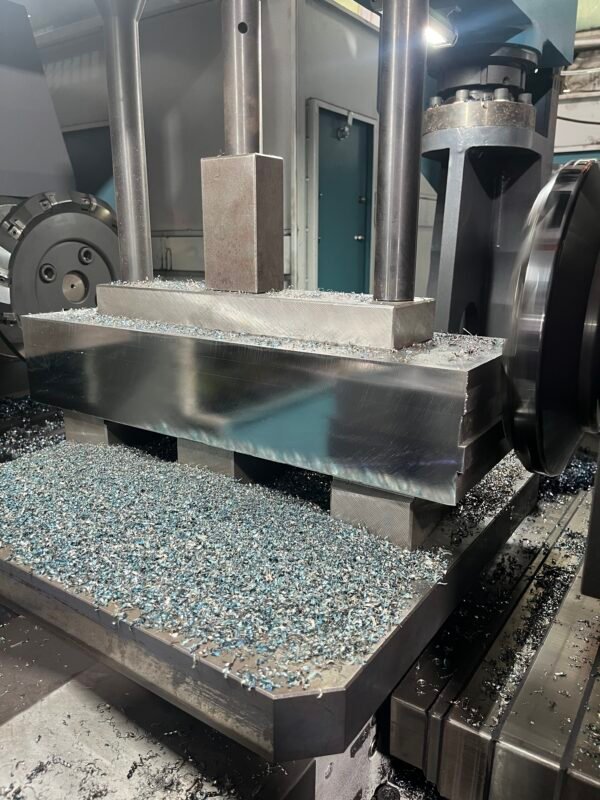
Key Advantages of S136 Mold Steel
Outstanding Corrosion Resistance
One of the biggest advantages of S136 is its ability to resist corrosion in demanding molding environments.
Many plastics—including PVC, PET, flame-retardant ABS, and certain engineering polymers—release corrosive gases during processing. These gases gradually attack conventional mold steels, causing rust, pitting, and surface deterioration.
Thanks to its high chromium content, S136 naturally forms a protective passive layer that prevents corrosion and significantly extends mold service life.
Benefits include:
- Reduced mold maintenance
- Longer polishing retention
- Less downtime for rust removal
- Improved production consistency
- Lower long-term operating costs
Exceptional Mirror Polishing Performance
Surface quality is critical for transparent plastic products.
The ultra-clean metallurgical structure of S136 allows manufacturers to achieve an extremely smooth optical-grade mirror finish after precision polishing.
This makes it an excellent choice for:
- Optical lenses
- Cosmetic packaging
- Medical devices
- Transparent containers
- Automotive lighting components
- Food packaging
Unlike lower-grade steels, S136 minimizes polishing defects such as pinholes, orange peel, inclusions, and surface streaks.
High Wear Resistance
After proper heat treatment, S136 achieves excellent hardness while maintaining good toughness.
Its wear resistance enables molds to withstand millions of injection cycles with minimal cavity wear, ensuring stable dimensional accuracy throughout long production runs.
This is particularly important for manufacturers producing high-volume consumer products where mold replacement costs can become significant.
Excellent Dimensional Stability
Precision molds require dimensional accuracy throughout machining, heat treatment, and production.
S136 exhibits excellent dimensional stability after professional vacuum hardening.
When heat treated correctly, deformation is minimal, allowing manufacturers to maintain tight tolerances without excessive correction machining.
This characteristic makes S136 especially suitable for:
- Precision electronic components
- Medical products
- Optical molds
- High-precision engineering plastics
Superior Texture Etching Performance
Many consumer products require decorative textures rather than mirror finishes.
S136 responds exceptionally well to chemical etching, producing consistent leather grain, matte textures, and customized surface patterns.
The homogeneous microstructure ensures uniform etching depth while preventing irregular grain appearance.
Easy Maintenance and Long Service Life
Unlike ordinary mold steels that require frequent rust prevention, S136 naturally resists oxidation.
Routine maintenance is simplified to basic cleaning after production, reducing maintenance labor while extending overall mold life.
For manufacturers operating in humid environments or coastal regions, this advantage alone often justifies the higher material investment.
Chemical Composition of S136 Mold Steel
The excellent performance of S136 is achieved through a carefully balanced alloy composition.
| Element | Typical Content | Primary Function |
|---|---|---|
| Carbon (C) | 0.35–0.45% | Provides hardness and wear resistance |
| Chromium (Cr) | 13.0–14.0% | Improves corrosion resistance and hardenability |
| Molybdenum (Mo) | 0.30–0.50% | Enhances pitting resistance and strength |
| Manganese (Mn) | 0.50–0.80% | Improves machinability and structural stability |
| Silicon (Si) | 0.20–0.40% | Increases oxidation resistance |
| Phosphorus (P) | ≤0.015% | Maintained at a low level to reduce brittleness |
| Sulfur (S) | ≤0.005% | Ultra-low sulfur improves polishing quality |
Each alloying element contributes to achieving an optimal balance of corrosion resistance, polishability, wear resistance, toughness, and dimensional stability.
Applications of S136 Mold Steel
Thanks to its unique combination of corrosion resistance, mirror polishability, wear resistance, and dimensional stability, S136 has become one of the most widely used stainless mold steels for premium plastic injection molds. It performs exceptionally well in applications where surface quality, cleanliness, and long mold life are essential.
PVC and Corrosive Plastic Molds
S136 is particularly suitable for molding plastics that generate corrosive gases during processing.
Materials such as PVC, flame-retardant ABS, chlorinated plastics, and certain engineering resins release acidic compounds that can rapidly corrode conventional mold steels. Over time, this leads to rust, pitting, poor surface finish, and increased maintenance costs.
With its high chromium content and excellent corrosion resistance, S136 effectively withstands these aggressive environments while maintaining a clean cavity surface.
Typical applications include:
- PVC pipe fittings
- PVC electrical housings
- Cable accessories
- Flame-retardant electronic components
- Industrial plastic parts
Transparent Plastic Products
When producing transparent plastic components, even microscopic surface imperfections can reduce product quality.
S136’s outstanding mirror polishing capability allows mold makers to achieve optical-grade finishes that produce crystal-clear molded parts with excellent gloss and minimal distortion.
Common products include:
- Cosmetic packaging
- Transparent storage containers
- Display covers
- Beverage bottles
- Acrylic products
- PC and PET components
Optical Components
Optical products require extremely smooth mold surfaces to ensure high light transmission and eliminate visual defects.
S136 is widely used for manufacturing molds for:
- Optical lenses
- Light guides
- Camera components
- LED lighting covers
- Automotive headlamp lenses
- Precision optical instruments
Its stable microstructure enables polishing to an exceptionally fine finish while maintaining dimensional accuracy throughout production.
Medical Plastic Molds
Medical devices demand strict cleanliness, corrosion resistance, and dimensional precision.
Because S136 naturally resists rust and contamination, it is commonly selected for molds producing:
- Syringe components
- Test tubes
- Medical connectors
- Diagnostic device housings
- Laboratory consumables
- Disposable medical products
Its corrosion-resistant surface also reduces the risk of contamination during long production cycles.
Food Packaging Molds
Food-contact products require molds that remain clean, corrosion-free, and easy to maintain.
S136 helps manufacturers produce hygienic plastic packaging with consistent surface quality.
Typical applications include:
- Food containers
- Lunch boxes
- Beverage caps
- Plastic tableware
- Baby feeding products
- Kitchen storage containers
High-Humidity Production Environments
Factories located in coastal regions or tropical climates often struggle with mold corrosion caused by high humidity.
Unlike ordinary mold steels that require frequent rust prevention treatments, S136 naturally withstands moisture exposure, reducing maintenance while extending mold service life.
This advantage is particularly valuable for manufacturers operating year-round in humid environments.
Machining Recommendations for S136 Mold Steel
Compared with pre-hardened mold steels such as P20 or NAK80, S136 is more difficult to machine due to its stainless alloy composition.
Proper machining parameters and cutting tools are essential for maintaining productivity and achieving excellent surface quality.
CNC Machining
High-quality coated carbide tools are recommended for rough and finish machining.
General recommendations include:
- Cutting speed: 35–60 m/min
- Feed rate: 0.06–0.18 mm/rev
- Cutting depth: 0.8–2.0 mm
Using lower cutting speeds helps minimize heat generation, reduce tool wear, and improve machining accuracy.
Adequate coolant supply is also important to prevent built-up edge formation during machining.
EDM Processing
S136 performs well during electrical discharge machining.
With optimized EDM parameters, the steel produces a smooth machined surface while minimizing the thickness of the recast layer.
Benefits include:
- Better surface quality
- Reduced polishing time
- Lower risk of microcracks
- Improved dimensional accuracy
Fine finishing EDM is recommended for molds requiring optical-grade polishing.
Heat Treatment of S136 Mold Steel
Proper heat treatment is critical for achieving the full performance potential of S136.
Unlike pre-hardened mold steels, S136 must undergo professional vacuum hardening and tempering before it can deliver its excellent corrosion resistance, wear resistance, and mirror polishing capability.
Vacuum Hardening
The recommended hardening procedure includes:
- Austenitizing temperature: 1020–1050°C
- Holding time: 30–60 minutes
- Cooling method: Vacuum gas quenching
Vacuum heat treatment minimizes oxidation and ensures a clean surface suitable for high-quality polishing.
Double Tempering
After hardening, S136 should always receive double tempering.
Typical parameters include:
- Tempering temperature: 200–220°C
- Holding time: 2 hours per cycle
- Number of tempering cycles: Two
This process relieves internal stress while maintaining a final hardness of approximately 48–52 HRC, providing an excellent balance between hardness and toughness.
Why Vacuum Heat Treatment Matters
Improper heat treatment can significantly reduce the performance of S136.
Air hardening or poorly controlled furnace conditions may cause:
- Surface oxidation
- Reduced corrosion resistance
- Lower polishing quality
- Excessive distortion
- Inconsistent hardness
For high-value molds, professional vacuum heat treatment is strongly recommended.
Polishing and Surface Finishing
One of S136’s greatest strengths is its ability to achieve an exceptional mirror finish.
A typical polishing sequence includes:
320 grit → 800 grit → 1500 grit → 3000 grit → 5000 grit → Diamond polishing paste
Following a gradual polishing process helps eliminate scratches while producing a flawless optical surface.
Over-polishing should be avoided because excessive polishing pressure can damage the passive stainless surface and reduce corrosion resistance.
Welding and Mold Repair
Although S136 offers good weldability compared with many stainless tool steels, proper repair procedures are essential.
For best results:
- Use dedicated S136 welding consumables.
- Preheat the mold before welding.
- Perform stress-relief tempering after welding.
- Re-polish repaired areas to restore the original surface finish.
Following these procedures minimizes cracking and preserves the mold’s corrosion-resistant properties.
Daily Maintenance
One of the major advantages of S136 is its low maintenance requirement.
Routine maintenance typically involves:
- Cleaning plastic residue after production
- Keeping cooling channels free from scale
- Protecting polished surfaces from mechanical damage
- Applying rust preventive oil only during long-term storage
Under normal operating conditions, S136 requires significantly less maintenance than conventional mold steels, reducing production downtime and extending mold service life.
S136 vs NAK80 Mold Steel Comparison
S136 and NAK80 are both premium-grade mold steels widely used in high-precision plastic injection molds, but they serve different engineering purposes.
S136 is a martensitic stainless mold steel with excellent corrosion resistance, high polishability, and strong wear resistance. It is typically used in applications requiring long mold life and high surface finish, such as optical lenses, medical components, and transparent plastic parts.
NAK80, on the other hand, is a pre-hardened mold steel known for outstanding mirror polish performance and excellent machinability. It is often chosen for cosmetic molds, household appliance housings, and precision plastic parts where surface finish is more critical than extreme durability.
Key Differences:
- Corrosion Resistance: S136 is significantly superior due to stainless composition
- Polishability: NAK80 achieves mirror finish more easily
- Hardness: S136 can be hardened up to higher levels after heat treatment
- Machinability: NAK80 is easier to machine in pre-hardened condition
- Application Life: S136 is preferred for long-life, high-volume production
- Cost Efficiency: NAK80 is generally more economical for medium production runs
In summary, choose S136 when durability and corrosion resistance are priorities, and choose NAK80 when surface finish and machining efficiency are more important.
How to Choose S136 Mold Steel
Selecting the right S136 mold steel depends on application environment, production volume, and surface requirements.
1. Evaluate Corrosion Exposure
If the mold operates in humid environments, or processes PVC, corrosive plastics, or medical-grade materials, S136 is the preferred choice due to its stainless properties.
2. Define Surface Quality Requirements
For optical-grade or high-gloss finishes, S136 can achieve exceptional polish levels (mirror finish) after proper heat treatment and polishing.
3. Consider Production Volume
For high-volume injection molding (>500,000 cycles), S136 provides better wear resistance and dimensional stability compared to standard tool steels.
4. Check Heat Treatment Capability
S136 performs best when properly hardened to the required HRC range. Improper heat treatment can significantly reduce corrosion resistance and toughness.
5. Match With Plastic Material Type
Ideal for:
- ABS
- PC (Polycarbonate)
- PMMA (Acrylic)
- PVC (corrosive grade applications)
Common Mistakes to Avoid When Using S136
Many mold failures are not caused by material quality, but by incorrect usage or processing.
1. Incorrect Heat Treatment
One of the most common issues is improper hardening temperature control, leading to reduced corrosion resistance and premature cracking.
2. Over-Polishing Without Proper Hardness
Excessive polishing on under-hardened steel may lead to surface deformation or reduced mold lifespan.
3. Using S136 for Low-Cost Short-Life Molds
S136 is not cost-effective for low-cycle, disposable molds where P20 or lower-grade steels are sufficient.
4. Ignoring Cooling System Design
Even premium steel cannot compensate for poor thermal design, which may cause warping or uneven wear.
5. Mixing With Incompatible Inserts
Incorrect pairing with different hardness inserts can create stress concentration and early failure.
FAQ (Featured Snippet Optimized for Google & AI Search)
What is S136 mold steel used for?
S136 is mainly used for high-precision plastic injection molds requiring corrosion resistance, high polishability, and long service life.
Is S136 stainless steel?
Yes, S136 is a stainless mold steel with excellent corrosion resistance compared to standard tool steels like P20.
What is the hardness of S136 steel?
S136 typically reaches up to HRC 48–52 after proper heat treatment, depending on application requirements.
What is the difference between S136 and P20 steel?
P20 is a pre-hardened general-purpose mold steel, while S136 offers higher corrosion resistance, better polishability, and longer mold life.
Can S136 achieve mirror finish?
Yes, S136 is widely used for mirror-polish applications such as optical and transparent plastic molds.
Which is better: S136 or NAK80?
S136 is better for durability and corrosion resistance, while NAK80 is better for machinability and surface finish efficiency.
Is S136 suitable for medical molds?
Yes, due to its corrosion resistance and high cleanliness requirements, S136 is commonly used in medical and food-grade molds.
Does S136 require heat treatment?
Yes, heat treatment is required to achieve optimal hardness and performance characteristics.
Conclusion
S136 mold steel is a premium-grade material designed for high-performance injection molding applications where corrosion resistance, surface quality, and long mold life are critical.
Compared to general-purpose steels, S136 delivers superior durability and polishing capability, making it a preferred choice for demanding industries such as medical devices, optical products, and high-end consumer plastics.
However, selecting S136 should always be based on application requirements rather than cost alone. For medium or low-volume production, alternative steels such as P20 or NAK80 may provide better cost efficiency.
Call to Action (CTA)
If you are selecting mold steel for your next project and need technical guidance, contact our engineering team for material recommendations, heat treatment advice, and equivalent grade comparison.
We also provide:
- Free technical consultation
- Material selection support
- Equivalent grade charts (AISI / DIN / JIS)
- Custom steel supply solutions for injection mold manufacturers
S136 / S136H (Premium ESR Grade) Corrosion Resistant Stainless Plastic Mold Steel Plate – KUTU