

2344 mold steel is a premium hot work tool steel designed for demanding die casting and hot forming applications. Manufactured using ESR (Electro-Slag Remelting) technology, it offers a cleaner microstructure, improved toughness, and better thermal fatigue resistance than conventional H13 steel.
For manufacturers producing aluminum, magnesium, or zinc alloy components, mold life directly impacts production efficiency and maintenance costs. 2344 helps extend tool life by reducing heat checking, cracking, and wear during continuous high-temperature operation. It is widely used in automotive, aerospace, electronics, and industrial manufacturing where tooling reliability is essential.
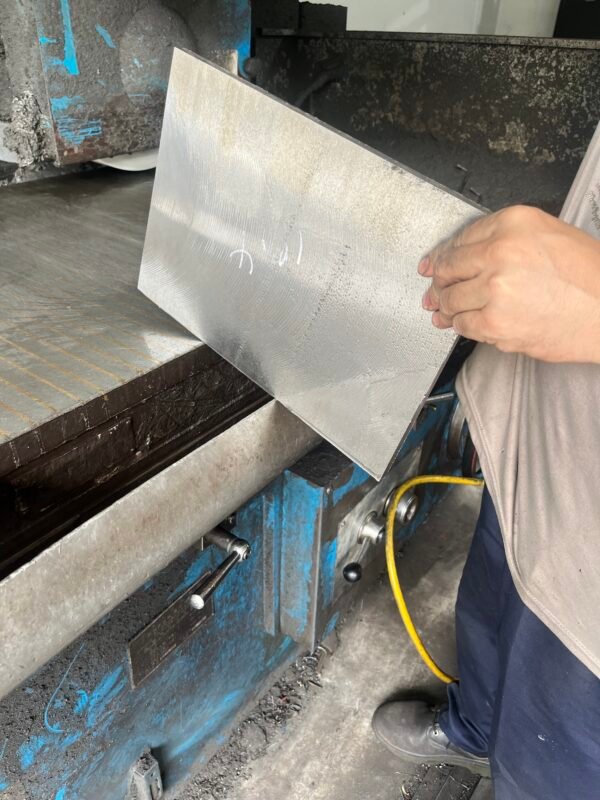
Why Choose 2344 Mold Steel?
Compared with standard H13, 2344 provides higher material purity and more consistent mechanical properties, making it an excellent choice for demanding production environments.
Its key advantages include:
- Excellent thermal fatigue resistance
- High toughness under repeated impact
- Superior hot hardness
- Good thermal conductivity
- Low distortion during heat treatment
- Excellent wear resistance
- Reliable performance in long production runs
These properties help reduce downtime, improve productivity, and lower tooling costs over the lifetime of the mold.
Chemical Composition
| Element | Typical Content |
|---|---|
| Carbon (C) | 0.37–0.42% |
| Chromium (Cr) | 5.00–5.50% |
| Molybdenum (Mo) | 1.20–1.60% |
| Vanadium (V) | 0.90–1.10% |
| Silicon (Si) | 0.90–1.10% |
| Manganese (Mn) | 0.30–0.50% |
The balanced chromium-molybdenum-vanadium alloy system provides excellent hot strength while maintaining toughness and dimensional stability during repeated heating and cooling cycles.
Typical Applications
2344 is recommended for tooling exposed to high temperatures, heavy loads, and continuous production.
Aluminum Die Casting
One of the most common applications for 2344 is aluminum die casting.
Typical products include:
- Engine housings
- Transmission cases
- Motor housings
- Structural automotive parts
- Heat sinks
Its excellent resistance to heat checking helps increase die life during high-volume production.
Magnesium and Zinc Die Casting
2344 performs well in magnesium and zinc alloy casting where molds experience rapid thermal cycling and repeated mechanical stress.
Its improved toughness reduces the risk of edge chipping and premature cracking.
Hot Forging
For hot forging operations, 2344 offers excellent impact resistance and maintains strength at elevated temperatures.
Typical applications include:
- Forging dies
- Punches
- Hot trimming tools
- Heavy-duty forming dies
High-Temperature Plastic Molds
2344 is also suitable for molds processing engineering plastics with high melt temperatures, including:
- PEEK
- PPS
- PEI
- High-temperature PA
Its thermal stability helps maintain dimensional accuracy during long production cycles.
Core Inserts
Many mold manufacturers use 2344 only for critical wear components, including:
- Core inserts
- Core pins
- Gate inserts
- Sprue bushings
This approach improves durability while controlling tooling costs.
Heat Treatment
Correct heat treatment is essential to achieve the full performance of 2344.
Typical process:
Hardening
- Austenitizing: 1030–1050°C
- High-pressure gas quenching
Tempering
- Triple tempering
- 550–570°C
- Final hardness: 50–54 HRC
Vacuum heat treatment is recommended to minimize oxidation and distortion while ensuring uniform hardness throughout the tool.
Machining Recommendations
2344 machines well in the annealed condition using modern carbide tooling.
Best practices include:
- Use coated carbide cutting tools.
- Maintain moderate cutting speeds.
- Apply sufficient coolant.
- Remove the EDM white layer before finishing.
- Perform stress relief after heavy machining when required.
Following these recommendations improves dimensional stability and reduces the risk of premature tool failure.
2344 vs. H13
| Property | 2344 | H13 |
|---|---|---|
| Manufacturing Process | ESR Refined | Conventional |
| Material Cleanliness | Excellent | Good |
| Thermal Fatigue Resistance | Higher | Good |
| Toughness | Higher | Good |
| Wear Resistance | Better | Good |
| Tool Life | Longer | Standard |
| Cost | Higher | Lower |
For high-volume production where tooling life is critical, the additional investment in 2344 is often offset by reduced maintenance and fewer die replacements.
How to Choose 2344
2344 is the right choice when production demands maximum reliability under severe thermal conditions.
Choose 2344 if your application involves:
- Continuous die casting
- Large aluminum casting molds
- Thin-wall die casting
- High-temperature forming
- Heavy-duty industrial tooling
- Long production cycles with minimal downtime
For lower-volume production or general hot work applications, H13 may provide a more economical solution.
Common Mistakes
Avoid these common issues when using 2344:
- Applying standard H13 heat treatment without optimization
- Skipping the third tempering cycle
- Using incorrect welding consumables for repairs
- Leaving the EDM recast layer on finished surfaces
- Selecting 2344 for low-demand applications where H13 is sufficient
Proper processing ensures maximum toughness, wear resistance, and service life.
Frequently Asked Questions
Is 2344 better than H13?
Yes. Because it is typically produced using ESR technology, 2344 offers higher cleanliness, improved toughness, and better thermal fatigue resistance than standard H13.
What hardness does 2344 reach?
After proper heat treatment, the recommended working hardness is 50–54 HRC.
What is 2344 mainly used for?
It is widely used for aluminum die casting, magnesium die casting, hot forging, extrusion tooling, and high-temperature mold components.
Can 2344 be welded?
Yes. Repair welding is possible using compatible filler materials followed by appropriate post-weld heat treatment.
Is 2344 suitable for plastic injection molds?
Yes. It is an excellent choice for molds processing high-temperature engineering plastics where thermal stability is important.
Why Choose KUTU 2344 Mold Steel?
KUTU supplies premium 2344 mold steel manufactured to strict quality standards for demanding industrial applications.
We provide:
- Custom cutting
- Rough machining
- Vacuum heat treatment
- Material certification
- Technical support
- Fast international delivery
Whether you are building new die casting tools or upgrading from standard H13, KUTU can help you achieve longer mold life, lower maintenance costs, and more consistent production performance.