

What Is SKD11 Mold Steel?
SKD11 is a widely used high-carbon, high-chromium cold work mold steel and is commonly associated with the Cr12Mo1V1 designation. It is designed for molds and dies that operate at room temperature and require a strong combination of wear resistance, hardness and dimensional stability.
Compared with traditional Cr12MoV steel, SKD11 offers a more mature balance of carbide-forming elements, hardenability and heat-treatment stability. After proper vacuum heat treatment, it can achieve a working hardness of approximately 60–61 HRC, making it suitable for repeated stamping, blanking, punching and shearing operations.
The main advantage of SKD11 is its ability to resist abrasive wear during long production runs. However, its high carbide content also limits its impact toughness. When the mold is exposed to severe impact, thick stainless-steel stamping or very small cutting edges, chipping and cracking can become concerns.
For this reason, SKD11 is best regarded as a standard high-wear cold work steel, while tougher grades such as DC53 are more appropriate when impact resistance becomes the primary requirement.
This guide explains the material’s properties, composition, applications, heat treatment, machining considerations and differences from Cr12MoV and DC53.
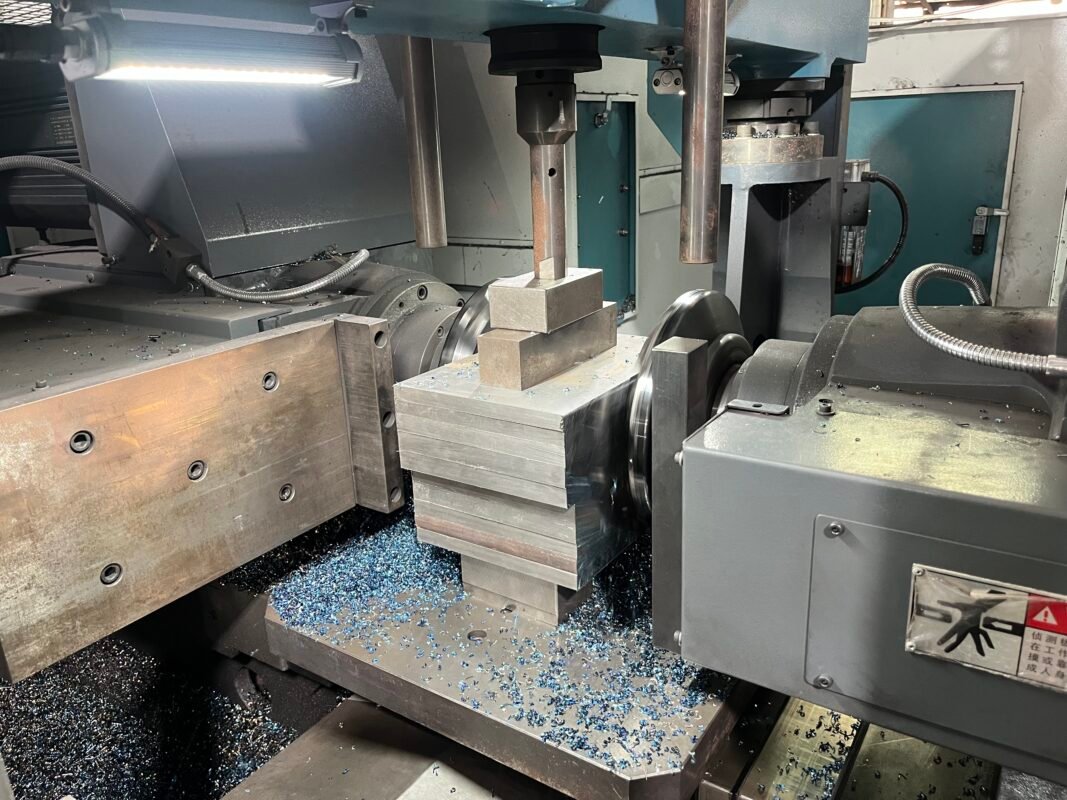
Key Performance Characteristics of SKD11 Mold Steel
SKD11 remains popular because its performance is predictable, its processing technology is mature and its material cost is generally lower than premium upgraded grades.
1. High Wear Resistance
The high chromium and carbon content allows SKD11 to form a substantial amount of hard alloy carbide within its steel matrix. These carbides provide strong resistance against friction and abrasive wear.
This makes SKD11 particularly suitable for continuous stamping and cutting operations where mold surfaces are exposed to repeated contact with metal sheets.
2. Good Dimensional Stability
Proper vacuum quenching and tempering can significantly reduce dimensional changes compared with conventional high-chromium cold work steels.
For precision stamping dies, stable dimensions are important because even small changes after heat treatment can affect punch-to-die clearance and finished-part accuracy.
3. High Hardenability
SKD11 can develop a high and relatively uniform hardness throughout appropriately sized mold components. Its hardenability makes it suitable for punches, dies, inserts and other components that require consistent wear resistance.
4. Mature Machining and Heat-Treatment Technology
One of SKD11’s practical advantages is its extensive industrial use. CNC machining, EDM, grinding, vacuum heat treatment and surface coating processes for SKD11 are well established.
This reduces process-development risk for manufacturers already familiar with conventional cold work tool steels.
5. Good Polishing and Surface Treatment Potential
With appropriate grinding and polishing procedures, SKD11 can achieve a smooth working surface. It can also be combined with surface treatments such as TiN and other hard coatings when additional wear or anti-adhesion performance is required.
6. Competitive Material Cost
Compared with premium high-toughness cold work grades, SKD11 generally offers a more economical solution for conventional stamping applications.
For medium-impact molds where extreme toughness is unnecessary, upgrading to a more expensive steel may provide little practical benefit.
Limitations of SKD11 Mold Steel
SKD11 should not be selected simply because it has high hardness and wear resistance. Its limitations become important when mold loading changes.
Limited Impact Toughness
The relatively high carbide content that contributes to wear resistance also limits toughness. Under severe impact, thin cutting edges can chip, and concentrated stress can initiate cracks.
Applications involving thick stainless steel sheets, heavy blanking loads or repeated impact may therefore benefit from a tougher material such as DC53.
More Difficult Machining Than Tougher Grades
SKD11’s hardness and carbide structure can increase cutting-tool wear and make grinding more demanding. Machining parameters need to be controlled carefully to prevent excessive heat generation and grinding burns.
Heat Treatment Requires Care
Although SKD11 has good dimensional stability when processed correctly, improper austenitizing, quenching or tempering can introduce excessive residual stress or produce an unsuitable hardness-toughness balance.
Chemical Composition of SKD11
The following composition represents the composition range provided for the material in this article.
| Element | Content Range | Main Function |
|---|---|---|
| C | 1.40–1.60% | Provides hardness and promotes formation of hard alloy carbides. |
| Cr | 11.00–13.00% | Improves hardenability and wear resistance through chromium carbide formation. |
| Mo | 0.80–1.20% | Improves hardenability and supports structural stability during heat treatment. |
| V | 0.20–0.50% | Refines the microstructure and contributes to wear and fatigue resistance. |
| Si | 0.20–0.40% | Supports matrix strength and heat-treatment stability. |
| Mn | 0.20–0.40% | Contributes to hardenability and processing characteristics. |
| P | ≤0.025% | Controlled as a harmful impurity to reduce brittleness. |
| S | ≤0.015% | Controlled to maintain steel cleanliness and toughness. |
Image suggestions:
- SKD11 cold work steel bar — Alt:
SKD11 cold work mold steel bar - SKD11 precision stamping die — Alt:
SKD11 precision stamping die - SKD11 metallographic structure — Alt:
SKD11 carbide microstructure
Main Applications of SKD11 Mold Steel
SKD11 is most effective in applications where wear resistance is more important than maximum impact toughness.
1. Thin-Sheet Stamping Dies
Typical applications include:
- Aluminum sheet stamping dies
- Copper sheet stamping dies
- Thin cold-rolled steel sheet dies
- Electronic connectors and terminal components
- Small hardware stamping parts
- Metal clips and precision brackets
These applications generally involve repeated production cycles with moderate impact loading.
2. Punches, Dies and Blanking Components
SKD11 is widely used for:
- Punches
- Blanking dies
- Shearing dies
- Cutting inserts
- Trimming components
- Small-diameter punching pins
Its high hardness and wear resistance help maintain cutting-edge geometry over extended production runs.
3. Cold Forming and Embossing Dies
SKD11 can also be used for cold forming applications where the primary requirement is resistance to surface wear rather than extreme impact toughness.
Examples include:
- Embossing dies
- Pattern-forming tools
- Small cold-forming dies
- Selected fastener tooling
- Precision forming inserts
4. Wear-Resistant Mold Components
Beyond complete molds, SKD11 can be used for components exposed to repeated friction, including:
- Wear plates
- Guide components
- Positioning pins
- Precision inserts
- Gauge blocks
- Automated production-line tooling
SKD11 Machining and Heat Treatment
Correct processing is essential if the material is expected to deliver its designed hardness and dimensional stability.
1. CNC Machining
Rough machining should normally be completed before final heat treatment, with sufficient material reserved for post-treatment grinding and finishing.
Because SKD11 contains a significant amount of hard carbide, tooling selection and cutting parameters should be adjusted according to the machining operation, workpiece geometry and equipment.
For precision components, avoid excessive cutting heat and mechanical shock.
2. EDM Processing
EDM is widely used for complex SKD11 mold cavities and narrow features.
After EDM, the affected surface layer should be removed through appropriate finishing or polishing. Leaving a brittle or highly stressed recast layer on a heavily loaded cutting edge can increase the risk of premature cracking.
3. Vacuum Heat Treatment
The original material provided specifies the following reference process:
- Quenching: 1030–1040°C, holding for approximately 100–120 minutes
- Quenching medium: High-pressure nitrogen gas
- Tempering: Double tempering at 510–530°C
- Holding time: Approximately 2 hours per tempering cycle
- Target hardness: Approximately 60–61 HRC
Actual parameters should be confirmed according to the steel producer, section thickness, furnace characteristics and required final properties rather than applying one fixed cycle to every mold.
Why Double Tempering Matters
Double tempering helps reduce residual stresses generated during quenching and stabilizes the final microstructure.
For precision stamping components, inadequate tempering can increase the risk of delayed cracking or dimensional instability during service.
Grinding, Welding and Surface Treatment
Grinding
SKD11 requires controlled grinding because its carbide structure can make the material sensitive to localized heat.
Use suitable grinding wheels, moderate grinding depth and sufficient cooling to minimize grinding burns and residual tensile stress.
Welding Repair
When repairing damaged SKD11 tooling, the mold should be properly preheated and a compatible welding consumable should be selected.
Post-weld stress relief or appropriate heat treatment is important because the welding zone and heat-affected zone can otherwise become vulnerable to cracking.
Surface Coatings
SKD11 can be used with hard coatings such as TiN when additional surface wear resistance or reduced adhesion is required.
The coating system should be selected according to the stamped material, operating speed, lubrication conditions and failure mode.
SKD11 vs Cr12MoV vs DC53
Choosing between these three steels depends mainly on the balance between cost, wear resistance, toughness and machining requirements.
| Performance | Cr12MoV | SKD11 | DC53 |
|---|---|---|---|
| Wear Resistance | Good | Excellent | Excellent |
| Impact Toughness | Low | Moderate | High |
| Heat Treatment Stability | Moderate | Good | Excellent |
| Machinability | Moderate | Moderate | Good |
| Chipping Resistance | Low | Moderate | High |
| Typical Cost | Low | Low–Medium | Medium–High |
| Typical Application | General low-cost tooling | Standard stamping dies | High-impact precision dies |
When Should You Choose SKD11?
Choose SKD11 when:
- Wear resistance is the main requirement.
- The mold operates under moderate impact.
- The material being stamped is relatively thin.
- Production volume is high and stable dimensions are important.
- You want mature processing technology and reasonable material cost.
When Should You Upgrade to DC53?
Consider DC53 when:
- SKD11 cutting edges repeatedly chip.
- The mold handles thicker or harder sheet materials.
- Impact loading is high.
- Thin punch tips are prone to fracture.
- Mold downtime caused by cracking is more expensive than the additional steel cost.
When Is Cr12MoV More Appropriate?
Cr12MoV may still be reasonable for cost-sensitive tooling where precision requirements, production volume and service-life expectations are relatively modest.
Common SKD11 Selection Mistakes
1. Choosing SKD11 Solely for Its Hardness
High hardness does not automatically mean high toughness. A mold exposed to heavy impact may fail through chipping even when its hardness is appropriate.
2. Using SKD11 for Severe Heavy-Impact Stamping
If a mold repeatedly processes thick stainless steel or experiences concentrated impact, a tougher grade should be evaluated before production.
3. Using an Inappropriate Heat Treatment Cycle
Incorrect heat treatment can compromise both hardness and toughness. The process should be established according to section size and the steel supplier’s technical recommendations.
4. Ignoring EDM Damage
Residual EDM-affected layers can become crack initiation sites. Proper post-EDM finishing is especially important on punches, sharp edges and highly stressed mold surfaces.
5. Overlooking Grinding Heat
Aggressive grinding can introduce thermal damage even when the final dimensions appear correct. Controlled grinding is essential for precision SKD11 components.
Why Choose KUTU SKD11 Mold Steel?
KUTU supplies SKD11 cold work mold steel with material documentation and hardness inspection support for precision tooling applications.
We can provide:
- Precision cutting to customer dimensions
- Rough pre-machining
- Vacuum heat treatment support
- Hardness testing
- Material certificates
- Welding and processing guidance
- Technical recommendations for stamping and blanking applications
For standard stamping, blanking, punching and shearing molds with moderate impact loads, SKD11 remains a practical combination of high wear resistance, dimensional stability, mature processing technology and competitive cost.
When the primary problem shifts from wear to edge chipping and impact cracking, however, DC53 or another higher-toughness cold work steel should be considered instead. The correct material should always be selected according to the actual mold load, workpiece material, production volume and failure mode.
SKD11 (JIS SKD11 Standard) High Toughness Hardware Mold Steel Plate Cold Work Steel – KUTU
AISI D2 (Cr12MoV Grade) High Wear Resistant Hardware Mold Steel Plate Cold Work Steel – KUTU
DC53 (Upgraded D2 Variant) High Toughness & Wear Resistant Hardware Mold Steel Plate – KUTU