

H13 is one of the world’s most widely used hot work tool steels, valued for its balance of toughness, heat resistance, wear resistance, and thermal fatigue performance. It is commonly used for aluminum die casting, hot forging, hot stamping, extrusion, and other tooling exposed to repeated heating and cooling cycles.
After proper heat treatment, H13 typically reaches a working hardness of 48–52 HRC, offering reliable performance under high temperatures while maintaining good toughness. Because of its versatility and cost-effectiveness, H13 has become the industry standard for many hot work tooling applications.
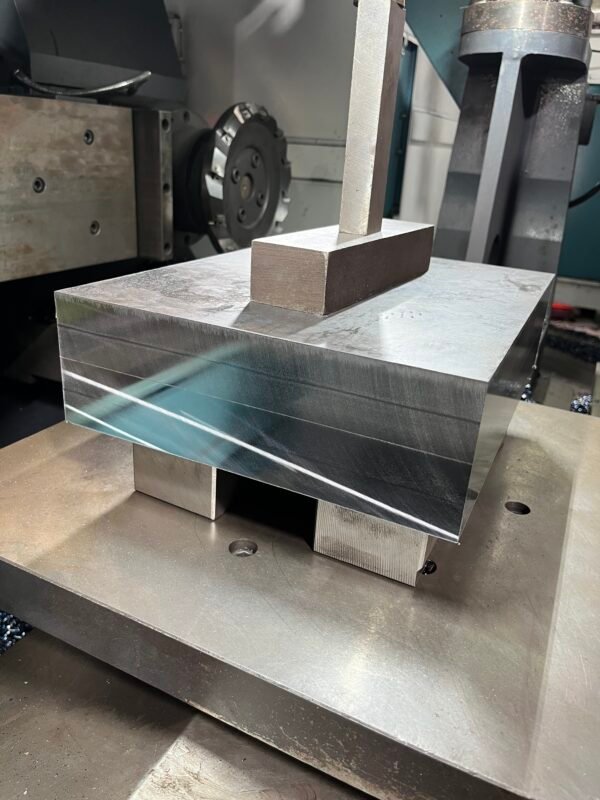
Why Choose H13 Mold Steel?
H13 provides an excellent balance of mechanical properties for general hot work tooling.
Its key advantages include:
- Excellent thermal fatigue resistance
- Good toughness at elevated temperatures
- Stable hardness after heat treatment
- High resistance to thermal cracking
- Good wear resistance
- Excellent hardenability
- Suitable for nitriding and PVD coatings
- Reliable performance in long production runs
These characteristics make H13 suitable for molds and dies subjected to repeated thermal cycling and mechanical stress.
Chemical Composition
| Element | Typical Content |
|---|---|
| Carbon (C) | 0.32–0.45% |
| Chromium (Cr) | 4.75–5.50% |
| Molybdenum (Mo) | 1.10–1.75% |
| Vanadium (V) | 0.80–1.20% |
| Silicon (Si) | 0.80–1.20% |
| Manganese (Mn) | 0.20–0.50% |
The chromium-molybdenum-vanadium alloy system provides the combination of hot strength, wear resistance, and thermal fatigue resistance that H13 is known for.
Typical Applications
Aluminum Die Casting Dies
H13 is the preferred steel for aluminum die casting because it offers an excellent balance between heat resistance and toughness.
Typical applications include:
- Automotive housings
- Engine components
- Structural die castings
- Electronic housings
Hot Forging Dies
H13 is widely used for forging tools operating under repeated impact and elevated temperatures.
Typical tooling includes:
- Closed-die forging dies
- Upsetting dies
- Forging punches
- Extrusion tooling
Hot Stamping Dies
Automotive manufacturers commonly use H13 for hot forming high-strength steel components because of its thermal stability and resistance to cracking.
Hot Runner Components
H13 is also suitable for high-temperature plastic molding components such as:
- Hot runner manifolds
- Nozzles
- Heated inserts
Mechanical Properties
After proper heat treatment, H13 typically provides:
- Hardness: 48–52 HRC
- Excellent hot hardness
- Good impact toughness
- High thermal fatigue resistance
- Good dimensional stability
- Moderate thermal conductivity
These properties allow tooling to withstand repeated heating and cooling without excessive cracking or distortion.
Heat Treatment
Correct heat treatment is critical to maximizing H13 performance.
Typical process:
Hardening
- Austenitizing: 1020–1040°C
- Vacuum hardening
- High-pressure gas quenching
Tempering
- Triple tempering
- 560–580°C
- Final hardness: 48–52 HRC
Triple tempering is widely recommended because it significantly reduces residual stress and improves resistance to thermal fatigue.
Machining Recommendations
H13 is generally machined before heat treatment.
Best practices include:
- Complete rough machining before hardening.
- Leave finishing allowance after heat treatment.
- Remove the EDM recast layer before polishing.
- Use generous corner radii to reduce thermal stress.
- Apply stress relief when required.
These measures help extend die life and minimize cracking during production.
Surface Treatment
H13 responds well to several surface engineering processes, including:
- Gas nitriding
- Plasma nitriding
- PVD coating
- Duplex treatment
Surface treatments improve wear resistance, reduce soldering, and extend die life in aluminum die casting operations.
H13 vs. 8407 vs. SKD61
| Property | H13 | 8407 | SKD61 |
|---|---|---|---|
| Hot Toughness | Good | Excellent | Excellent |
| Thermal Fatigue Resistance | Good | Excellent | Excellent |
| Wear Resistance | Good | Excellent | Good |
| Heat Treatment Distortion | Low | Very Low | Low |
| Material Cost | Lower | Medium | Higher |
| Best Application | General Hot Work | Long-Life Die Casting | Premium Hot Work Tooling |
H13 is the most economical choice for general hot work tooling. For demanding die casting operations requiring longer service life, 8407 may provide better toughness and thermal fatigue resistance. SKD61 is often selected where premium Japanese tooling steel is preferred.
How to Choose H13 Mold Steel
H13 is recommended for applications requiring a balance between performance and cost.
Choose H13 for:
- Aluminum die casting dies
- Hot forging tools
- Hot stamping dies
- Extrusion tooling
- Hot runner components
- Medium to high production volumes
If tooling is exposed to extremely severe thermal shock or requires maximum service life, premium grades such as 8407 may be worth considering.
Frequently Asked Questions
What is H13 mold steel used for?
H13 is commonly used for aluminum die casting, hot forging, extrusion, hot stamping, and other hot work tooling.
What hardness does H13 reach?
After proper heat treatment, H13 typically reaches 48–52 HRC.
Is H13 suitable for aluminum die casting?
Yes. H13 is considered one of the industry standards for aluminum die casting because it combines good toughness, thermal fatigue resistance, and wear resistance.
What is the difference between H13 and SKD61?
Both are equivalent hot work tool steels. SKD61 is the Japanese JIS designation, while H13 is the AISI designation. Performance is similar, although material quality may vary between manufacturers.
Should H13 be nitrided?
Yes. Nitriding is commonly used to improve surface hardness, reduce soldering, and increase die life in aluminum die casting applications.
Why Choose KUTU H13 Mold Steel?
KUTU supplies high-quality H13 mold steel for die casting, forging, and hot work tooling applications.
Our services include:
- Custom cutting
- Rough machining
- Vacuum heat treatment
- Nitriding support
- Material certification
- Technical assistance
- Fast global delivery
Whether you are producing aluminum die casting molds, hot forging dies, or hot stamping tools, KUTU provides dependable H13 mold steel with consistent quality and professional support to help improve tooling performance and reduce production costs.
8407 (Premium H13 Grade) High Performance Hot Work Die Casting Mold Steel Plate – KUTU
H13 (AISI H13 / DIN 1.2344) Hot Work Die Casting Mold Steel Plate High Temperature Resistant – KUTU
SKD61 Hot Work Tool Steel | High Toughness Die Casting Mold Steel Blocks – KUTU