

SKD11 is one of the most widely used cold work tool steels for precision stamping, blanking, forming, and cutting applications. Manufactured to JIS standards, it is valued for its exceptional wear resistance, stable hardness, and excellent dimensional stability after heat treatment.
Designed for long production runs, SKD11 performs particularly well in tooling exposed to continuous abrasion and repetitive loading. Compared with conventional Cr12MoV, it provides better wear resistance, improved hardenability, and longer service life. While DC53 offers higher toughness for impact-resistant tooling, SKD11 remains the preferred choice when wear resistance is the primary concern.
After proper heat treatment, SKD11 typically achieves a working hardness of 59–61 HRC, making it suitable for demanding cold work applications where consistent performance and low maintenance are essential.
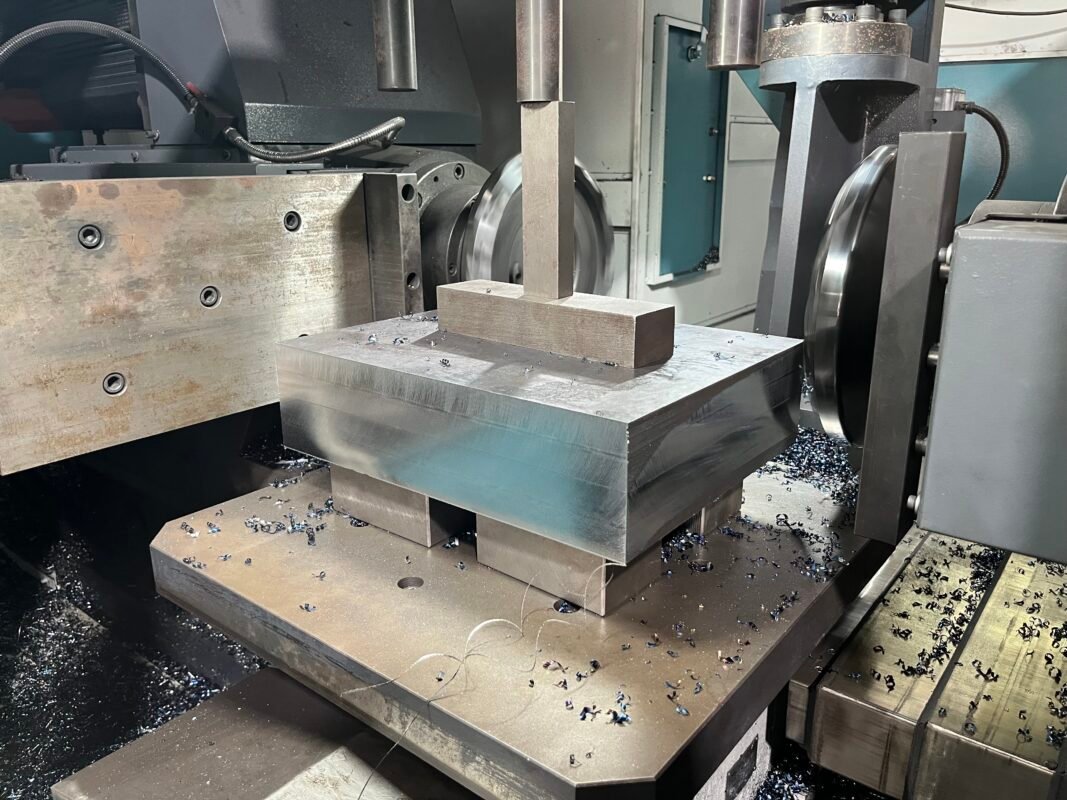
Why Choose SKD11 Mold Steel?
SKD11 is engineered for tooling that requires exceptional wear resistance and reliable dimensional accuracy over extended production cycles.
Key advantages include:
- Excellent wear resistance
- Stable hardness after heat treatment
- Good dimensional stability
- High compressive strength
- Excellent compatibility with PVD and nitriding
- Good polishing performance
- Reliable fatigue resistance
- Long service life in high-volume production
These characteristics help reduce tool wear, minimize downtime, and improve overall manufacturing efficiency.
Chemical Composition
| Element | Typical Content |
|---|---|
| Carbon (C) | 1.40–1.50% |
| Chromium (Cr) | 11.0–12.5% |
| Molybdenum (Mo) | 0.80–1.20% |
| Vanadium (V) | 0.25–0.45% |
| Silicon (Si) | 0.20–0.40% |
| Manganese (Mn) | 0.30–0.50% |
Its high-carbon, high-chromium alloy design forms a fine carbide structure that delivers outstanding wear resistance while maintaining dimensional stability after hardening.
Typical Applications
Precision Stamping Dies
SKD11 is widely used for precision stamping tools operating under continuous production.
Typical applications include:
- Electronic connectors
- Progressive dies
- Precision hardware
- Stainless steel stamping
- Thin sheet metal processing
Blanking and Cutting Tools
Its excellent wear resistance makes SKD11 ideal for cutting applications where edge retention is critical.
Common tooling includes:
- Blanking dies
- Shear blades
- Slitting knives
- Punches
- Trimming tools
Cold Forming and Extrusion
SKD11 performs well in cold forming applications subjected to high contact pressure and abrasive wear.
Typical products include:
- Fastener tooling
- Cold extrusion dies
- Forming dies
- Bending tools
Wear-Resistant Mold Components
SKD11 is also used for high-wear mold components such as:
- Core inserts
- Guide blocks
- Wear plates
- Replaceable mold inserts
Its compatibility with surface treatments further extends service life in demanding production environments.
Heat Treatment
Proper heat treatment is essential for achieving the best performance from SKD11.
Typical process:
Hardening
- Austenitizing: 1020–1040°C
- Vacuum hardening
- High-pressure gas quenching
Tempering
- Triple tempering
- 500–530°C
- Final hardness: 59–61 HRC
Vacuum heat treatment minimizes distortion while improving hardness, dimensional stability, and coating performance.
Machining Recommendations
SKD11 is easier to machine in the annealed condition and becomes significantly harder after heat treatment.
Recommended practices include:
- Complete rough machining before hardening.
- Use coated carbide cutting tools.
- Select slow wire EDM for precision components.
- Remove the EDM recast layer before finishing.
- Perform stress relief after wire EDM when necessary.
Following these guidelines helps improve dimensional accuracy and reduce the risk of cracking during production.
Surface Treatment
One of SKD11’s strengths is its excellent compatibility with surface engineering technologies.
Suitable treatments include:
- PVD coating
- CVD coating
- Nitriding
- TD coating
These surface treatments further improve wear resistance and extend tool life in high-volume manufacturing.
SKD11 vs. DC53 vs. Cr12MoV
| Property | SKD11 | DC53 | Cr12MoV |
|---|---|---|---|
| Hardness | 59–61 HRC | 60–62 HRC | 58–60 HRC |
| Wear Resistance | Excellent | Excellent | Good |
| Toughness | Good | Excellent | Fair |
| Heat Treatment Distortion | Low | Very Low | Higher |
| Coating Compatibility | Excellent | Good | Fair |
| Best Application | High-Wear Tooling | Crack-Resistant Tooling | General Cold Work |
SKD11 is the preferred choice for tooling subjected to continuous abrasive wear, while DC53 is better suited to applications where impact resistance and toughness are more critical.
How to Choose SKD11
SKD11 is recommended when tooling must maintain cutting performance throughout long production runs.
Choose SKD11 for:
- Progressive stamping dies
- Blanking and cutting tools
- Cold forming dies
- Slitting knives
- Wear-resistant mold inserts
- High-volume manufacturing
If premature chipping or cracking is the primary concern, DC53 may offer a better balance between hardness and toughness.
Frequently Asked Questions
What is SKD11 mold steel used for?
SKD11 is commonly used for precision stamping, blanking, cutting, forming, and cold extrusion tooling that requires excellent wear resistance.
Is SKD11 better than Cr12MoV?
Yes. SKD11 generally provides better wear resistance, improved dimensional stability, and longer tool life than conventional Cr12MoV.
What hardness does SKD11 achieve?
After proper heat treatment, SKD11 typically reaches 59–61 HRC.
Is SKD11 better than DC53?
It depends on the application. SKD11 offers superior wear resistance, while DC53 provides higher toughness and better resistance to chipping under heavy impact.
Does SKD11 require heat treatment?
Yes. Proper vacuum hardening and triple tempering are recommended to achieve its designed mechanical properties and dimensional stability.
Why Choose KUTU SKD11 Mold Steel?
KUTU supplies premium SKD11 mold steel for demanding cold work tooling applications.
Our services include:
- Custom cutting
- Rough machining
- Vacuum heat treatment
- Material certification
- Technical support
- Fast global delivery
Whether you are manufacturing precision stamping dies, cutting tools, or high-wear mold components, KUTU provides reliable SKD11 mold steel to help maximize tool life, improve production efficiency, and reduce maintenance costs.