

D2 is a high-carbon high-chromium cold work mold steel with extremely high wear resistance, high hardness and good dimensional stability, which is widely used in heavy-load cold work scenarios. It is a high-performance cold work mold steel, and its wear resistance is better than Cr12MoV, which is suitable for cold stamping, blanking, extrusion and other heavy-load cold work molds that require extremely high wear resistance. Although D2 has high wear resistance, its toughness is slightly worse than Cr12MoV, so it is not suitable for scenarios with strong impact load. This article will detail the performance characteristics, chemical composition, application scenarios, heat treatment specifications and selection tips of D2 mold steel, helping you correctly select and use D2 mold steel.
Core Performance Characteristics of D2 Mold Steel
D2 mold steel is mainly characterized by extremely high wear resistance and high hardness, which is especially suitable for heavy-load cold work scenarios requiring strong wear resistance:
- Extremely High Wear Resistance: D2 contains high content of carbon (1.40-1.60%) and chromium (11.00-13.00%), and also contains molybdenum and vanadium elements, which can form a large number of hard carbides after heat treatment. Its wear resistance is better than Cr12MoV, and it can withstand long-term heavy-load friction and wear.
- High Hardness: After heat treatment, the hardness of D2 can reach 62-66 HRC, which is the highest among common cold work mold steels, and can withstand strong pressure and wear during heavy-load cold work.
- Good Dimensional Stability: D2 has small deformation during heat treatment, stable structure, and can ensure the dimensional accuracy of the mold, suitable for high-precision heavy-load cold work molds.
- Moderate Toughness: D2 has moderate toughness, which is worse than Cr12MoV, but better than Cr12. It is suitable for heavy-load cold work scenarios with small impact, but not for scenarios with strong impact load (such as heavy-duty stamping of thick plates).
- Good Corrosion Resistance: Compared with Cr12MoV and Cr12, D2 has better corrosion resistance due to its high chromium content, which can resist weak corrosion and avoid mold rust in general cold work environments.
Chemical Composition of D2 Mold Steel
The extremely high wear resistance of D2 is determined by its scientific chemical composition, and its detailed chemical composition (mass fraction) is as follows:
| Element | Content Range | Function |
| C (Carbon) | 1.40-1.60% | Improve hardness and wear resistance, form hard carbides |
| Cr (Chromium) | 11.00-13.00% | Form hard carbides, enhance wear resistance and corrosion resistance |
| Mo (Molybdenum) | 0.70-1.20% | Refine grain, improve toughness and thermal stability |
| V (Vanadium) | 0.50-1.00% | Refine grain, improve wear resistance and dimensional stability |
| Si (Silicon) | ≤ 0.60% | Improve oxidation resistance and strength |
| Mn (Manganese) | ≤ 0.60% | Improve machinability, avoid harmful impurities |
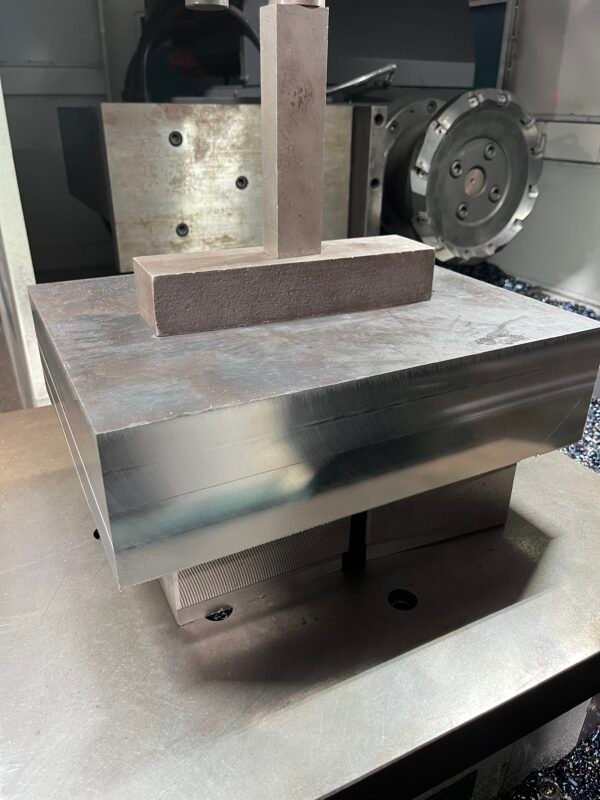
Applications of D2 Mold Steel
D2 is mainly used in heavy-load cold work molds requiring extremely high wear resistance, and its application scenarios are concentrated in the following fields:
1. Heavy-Load Cold Stamping & Blanking Molds
D2 is suitable for heavy-load cold stamping and blanking molds, especially for thick sheet metal and high-hardness material processing:
- Heavy-duty blanking molds: Blanking molds for thick carbon steel sheets, stainless steel sheets, and high-strength alloy sheets (thickness 10-20mm).
- Precision heavy-load stamping molds: Precision stamping molds for auto parts, engineering machinery parts (require high precision and wear resistance).
2. Cold Extrusion Molds
D2 has extremely high wear resistance and high hardness, which is suitable for cold extrusion molds of high-hardness metal parts:
- Cold extrusion molds for steel parts: Cold extrusion molds for bolts, screws, and other high-hardness steel parts (require strong wear resistance to withstand extrusion pressure).
- Cold extrusion molds for alloy parts: Cold extrusion molds for aluminum alloy, copper alloy and other non-ferrous metal alloy parts (heavy load, high wear).
3. Wear-Resistant Cold Work Molds
D2 is suitable for various wear-resistant cold work molds, such as:
- Thread rolling molds: Thread rolling molds for high-hardness bolts, screws (require extremely high wear resistance to ensure thread precision).
- Shearing molds: Shearing molds for high-hardness metal wires, sheets (require high hardness and wear resistance).
- Drawing molds: Drawing molds for high-hardness metal pipes, wires (require strong wear resistance to withstand friction during drawing).
4. Other High-Wear Scenarios
In addition to cold work molds, D2 is also used in other high-wear scenarios, such as mold inserts, wear-resistant parts, and cutting tools (with high wear resistance and long service life).
Heat Treatment Guide for D2 Mold Steel
D2 is a high-carbon high-chromium steel, and its heat treatment process is strict. The key is to control the quenching temperature and tempering process to balance wear resistance and toughness. The recommended heat treatment process is as follows:
1. Annealing (Before Processing)
Purpose: Reduce hardness, eliminate internal stress, improve machinability, and dissolve carbides to ensure uniform structure.
- Annealing Temperature: 850-900℃
- Holding Time: 3-4 hours (ensure uniform heating and carbide dissolution)
- Cooling Method: Slow cooling (furnace cooling) to 500℃, then air cooling to room temperature
- Annealed Hardness: ≤ 255 HB
2. Preheating (Before Quenching)
Purpose: Avoid uneven heating, reduce internal stress, and prevent mold cracking during quenching. Preheating is essential for D2 to avoid thermal shock.
- First Preheating Temperature: 500-600℃, holding time 1-2 hours
- Second Preheating Temperature: 800-850℃, holding time 1-1.5 hours
3. Quenching (Core Heat Treatment Step)
Purpose: Form a martensitic structure, improve hardness and wear resistance, and dissolve excess carbides.
- Quenching Temperature: 980-1050℃ (small molds use 1020-1050℃, large molds use 980-1020℃ to avoid deformation)
- Holding Time: 1-1.5 hours (ensure full austenitization, avoid excessive holding time to prevent grain growth)
- Cooling Method: Oil cooling (cool to 150-200℃, then air cooling to room temperature); avoid water cooling to prevent cracking.
- Quenched Hardness: 62-66 HRC
4. Tempering (Improve Toughness and Stabilize Structure)
Tempering is crucial for D2 to eliminate quenching brittleness and improve toughness. Three times tempering is recommended to ensure stable performance:
- Tempering Temperature: 180-220℃ (for extremely high wear resistance); 280-320℃ (for better toughness)
- Holding Time: 2-3 hours per time, three times tempering (each tempering can eliminate part of the internal stress and improve toughness)
- Cooling Method: Air cooling to room temperature after each tempering
- Tempered Hardness: 60-64 HRC (common for heavy-load cold work molds)
D2 vs Cr12MoV: Detailed Comparison
D2 and Cr12MoV are both high-performance cold work mold steels, and they have their own advantages and applicable scenarios. Understanding their differences can help you make more reasonable choices according to actual production needs. The detailed comparison is as follows:
- Wear Resistance: D2 has extremely high wear resistance, which is better than Cr12MoV. This is because D2 contains higher content of molybdenum and vanadium, which can form more hard carbides, making it more suitable for heavy-load and high-wear scenarios (such as thick sheet metal blanking and high-hardness part extrusion).
- Toughness: Cr12MoV has better toughness than D2. Cr12MoV can withstand certain impact loads during cold work, while D2 is relatively brittle and is not suitable for scenarios with strong impact (such as heavy-duty stamping of thick plates with uneven thickness).
- Hardness: D2 has higher hardness (62-66 HRC after heat treatment) than Cr12MoV (60-64 HRC after heat treatment), so D2 can withstand greater pressure during heavy-load cold work and is not easy to deform.
- Corrosion Resistance: D2 has better corrosion resistance than Cr12MoV. Due to its reasonable alloy element ratio, D2 can form a more stable passive film, which can resist weak corrosion in general cold work environments and avoid mold rust.
- Cost: The price of D2 is slightly higher than that of Cr12MoV. Because D2 contains more precious alloy elements (such as molybdenum and vanadium), its production cost is higher, which is suitable for high-demand and high-budget scenarios.
- Machinability: Both D2 and Cr12MoV have poor machinability in the quenched state, but have good machinability in the annealed state. However, D2 has higher hardness in the annealed state than Cr12MoV, so its processing difficulty is slightly higher, and more wear-resistant tools are needed during processing.
Selection Tips & Common Mistakes for D2 Mold Steel
Selection Tips
- If you need heavy-load cold work molds with extremely high wear resistance (such as thick sheet metal blanking, high-hardness part extrusion) → Choose D2 (excellent wear resistance and high hardness).
- If your cold work scenario has certain impact load (such as precision stamping of thin-walled parts with uneven thickness) → Choose Cr12MoV (better toughness, not easy to crack).
- If you have high requirements on corrosion resistance in cold work environments (such as humid workshops, weak corrosive cooling media) → Choose D2 (better corrosion resistance than Cr12MoV).
- If you have limited budget and the wear resistance requirements are not extremely high → Choose Cr12MoV (cost-effective, can meet most heavy-load cold work needs).
- If you need high-precision heavy-load cold work molds (such as precision thread rolling molds, high-precision extrusion molds) → Choose D2 (good dimensional stability and high hardness, ensuring mold precision).
Common Mistakes
- Using D2 for cold work scenarios with strong impact load → D2 has poor toughness, which will lead to mold cracking and damage during use.
- Neglecting preheating or using insufficient preheating time → D2 is a high-carbon high-chromium steel, which is prone to uneven heating and internal stress without sufficient preheating, leading to mold deformation and cracking during quenching.
- Using only one or two times tempering → D2 has high brittleness after quenching; three times tempering is necessary to eliminate quenching brittleness and improve toughness, otherwise the mold will be brittle and easy to break.
- Confusing D2 with Cr12MoV and using them interchangeably → D2 is suitable for extremely high wear and heavy-load scenarios, while Cr12MoV is suitable for scenarios with certain impact load; blind interchange will lead to shortened mold service life and increased production costs.
- Pursuing high wear resistance and using excessive quenching temperature → Too high quenching temperature will lead to grain growth, reduced toughness and dimensional deformation of D2, affecting mold precision and service life.
We provide high-quality D2 mold steel, with complete chemical composition detection reports and professional heat treatment guidelines, and free custom cutting, forging and heat treatment services. Our team of engineers can adjust the heat treatment process according to your mold size, application scenario and performance requirements, helping you maximize the performance of D2 mold steel and reduce production costs. Contact us now to get a free quote and detailed material data sheet!
AISI D2 (Cr12MoV Grade) High Wear Resistant Hardware Mold Steel Plate Cold Work Steel – KUTU
D2 (Premium DIN 1.2379) High Hardness & Wear Resistant Hardware Mold Steel Plate – KUTU