

Mold steel and tool steel are two common types of special steel in the manufacturing industry. Many purchasers confuse them because of their similar names and partial overlapping performance. However, there are obvious differences between mold steel and tool steel in definition, performance, application scenarios and grades. Choosing the wrong type will affect production efficiency and product quality. This article will detail the differences between mold steel and tool steel to help you distinguish them clearly and choose the right steel for your production.
Definition: What Are Mold Steel and Tool Steel?
1. Mold Steel
Mold steel is a type of special steel specially used to make molds (such as injection molds, die casting molds, forging molds, stamping molds). Its core function is to bear the pressure, temperature, friction and impact during the mold working process, and ensure the precision and surface quality of the workpiece. Mold steel has strict requirements on toughness, wear resistance, high-temperature resistance, corrosion resistance and other properties.
2. Tool Steel
Tool steel is a type of special steel used to make cutting tools, measuring tools, dies and other tools. Its core function is to cut, process, shape and measure workpieces, so it has high requirements on hardness, wear resistance, red hardness (hardness at high temperature) and machinability.
Key Distinction: Mold steel is used to make “molds” (the tool for shaping workpieces), while tool steel is used to make “tools” (the tool for processing workpieces). The core functions of the two are completely different.
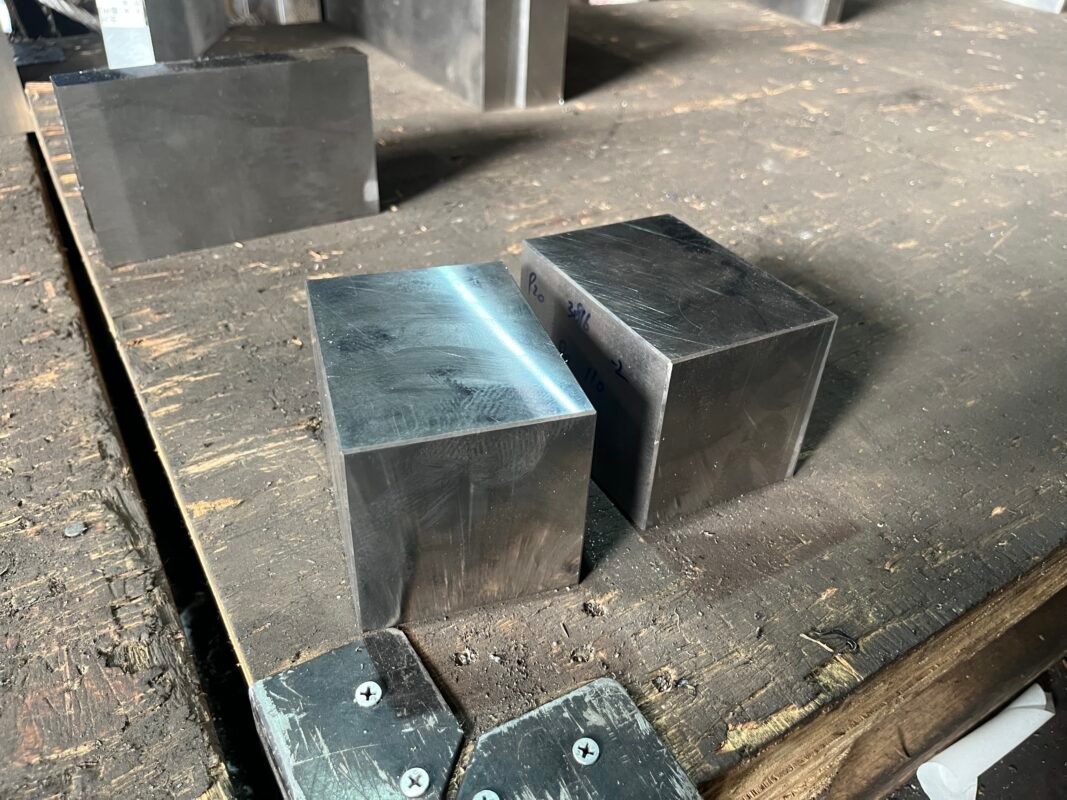
Core Performance Differences
Due to the different core functions, the performance requirements of mold steel and tool steel are also very different. The specific comparison is as follows:
| Performance Index | Mold Steel | Tool Steel |
| Hardness | Moderate to high (28-52 HRC), different grades have different hardness, focusing on balance between hardness and toughness. | High to ultra-high (55-65 HRC), focusing on high hardness to ensure cutting and processing capabilities. |
| Toughness | High, especially hot work mold steel and plastic mold steel, need to bear impact load, not easy to crack. | Relatively low, high hardness leads to poor toughness, easy to break under impact load. |
| High-Temperature Resistance | Excellent (especially hot work mold steel), can work stably at 500-600℃. | Good red hardness, can maintain hardness at 200-300℃, but not as good as hot work mold steel at high temperature. |
| Corrosion Resistance | Some grades have excellent corrosion resistance (such as S136, 2083), suitable for corrosive environments. | Generally poor, most tool steels have no corrosion resistance, easy to rust. |
| Polishability | Many grades have good polishability (such as S136, NAK80), to ensure the surface quality of the workpiece. | Generally not required, only a few tool steels need certain polishability. |
Application Scenarios Comparison
The application scenarios of mold steel and tool steel are completely different, which is the most intuitive way to distinguish them:
Mold Steel Application Scenarios
Mold steel is mainly used to make various molds, according to the type of mold, it can be divided into:
- Plastic Injection Molds: Used to produce plastic products, such as daily necessities, electronic product shells, automotive parts. Common steel grades: P20, 718H, S136, NAK80.
- Hot Work Molds: Used to produce metal products through high-temperature die casting, forging, extrusion. Common steel grades: H13, SKD61, H11.
- Cold Work Molds: Used to produce metal products through cold stamping, blanking, bending. Common steel grades: D2, Cr12MoV.
Tool Steel Application Scenarios
Tool steel is mainly used to make various tools, according to the type of tool, it can be divided into:
- Cutting Tools: Used to cut workpieces, such as turning tools, milling tools, drills. Common steel grades: HSS (high-speed steel), W18Cr4V.
- Measuring Tools: Used to measure the size and precision of workpieces, such as calipers, micrometers, gauges. Common steel grades: Cr12, Cr12MoV.
- Die Tools: Used to shape workpieces, such as punches, dies for stamping. Common steel grades: Cr12MoV, D2.
Common Grades Comparison
There are overlapping grades between mold steel and tool steel (such as D2, Cr12MoV), but their uses are different. The following are common grades of mold steel and tool steel:
| Type | Common Grades | Main Use |
| Mold Steel | P20, 718H, S136, H13, SKD61, NAK80, D2 | Make injection molds, die casting molds, forging molds, etc. |
| Tool Steel | HSS, W18Cr4V, Cr12, Cr12MoV, D2 | Make cutting tools, measuring tools, die tools, etc. |
Note: D2, Cr12MoV and other grades can be used as both mold steel and tool steel, but the heat treatment process and performance requirements are different when used for different purposes.
How to Choose Between Mold Steel and Tool Steel?
The choice between mold steel and tool steel depends entirely on your production needs. The following are simple selection criteria:
- If you need to make molds (to shape workpieces, such as injection molds, die casting molds) → Choose mold steel, and select the specific grade according to the mold type and working environment.
- If you need to make tools (to cut, process or measure workpieces, such as turning tools, calipers) → Choose tool steel, and select the specific grade according to the tool type and processing requirements.
- If you are unsure, you can provide us with your specific use scenario, and our professional team will give you free selection advice.
We provide both high-quality mold steel and tool steel, with complete grades and stable performance. Whether you need to make molds or tools, we can provide you with suitable products and professional technical guidance. Contact us now to get a free quote and selection plan!